No.: PET3414
English name: Yellow-naped Amazon, Yellow-naped Parrot
Origin: Central America
Vulnerability: iron deficiency, bending poles
Life: 10 years
Price: Overview of species of parrots around 40,000
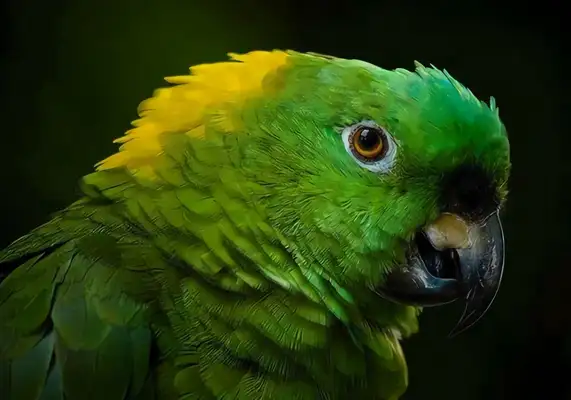
The macaws of the yellow-necked Amazon are very speaking birds that, if properly trained, are enough to make you look at. But while the macaws speak very well, they are also noisy, so before raising such parrots, the master must make sure that they do not bother himself and the people around them. There are, of course, times when the macaws are quiet, like the wild macaws are very quiet when they eat.
The body of the macaws is mainly green, and according to the name of the macaws, many may have assumed that the neck of the macaws may be yellow. It is true that the necks of the macaws have yellow feathers, but some individuals do not have yellow feathers that are more visible in their necks. In addition, young parrots with yellow necks are generally free of yellow feathers.
The macaws also have aliases, for example, some people would call them parrots.
Chinese literary name: A parrot with a yellow neck
Context: Animals
Gate: Pipeline gate
Programme: Birds
Look: Parakeet.
Section: parrots
The Amazon parrot.
English name: Amazona auropalita, Yellow-naped Amazon, Yellow-naped Parrot
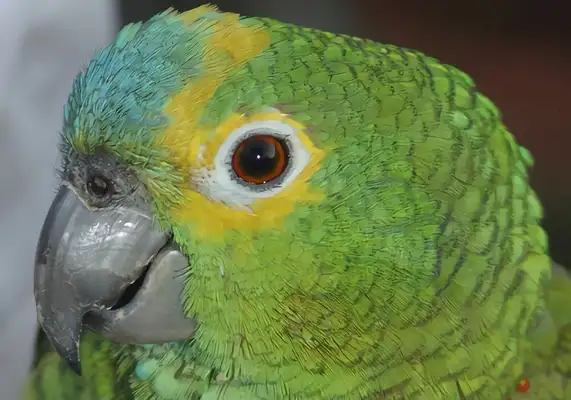
Although macaws are not “smuggling” birds, this does not prevent them from becoming deviant birds. The body of the macaws is mainly green and has yellow feathers on their necks, although some macaws have no visible yellow feathers on their necks. In addition to green and yellow, we can find other coloured feathers on the yellow neck parrot, such as red feathers in some individuals' wings bending and healthy yellow neck parrots' feathers are bright and pleasing.
The macaws are not small, they can be 35 cm in size and weigh over 600 g. In order to ensure the health of the macaws, the owners need to provide them with a suitable living environment (preparation of cages according to size), a scientific diet (food containing sufficient nutrition for birds). If problems are encountered in raising macaws, the owner must call on professionals in a timely manner.
Characteristic description of the morphological macaw of the yellow neck.
Size: 35 cm.
Weight: around 580g.
Body: mainly green.
The neck: has an uneven distribution of yellow feathers.
Plumb: Dark gray black.
Iris: Orange.
Other: There are generally no yellow feathers in the necks of young birds. A parrot with a yellow neck.
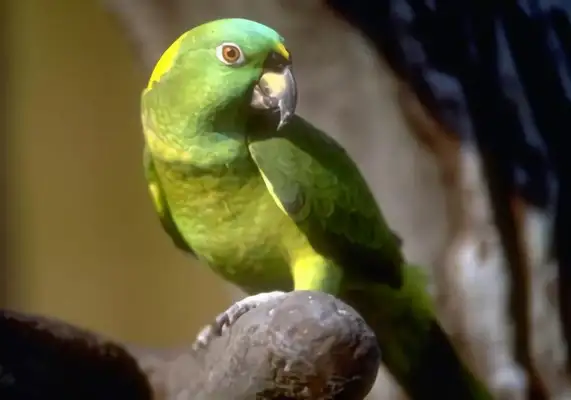
The macaws are non-threatening species, and the wild macaws tend to be paired or in groups, although they are usually organized in small groups, which are more difficult because the number of wild macaws is decreasing. In the natural environment, the habitat of the macaws includes forest lands, open plains, forests, farming areas, etc.
The macaws of the yellow necks are very talkative parrots, so many people love them. But not everyone likes them, and from one of their habitats — the farming areas — we can basically guess that farmers don't like them, and that's a simple reason why they don't like them, and that the yellow neck macaws cause crop losses (which is very similar to many birds).
Many masters fear that the parrots they buy will not be able to adapt well to the new environment, and in order to minimize the unexpected occurrence of parrots who are unable to adapt to the new environment, they prefer artificially to breed them when they choose to buy parrots, which not only adapt more quickly to the family environment, but also to the lives of human beings. When they adapt to the lives of the human family, the master does not worry that they will be as weak as Lin's sister.
There is a great deal of attention to be paid by the owner to the setting of the breeding environment, ranging from the size of the cage to its hygiene. For example, the length of the macaws is usually 35 cm, so the cages cannot be too small; they need to be kept warm during the lower temperatures; the water in the cages is often replaced; the cages are regularly cleaned up, etc.
In the wild, parrots with yellow necks bathe in the morning, and when the owners want the birds they raise to bathe, they need clean water. The point of raising parrots on the yellow neck.
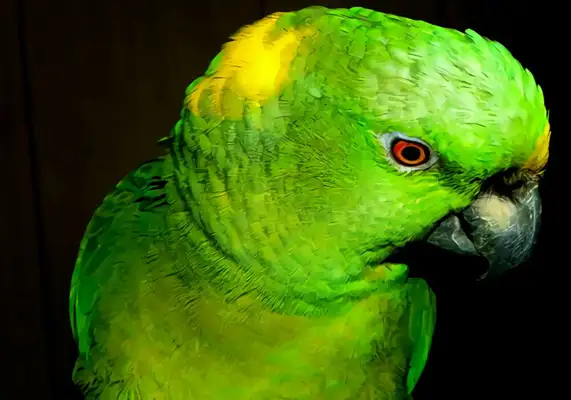
Many breed macaws with yellow necks have a common reason: they speak. But the conservation of the macaws is not just about making them talk. Masters need to know what to do to make them healthier.
I. ON FOOD
In the natural environment, there is a good deal of food for macaws such as plant seeds, buds, fruits, nuts and even flowers. In order for birds to be able to obtain the nutrients they need for their bodies from food under conditions of artificial breeding, the owner can buy them special feed or home-made feed (the home-made feed needs to pay attention to nutritional rationing).
Add: Wild macaws of the yellow neck eat dirt regularly in areas near the banks of the river that are rich in mineral soil. Many people are very surprised by this behaviour. Why do they eat dirt? Did the wild macaws suffer from anorexia? It's not true. The reason why macaws eat dirt is as follows: Some of the food of the macaws is premature seeds, among them toxins that are detrimental to the health of the birds, but eating dirt can help them digest, excrete, etc. In addition, parrots can supplement minerals while eating the soil.
II. On reproduction
The macaws are extremely difficult to reproduce and, in order to succeed in breeding such parrots, it is best for the owner to choose the artificially produced species of birds. During the breeding period, macaws will not be too nice to their masters, and if you come close to them, they will immediately warn you not to stay close, often in the form of an attack on you. When the female hatches, the male tends to stay by the nest box and take on the responsibility of protecting the mother and child.
Reference article: What is the living environment of the macaws?