Designation: PET2186
English name: Map Turtle
Character: lively
Origin: East United States and Southern Canada.
Vulnerability to disease: decomposition
Life: They can live 15 years.
Price: $20-500 for map turtle species.
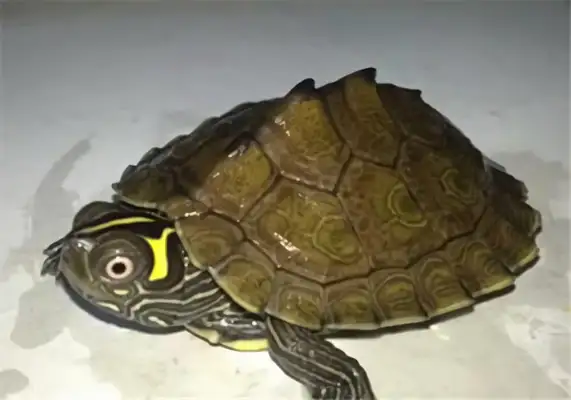
Map turtles are a relatively common variety of turtles, some of which are common in the domestic market, but some are also relatively rare, that is to say, they have a large number of subspecies, which vary considerably and are difficult to identify.
They are freshwater turtles in the eastern United States and southern Canada. They look very much like other turtles, such as fake turtles and colour turtles, but they are smaller and have an elasticity in the middle of their shells. Their shells are tattooed like maps, so they're named. They can live 15-20 years. Map turtles have many unique features that make them different from other water turtles that are present in the same area. They are a diverse group of turtles with different habits, recipes and habitat.
Context: Animal Animalia
Gate: Trondata Gate
It's called "Climbing".
Tortoise Testudines
K: Zhetori Emydidae
The current species of map turtles are:
Barbour's Map Turtle.
Cagle's Map Turtle (Graptemys Caglei) Turtle
Escambia Map Turtle (Graptemys ernsti)
Yellow-blown map Turtle
Northern Map Turtle (Graptemys geographica) Turtle
Pascal Map Turtle.
Delta Map Turtle (Graptemys nigrinoda delticola)
Black-knobbed Map Turtle (Graptemys nigrinoda nigrinada) Turtle
Ringed Map Turtle (Graptemys oculifera) Turtle
Ouachita Map Turtle (Graptemys ouachitensis ouachitensis)
Sabine Map Turtle.
Pearl River Map of the Pearl River
Missisippi Map Turtle (Graptemys pseudogeorapica kohnii)
False Map Turtle (Graptemys pseudogeopropica pseudogeopica) Turtle
Alabama Map Turtle (Graptemys pulkra) Alabama Map Turtle
Texas Map Turtle (Graptemys versa)
What we see on the market is Mississippi map turtles and map turtles. Map turtle morphological characteristics
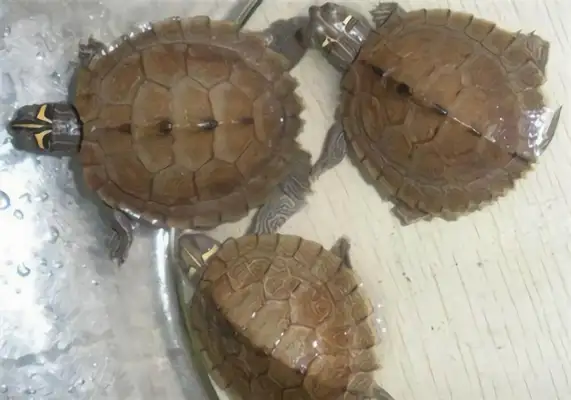
The appearance of different species in the map turtle has changed somewhat, but the same thorns and riddles in the back of the map turtle, and changes in some small details allow us to recognize the differences between different species, while at the same time groaning nature's ghost ax.
Map turtles are similar in size to the more common turtles and turtles. Unlike these turtles, however, the map turtles have a clear twitch in their backs. In many types, this gust is more like a large puncture or tumour stretching up back. This feature has given the map turtle another common name: sawn turtle. Most map turtles also highlighted the back of their backs, making the backs of their backs visible sawn teeth. Some species have large head and jaws, which allow them to bite snails and other molluscs. At the end of the day, the most striking difference lies in the distinctive fine lines on their skins and shields, which are the origins of the name “map turtles”, because they appear to be like the high lines and road maps on the map, which other turtles cannot reach.
Within the map turtle, it is easier to distinguish between females and males. Like most other turtles, males have larger tails than females, and their excretion holes are located beyond the back of their backs. The male has extra claws on his front feet. The size of the body after adulthood can also be a distinguishing feature. For most turtles, the smallest female is also equal to or greater than the largest male. Map turtle care knowledge
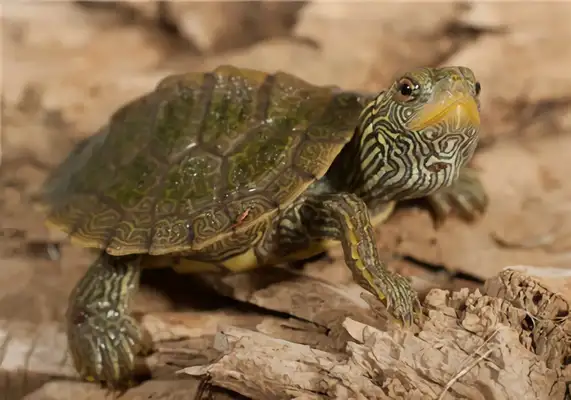
Although hand-fed map turtles have been very successful, the environment in which wild map turtles live is a matter of concern, so there is now a pattern in the breeding of map turtles, which now need people to protect their homes.
Map turtles are not as common as turtles and turtles, and when they do, they are often individual and usually male. Map turtles can live well under artificial rearing, but must be cared for in the right way. In most cases, their care is similar to the requirements for raising turtles and turtles. Map turtles are less resistant to poor water quality than other water turtles. For the health of turtles, clean water must be maintained.
Owing to limited distribution, map turtles are in constant danger. Many different factors, natural and man-made, may affect their long-term survival. Natural disasters make it easier to destroy concentrated communities than scattered communities.
The degradation of habitats may also have a significant impact on these small populations. Agricultural competition, waste from upstream industrial zones and cities, as well as large-scale development along the river coast, have impacted local map turtles. The collection of wildlife, especially rare species, has also contributed to the decline in population numbers. Unfortunately, it is not enough simply to protect where there are map turtles. Because they live in rivers, not in ponds or lakes, upstream, events outside protected areas can also have a significant impact on them. This is not a problem unique to map turtles, but it needs to be successfully addressed if the next generation is to enjoy the pleasure of observing these shy and rare turtles in the natural environment. Map turtle living environment
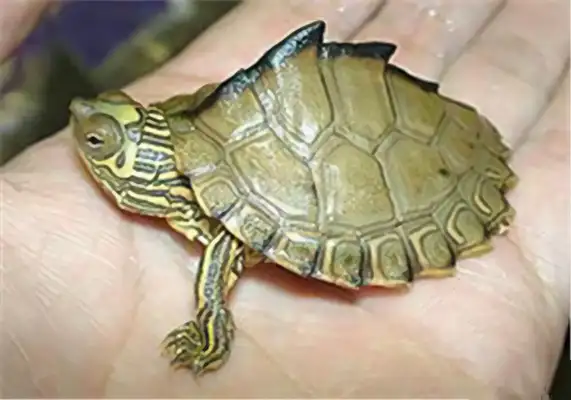
Different types of map turtles have different environmental requirements, some prefer deep water, some like shallow beaches, some are swimmers, and some think they can be half-water turtles, so they cannot be generalized.
The habitat of map turtles varies according to type. Many map turtles seem to prefer to live in rivers than ponds and lakes. In fact, some types of distribution are confined to the water system of a particular river. G. geographica, G. ouachitensis and G. pseugograpica live in ponds and swamps, in addition to living in slow-moving rivers. Among these turtles, areas with abundant aquatic vegetation appear to be more popular. Other types [G. Versa] (translation: Texas Map Turtle, English name: Texas Map Turkey), G. Nigrinoda, G. Flavimaculata and G. oculifera] live in streams with moderate or even faster flow, with sand and clay at the bottom, although they also have traces of limestone, sludge and gravel on the bottom.
Irrespective of that type of habitat, adequate sunscreen is an essential element. Map turtles have a limited field distribution, and it seems surprising that only a few individuals are working for them. As a group, the size of the map turtles and their neural sexual orientation cause problems, but this is not enough to stop the enthusiasm of reptile fever friends. More artificially produced animals are expected to reduce the depletion of wild populations, which cannot afford even small losses. Map turtle breeding points
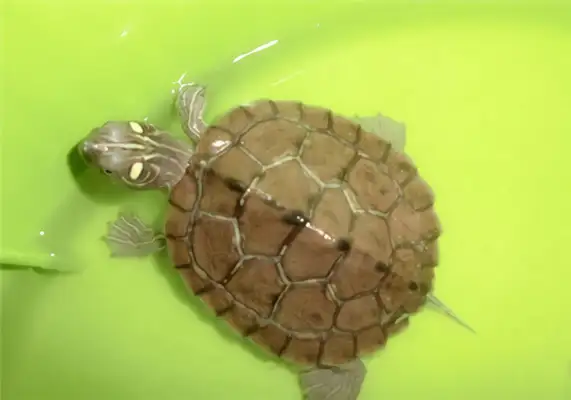
The map turtle's favorite food is unexpected, because his teeth are strong, so he eats some very hard food, and when he is raised, we don't have to feed him all the food, but he has to be fully nutritious.
The survey found that the breeding of map turtles was still as common as that of turtles and turtles. In general, map turtles are able to live well under conditions of artificial rearing, but this presupposes proper care and requires appropriate farming rules for different map turtles. More often, the methods of care for map turtles are similar to the requirements for raising turtles and turtles. Map turtles are less resistant to poor water quality than other water turtles. So to ensure the health of map turtles, it is important to keep water quality clean.
Map turtles are well nourished and, in addition to their individual habits and characteristics, they also depend on how the breeders are raised. The question of how to feed a map turtle also depends on the breeder. Targeted breeding is crucial if the lifestyle and requirements of map turtles are to be understood more often and better. Map turtles are very similar to Brazilian turtles. The head stripes and the concussed back ridges are common features of this species. It is famous for being covered with very similar maps. There are many species of Asia, and Taiwan has introduced Mississippi map turtles spread over the Mississippi River basin. Most of the other sub-species were not introduced.
Map turtles are food staples of aquatic herbs and snails, so their teeth are so hard that they can bite the crust. In combination, care must also be taken that they bite the tail or neck of other mild turtles. It's more appropriate to mix with North American turtles. All foods are eaten in an artificial environment and in large quantities are growing rapidly. The female and male identify as Brazilian turtles. The same is true for spawning and breeding. It's just that it's less adaptive to the environment, and it's less imported. So not so much as Brazilian turtles do.