Designation: PET2028
English name: Amazon mud turtle
Origin: Lower Colorado, United States, and Gila River, Arizona
Vulnerability: leukemia, gastrointestinal disease
Life: More than 15 years
Price: Overview of Amazon mollusc species 2000-18,000
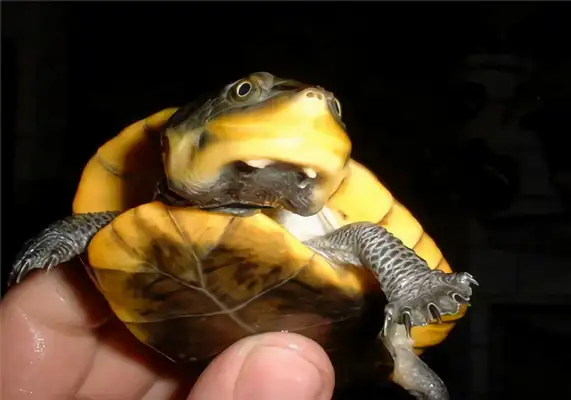
The Amazonian turtles are a relatively rare species of egg turtles, and when threats are received, the smell of musk will also spread, and the Amazon turtles will not reproduce very quickly, so wild numbers are declining, and some insects are eaten in the wild, a predatory turtle.
Chinese literary name: the Amazon turtle
Chinese alias: Stinky, Stinky Jim.
Two words: Amazon mud turtle
Context: Animals
Gate: Spinal gate
Amen: vertebrate Amen.
Programme: climb
Tortoises.
Section: chest tortoises
It's a musk turtle.
Speculation: Amazone turtles
Distribution: Lower Colorado, United States, and Gila River, Arizona, New Mexico southwards to the mainland divided Rio Yaqui basin, eastwards through the Rio Casas Grandes basin north-west of Chihuahua.
Appearance characteristics: The head, neck, and limbs are usually gray or mixed, and the jaws may have black spots.
Reproduction: 1-4 eggs per year with approximately 1-11 eggs. The number of nested eggs is bound to be related to the size of the female body, and the elliptical eggs have a hard shell with a size of 28.0~35.0 x 13.8~19.0 mm, usually hatching in August.
Life habits: When threatened, it tends to emit a musk smell, so they are often referred to as “dumb” or “dam” glands on both sides of the body, in contact with the skin under the back of the mantle.
Eating: Amazon turtles are predators, eating algae and aquatic plants, and also eating insects, snails, worms, small fish, crustaceans and amphibians. It's a remarkable night turtle, unlike the other turtles it belongs to. Amazon mud turtle morphological characteristics
The top of the head and neck of the Amazonian mud turtles is usually brown or brown, and there are also some bright and dim stripes, which are mostly yellow in pictures. The larynx is marked with a nipple type. Shells are generally brown and brown, and wild individuals tend to carry green algae. The back armour is clearly stretched and relatively high and typically contains 23 guilders, with a slight dim or flat top, and an invisible spine down to the edge along the centre of the backnail. Amazon mud turtle care knowledge
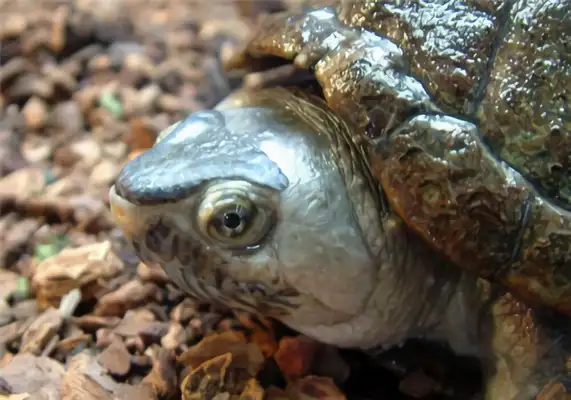
The number of Amazon turtles is declining, which has long been recognized, but it has not been well protected, and people have had to try not to destroy the environment, but it is already a fact.
I. Protection measures for Amazon turtles
In the United States, since 1997, Amazon turtles have been included in the act on endangered species and are in need of protection as candidates. The impact on the south-west region is clear because of the changing climate and shrinking habitat. Therefore, the decline in numbers is inevitable.
II. HOLDING OF THE AMAZAN MOLDOM
Amazon turtles are found in areas at an altitude of 2042 metres, in permanent streams, rivers, ponds, ditches and caves. They are often found in forested lands, and only a few enter temporary waters. In the Chiricahua Mountains in south-eastern Arizona, 90 per cent of the 580 Sonora turtles were caught in the pond. Five per cent of the individuals were captured in the stream and five per cent on land. They also occasionally migrate from one water to another, which may indicate that there is no distance of 8 kilometres between the pond they temporarily leave and the permanent water.
iii. Food for Amazon moth turtles
The Amazon turtles are predators, feeding algae and aquatic plants, and also eating insects, snails, worms, small fish, crustaceans and amphibians. It's a remarkable night turtle, unlike the other turtles it belongs to. Amazon mud turtle living environment
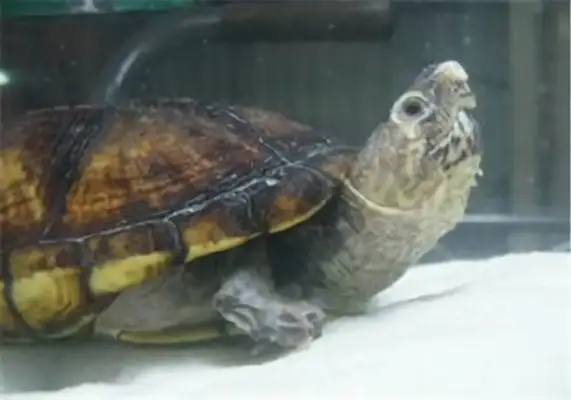
The Amazonite breeding environment could be based on other turtle species, such as some other turtle species, but there was also a problem, and different turtles had different environmental requirements, so it was suggested that you could accumulate experience while raising them.
I. Environmental set-up of Amazon mud turtles
The Amazon turtles have a variety of methods, such as ponds, casks, wooden basins and reservoir ponds, with advantages and disadvantages, which can be chosen on a case-by-case basis. For general professional households and small-scale farms, it is better to build pool farming, which is easier to manage and more economically efficient. Tortoise ponds and breeding pools can be constructed by reference to the specifications and methods of the larvae ponds and breeding pools of money turtles. Tortoise ponds are also built in the same way as money turtles, but they can be larger in size so that more turtles can be farmed.
II. Attention to the raising of Amazon turtles
Tortoises, tortoises and tortoises should be raised to avoid large turtles swallowing them, and to facilitate the identification of feed feed feed and stock management, as well as to observe and control the growth of Amazon turtles. The sand on the open ground between the surroundings of the pool and the wall should be kept a certain degree of humidity, and some cooling measures, such as water spills and the planting of small bushes, should be taken during the summer holidays. Before the hibernation period, check the growth of the Amazon mud turtles, adding more food for the weak breeders and feeding the Amazon turtles, which accumulates a large amount of nutrients, grows their bodies and makes winters safe. I've got a few points for the Amazon.
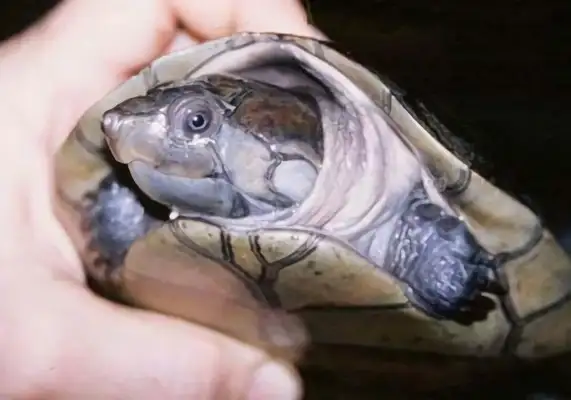
The Amazon turtles are meaty turtles in a wild environment, but when humans are raised, some plant food and turtle food are accepted, which is a better phenomenon, but when raised, care is taken to ensure that turtles do not suffer from indigestion.
The Amazon mackerel is more food-intensive, with rice, wheat, peas, fish, shrimp, insects, snails, etc., the most favorite of which are fish, snails, maize and rice. In the case of artificial breeding, in order to satisfy the nutrients required for the growth of the Amazon mud turtles and to avoid stunting and anorexia due to a single feed, a variety of feeds should be used, such as shrimp, snails, paddy, wheat, maize, etc., in animal feed and plant feed.
In order for the Amazon mud turtles to fully digest the feed, maize, peas, etc., must be crushed and immersed for about two hours before being fed, and other large foods must be shredded before being fed. It is also important to note that, at different times of the Amazon's mud turtles' growth, feed with different nutrients should be fed according to their growth characteristics. Life and climate are closely linked to Amazon turtles, who begin feeding early in April each year; the highest and fastest increase in feeding activity in June-August; and the beginning of a decline in food consumption by October, when temperatures fall below 10 degrees Celsius, they stop eating and enter hibernation.