Designation: PET1556
English
Nationality: Western Ontario to British Columbia
Vulnerability to disease: decomposition
Life: Around 30 to 40 years of age
Price: The price of seedlings is about $100 to $120.
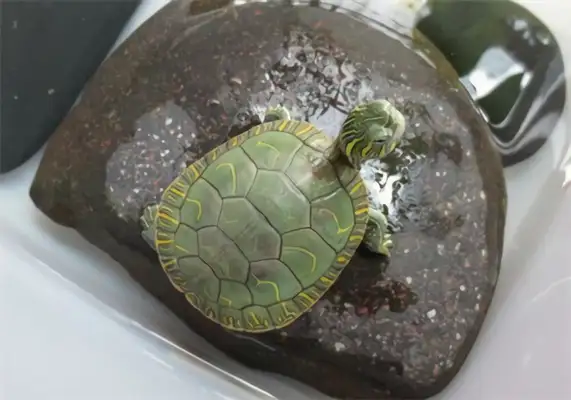
Western turtles are a sub-species of turtles, with the largest sizes in all sub-species, the back-skinned colours change significantly with changes in the rearing method, and the larvae are usually more colorful, and adult bodies prefer to sunen their backs, so they are darker.
Chinese literary name: Western Turtle
English
Latin name: Chrysemmys picta bellii
Context: Animals
Gate: Pipeline gate
Programme: climb
APA: An impenetrable APA, or short bow Outline
Tortoises.
Section: marsh turtles
Yes: Yes, yes.
Crop: Western turtle
Distribution: From Western Ontario to British Columbia, south to Missouri, north to Oklahoma, east to Colorado, Wyoming, Idaho and northern Oregon, and in Texas, New Mexico, Utah and Chihuahua, Mexico has isolated populations.
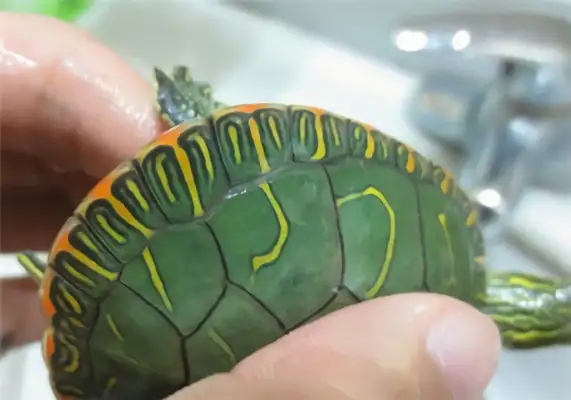
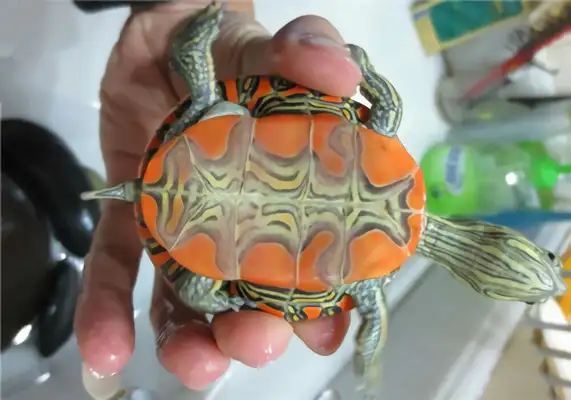
Appearance characteristics: A net pattern consisting of dim stripes is a feature of its vest. It appears to be complicated to have a dark pattern of corrugated fork along the armour, either abdominal or slightly red.
Reproduction characteristics: nesting took place between May and mid-July. The female nests in areas with abundant sunlight by the water, requiring the soil to be slightly humid, fertile or sandy, and the nests to be shaped by a long neck bottle. The number of eggs laid varied from 2 to 20.
Lifestyle: Turtles are daily and sleep at night at the bottom of the pool or on objects partially immersed in water. When the sun rises, they become active, tan for a few more hours and then feed later in the morning. By evening they may be feeding again. Western turtle morphology.
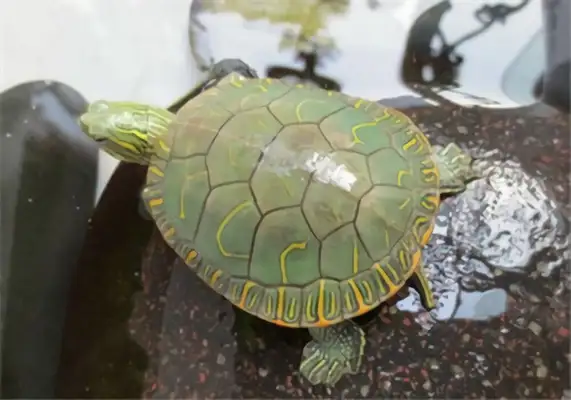
Western turtles are a relatively large group of breeders, and the prices and appearances of young turtles, which are visible in the market, are quite attractive and more common. The average western turtle price is about 100 to 120, with some differences depending on the size of the back armour and the turtle's product.
The size of the turtle's back is 10-25 cm, which is small. It has smooth backs, flat ellipses, colours from green to black, and some sub-species have red stripes. The abdominal armour is generally yellow, sometimes bound with red, and sometimes with black to red brown patterns, which vary in size and shape. The skin of the turtle is black to olive, with yellow and red stripes on the neck, limbs and tails, and yellow stripes on the head. Male turtles have long front claws and thick tails. Female turtles are generally larger, with shorter front claws and shorter and smaller tails.
Western turtles are the largest sub-species. The length of the turtle usually exceeds 17.8 cm, while the longest record is 25 cm. A net pattern consisting of dim stripes is characteristic of its vest. It appears to be complicated to have a dark pattern of corrugated fork along the armour, either abdominal or slightly red. The back of the turtles is light green, and the colours are deposited in relation to time, food, sun. Western Turtle Care Knowledge
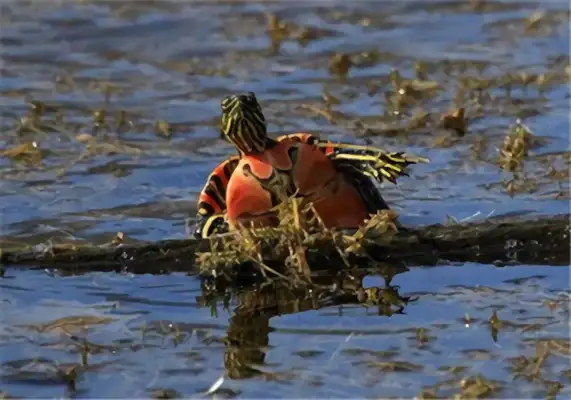
It is not difficult to feed turtles in the west, and it is generally possible to keep them healthy as long as they are protected from disease. In addition to this, attention to the management of hibernation in the west and the care of congenials is largely in place.
I. Can the western turtle mix?
The western turtle is tougher than the herd. As for mixing with other water turtles, it is not a sound and rational decision, because the turtles are essentially “human predators” and are vulnerable to each other's bites if they do not have enough food together or if the breeding space is too narrow, the result is physical damage. Western turtles are particularly fond of biting each other's tails, and many western turtles with broken tails or no tails are actually the victims of grouping and mixing. It is therefore recommended that they be kept alone.
II. The hibernation problem of the western turtle
Western turtle seedlings can be raised with heating sticks in winter so that they can feed throughout the year, grow and grow quickly and survive safely. As for adult bodies, it is possible to opt for natural hibernation, with an increase in feeding and sufficient food for 7, 8 and 9 months, and after mid-October, with lower temperatures, the western turtle will gradually decline, stop feeding a week before the end of November, so that it can be drained from its abdomen, and then put the turtle in clean water, so that it is not disturbed to sleep naturally. Rare mud can also be used for hibernation, but the soil must be disinfected. The living environment of the western turtle.
The good and bad state of Western turtle breeding is a major factor in their health. Western turtles have higher environmental requirements than Brazilian turtles, so simple breeding environments do not satisfy Western turtles. So, what kind of environment does Western turtle raising require?
I. EQUIPMENT OF THE FAMILY
It can be raised with organic glass or glass. The water level in the tank should be slightly higher than the back of the turtle, and the western turtles should be very good at swimming. They can be raised in deep water, with some weeds, some drifting wood, and a proper suffocating environment. Of course, empty jars can be raised and can be easily handled. There must be a sunscreen in the larvae, and Si Jin is a water turtle, but it cannot remain in the water, otherwise it is prone to various diseases. Filters can be placed in the water so that water quality does not deteriorate. Configure UVB lights and warmer sticks in the tank. Water temperature control is relatively secure at 26-28 degrees, at which point it thrives and grows rapidly.
II. Water management for breeding
Western turtles are best fed with nighttime water that is tanned by sunlight, because the species is sensitive to the good and bad quality of water, which is less susceptible to rotting skins, rotting nails, rotten claws, white eye disease and even death. If the breeder does not wish to change water extensively on a daily basis, filters are used, but a small proportion of the water is replaced on a daily basis in order to maintain the relative cleanliness of the water quality in the rearing tank. Western turtle breeding point.
For turtles, calcium can only be replaced by calcium. For turtles, calcium can be done all their lives. Food is needed to ensure their nutrition, and calcium supplementation is usually additional. The food choices and calcium recharge methods of some western turtles are described below.
I. Western turtle recipes and feeding
Western turtles are recommended live food for feeding, with minimum feed. Chrysotile worms (frozen precipitation can also be fed), dry shrimps, earthworms, live shrimp cut-off live fish, skinned bread worms, insects such as flies and grasshoppers. It is not appropriate to feed raw pork and animal internal organs, as there are more parasites. Tortoise diets are relatively large and feed at least twice a day, with a regular dose.
ii. Western turtle calcium
A lot of people say shrimp is the best food for calcium, but it's not. Shrimp does have the highest calcium, but Xi Jin eats a lot of shrimp at a time, and it absorbs just a little bit, and the bones of the feeded fish are soft enough to be digested by the Western Cine, and these bones plus calcium is enough to meet the calcium needs of Western Cine at any stage. Have a little fish with all kinds of vitamin protein. Isn't that enough?
Of course, it's better for shrimp than for calcium. It is emphasized here that it cannot be fed cooked, salty and fat. Over-saline, over-fertilized food can lead to disorders in the digestive system of Si Jin, leading to various edemas of indigestion and obesity.