Designation: PET1032
English name: Spotted Pond Turtle
Character: lively
National origin: Pakistan, India, Bangladesh, Nepal
Vulnerability to disease: decomposition
Life: Around 80 years old
Value: A brief description of the species of Hamidon turtles around $1,000.
Hamidon turtles are mainly black-headed, scattered and scattered with spots, so they're also called spot-tock turtles, a water-dwelling turtle, lively and interactive with humans, and they're very fond of them. Hamidon turtles are subtropical turtles, warm and cold. The water temperature is high and suitable at around 22°C; the water temperature above 18°C allows normal food consumption; and the water temperature below 15°C results in a stoppage, which leads to hibernation. Carbage. In nature, shellfish, plant leaves, insects, fish. Hamidon Tortoise Characteristics
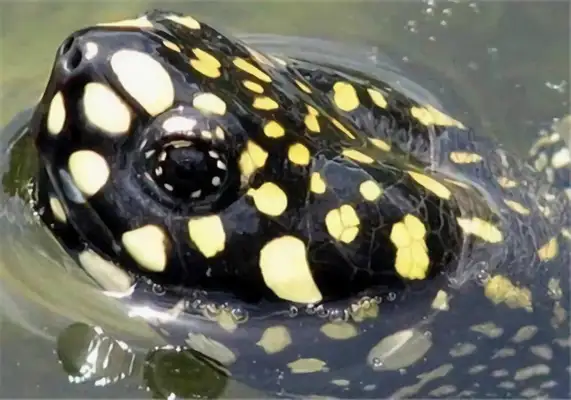
The appearance of Hamidon turtles is more characteristic, especially at an early age, when the appearance of adults is very different from that of Hamidon turtles, known as spottock pit turtles, which are more monolithic species, covered with stripes and gradually disappearing as adults.
I. morphological characteristics of the Hamilton turtle
Hamidon Tortoise's shells are high, three rows starting. The back of the tortoises is sawned, and the adult ones are looser. The back of the neck is thicker than the front, the front of the first ridge is rarely wider than the rear, the second and third ridges are almost the same, with large heads and short kisses. The dent in the center of the upper jaw, the size of the cheekbones is almost the same as the diameter of the eyelid.
The kisses and the crowns were covered with a large swirl, a swirl on the top, and between the eyes and the ears. There's a toenails on his toes, stretching all the way to the claws. The tail is very short. Turtle shells are dark brown or black, with yellow spots and stripes. The soft parts are dark brown or black, have yellow dots and have the largest spots on the head and neck.
Two, Hamilton Tortoise.
Within three months of birth, the tortoises are covered in black white spots and are suitable for protection in the wild. Then, as the white spots on the backs of the mantle quickly disappeared, they gradually became thinner and less visible white stripes, and only the edges of the backslids remained visible. There are also three prominent ridges on the backs, similar to crocodiles. Although aqueous turtles are, Hamidon turtles are not well swimming, so they can be raised at depths such as depths and back armour, and need not be too deep. Hamilton Tortoise Care Knowledge
Hamidon turtles are not well-positioned to swim, so the depth of the water and the back armour are sufficient for breeding, and need not be too deep. Hamidon turtles are carnival turtles and, because of their particularly developed jaws, aquatic crustaceans are the staple foods in the wild, feeding turtle feed bread worms and small snail snails in artificial environments. Their eating is rather clumsy and slow, so they are not suitable to mix with fast-moving turtles, such as Brazilian turtles or map turtles, in order to avoid chronic hunger without food. Hamilton Turtle Living Environment
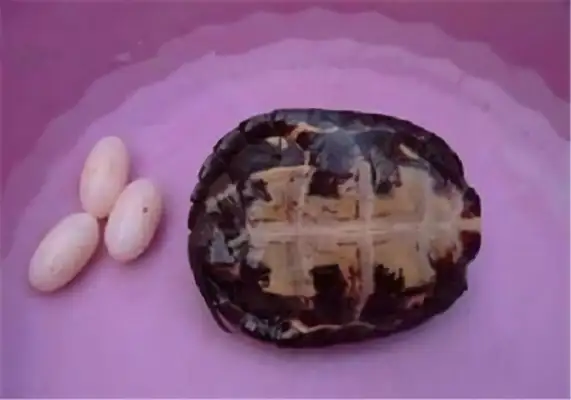
While Hamidon turtles do not have high environmental requirements, changes in water quality are likely to occur quickly in the summer, and Hamidon turtles are prone to corrosive nails, the main cause of which is water quality, so they need to be as high-quality as possible for their health.
I. Temperature control for Hamidon turtles
As subtropical turtles, Hamilton turtles are logically not suitable for low-temperature breeding. It would be preferable to keep ambient temperatures within 25 to 28°C, which would be more conservative. It also contributes to the feeding and growth of the Hamilton turtles, who are also less susceptible to disease. However, Hamidon turtles are strong and generally do not suffer from deadly diseases and do not have to worry too much about their health. It has been found that in-house farming, even if not hot in winter, is not problematic in the short term. Shanghai's room temperature won't be low. If you're a healthy, heavy individual, that's all the better.
II. Management of the water quality of Hamidon turtles
Hamidon turtles are extremely sensitive to the good and bad quality of water. When water quality deteriorates, it is particularly likely to induce skin outbursts, especially bad claws, to eventually fall off the nails. If it's Hamidon turtles, it's usually not too big. In such cases, it is recommended that water for breeding be completely replaced every day. At least one third of the rearing water is replaced if the rearing takes place. In the summer season, bacteria are particularly easy to breed in the water, which must be kept clean. You can add a little salt to the water. The management of water for breeding needs to be given high priority if Hamidon turtles are to be maintained.
III. REQUIREMENTS FOR HUMIPTON TURNING
When available, Hamidon turtles can be tanned, both to promote their growth and development, and to help them improve their own immunity and resilience. Starting in July, it is important to keep the sun in mind that the Hamidon turtles receive light, and if that is the case, more water should be put in the tank, so that the temperature rises slowly and not fatally. In addition, the irradiation time is significantly reduced and the control is relatively safe and secure within 10 minutes. The UVB lamps can also be used indoors in lieu of solar light exposure. What do you mean?
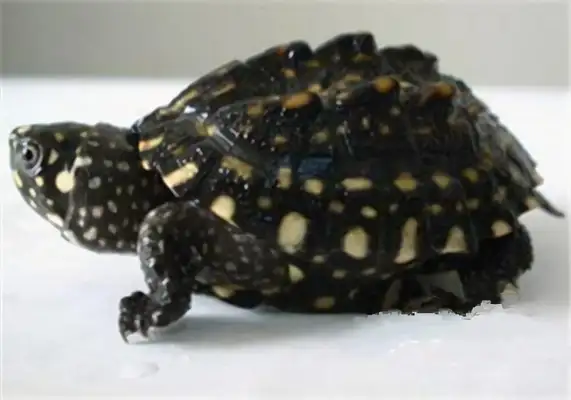
Hamidon turtles are typical meat-eating turtles, who like to eat some live fish, shrimps, can provide some frozen dry shrimp and turtle food in an artificially raised environment, and have to be nourished throughout the summer for a smooth winter.
I. Comparison of what Hamidon turtles eat. Okay.
Live fish, live shrimp, insects, turtle foods, all of which are eaten by speckling pit turtles. Tortoises can be fed with grain feed and shrimp dry, combined with feeding. Feeding grain feed first, eating almost enough, then feeding a small number of shrimp dry so their mouths don't feed. Between the end of April and June, they were fed twice a day, sometimes once when they had to go out.
It's hot in July, it's growing fast, it has to feed twice a day, and the amount of food has increased, and the variety of food can be enriched, fresh fish and shrimp. Leatherbread worms can also be fed to prepare for winter. It's not warm in the winter. It is natural that resistance is strong when it is fed.
ii. The feeding of Hamidon turtles
1. Do not feed infrequent foods, dead fish shrimp and frozen foods to prevent intestinal problems.
Cotton-marked cleaning turtles should be used frequently so as to be more rewarding.
3. Do not use a very hard plastic tank to feed the speckling pit turtle so that the nails can be worn.
4. In winter, the turtles should not be used to play games, which can cause cold.