The Scorpion of the Emperor: A guide to the conservation of the King's posture
Overview of species
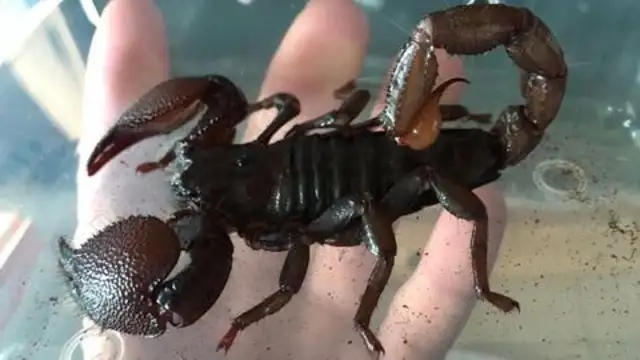
The emperor scorpion, also known as the King's Scorpion or the Indian Scorpion, is a well-known species of scorpion, known for its size, colour and arrogance. They are mainly located in India, Sri Lanka, Bangladesh and South-East Asia and are among the most popular reptiles in the pet world. The size of the adult emperor scorpion is usually between 10 and 20 cm, dark or dark brown, smooth on the surface, occasionally luminous with metal, and has a strong visual impact.
Because of its strong appearance and high quality, the emperor scorpion is often used as a “honoring king”, and because of its conservation difficulties and uniqueness, it attracts the attention of many reptiles.
Character characteristics
The scorpion's character is a more aggressive and vigilant species among scorpions. They are naturally alert, responsive, like to be in hiding and extremely sensitive to environmental change. It is relatively quiet, but if disturbed or threatened, it shows warning or attack.
They are not as gentle and aggressive as some small varieties and have a certain potential for attack. When faced with sudden changes in strangers or the environment, threatening gestures, such as poking tails, hissings (which are, in fact, the sounds of muscle vibrations in the abdomen), show that their territory is more conscious.
Individual differences, of course, also affect character, with some timid, afraid and others born strong. In any case, respect for their habits is the key to raising the emperor's scorpion.
(c) rearing techniques environment setting: Packaging selection: glass or plastic packagings are recommended, not less than 60 x 40 x 40 cm, to facilitate management and regulation of the environment. Basement: Coconut, peat or fine sand mixtures may be used to maintain thickness at 5-10 cm to facilitate excavation and concealment. Secrecy: Placing wood, ceramic tubes or stones, providing a hidden location and reducing stress. Temperature control: Stay between 26 and 32 degrees Celsius to avoid too low or too high temperatures. Humidity: Relative humidity is more appropriate at 60-70%. A small amount of water can be sprayed daily to keep the base humid and not too damp. Feeding management: mainly live food, such as cricket, small cockroaches or bread worms. The frequency is 2-3 times a week, avoiding indigestion due to over-feeding. Every effort is made to feed with a sling so as to avoid surprises or back bites. Around 24 hours after feeding, the food is cleaned up and the environment kept clean. Water: A shallow plate can be set up, clean water kept clean and bacteria avoided. Scorpion licks water with their tongues to ensure clean water quality. Cleaning and maintenance: regular cleaning and scraping of floors, once a month. Check the temperature of the container to ensure environmental stability.
Hair care.
The emperor scorpion has no hair, but their shell needs special care as a “protective layer”. Keep the shell clean and smooth is an important part of the representation. Cleaning of outer casings: Light removal of dust and impurities with soft brushes or tampons to avoid turtle cracks and adhesive substances. Avoiding accumulation of chemical substances: Prohibition of any harmful chemical cleaning agents or insecticides being sprayed in breeding areas in such a way that they do not lead to discoloration, flaring or even poisoning of scorpion casings. Environmental wetness regulation: Appropriate humidity can help the scorpion keep the shell bright and avoid dry cracks. When the environment is dry, the scorpion can be helped to maintain moisture by spraying fog or adjusting base moisture. Health monitoring: The normal scorpion shell is smooth and glitter, and if it is found to have cracks, white hair or colour changes, it may be a sign of environmental discomfort or health problems. Timely adaptation of the environment or observation of parasites, infections, etc. is required.
Summary
The Emperor was scorpioned in dark and dark robes, with a wildness. Their conservation is both science and art. You need to understand their nature and create a friendly environment, from temperature humidity to feeding water. And they also represent a form of respect and care for life. The process of accompanying them is not only a test of patience, but also of the resilience and strength of life.
If you can take a deep breath to understand their needs, you might as well turn the emperor scorpion into the indispensable “golden” of your life, enjoying that unique wild charm.