Designation: PET5948
English name: Dolarbird
Vulnerability: respiratory, digestive and parasitic diseases
Life: 3-4 years profile of bird species
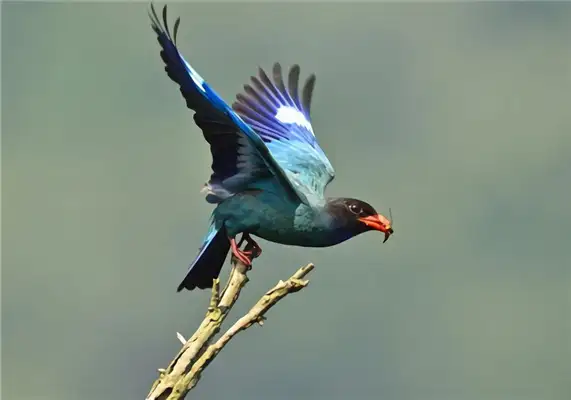
Dollarbird, a valuable bird of view in life, is in the wild, a good assistant to the farmers, who for a long time have stood on the top of the tree at the edge of the forest, or have flown in circles and up and down in the air, screaming with “galls”. The bird's spouse is known for a beautiful flight of courtship.
The species has been included in the List of Land-based Wildlife for National Conservation or of Significant Economic and Scientific Research, published by the National Forestry Administration on 1 August 2000. In addition, the bird preys on insects for forestry.
Chinese literary name: Zamboki
Chinese aliases: East wide-mouthed bird, Buddha monk, wide-mouthed bird, old Zhu Chong
English name: Dolarbird
Two words: Eurostomus orientalis
Context: Animals
Gate: Pipeline gate
Amen: vertebrate Amen.
Programme: Birds
APA: Today ' s APA
The Buddha.
Ko: Buddhist Monk
From: from Zamboo
Scrubbing bird
Distribution: East Asia, South-East Asia, Japan, Philippines, Indonesia and to New Guinea and Australia. The tectonic traits of the bird.
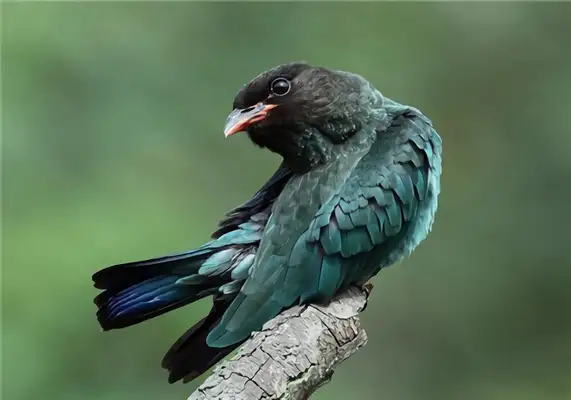
The weight of the bird can only be measured in grams, male or female. Ideally, the size of the bird should be 107-194 grams, with males weighing around 2-4 grams less than females. Ideally, the size of the bird should be 241-290 mm and similarly, the male should be shorter than the female.
The bird's head is big and wide, and his head is flat. The head to the neck is black and the back, the back, the shoulder, the back, the waist and the tail are dark and green. They are similar to their backs, but brighter and blueer. Primary plume black and brown, with a wide sky blue stripe of the base; secondary plume black and brown, with a deep blue glitter; and tertiary plume blue green. It's black, it's blue, it's the same base and back, and it's dark blue and purple sometimes. Black, blue on the throat and chest, blue on the cobalt blue feather and blue green on the rest. The armpits and the blue greens under the wings.
The female feather is darker than the male and less bright than the male. The young bird looks like a bird, but the feathers are darker, the back is close to green brown and the throat is blue. The living conditions of the three birds.
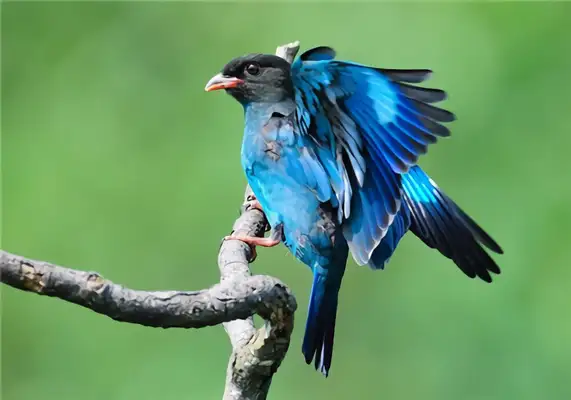
In the name of the Eastern wide-mouthed bird, the bird prefers to travel north-east, Gansu, Yunnan, and the region along the coast of Guangdong in hot summers to find its foothold. The three birds have bright feathers, which are more valuable cages to watch the birds.
The family-breededed Sampoo birds are afraid and scared, preferring to be quiet. This bird is suitable for the environment in the southern and central regions of the country. In the case of breeding in the north, the winter must be in-house for winter and room temperature should be above 15°C.
In the wild, the Samboro birds are mainly found in woody trees on the edges of the corrosive and broad-leaved forest roads and on the two banks of the valley. The Eastern wide-mouthed bird tends to live alone or in pairs in mountainous or plain forests, and tends to operate in open areas or in reclaimed areas on the edges of forests, often early and late. When the weather is hotter, it tends to dwell on wood in dense forests or on large trees in a relatively open area. The birds raise knowledge.
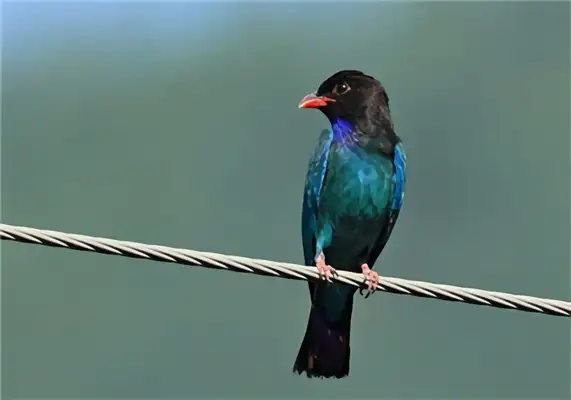
The bird, which is a target of wildlife protected by the State, sells at fairly high prices, and spring is the best time for the bird to breed. The bird does not nest, and the eggs are laid in nests or caves.
The breeding period for wild birds is March-May of each year, with one reproduction per year. Often no nest is built and eggs are laid in natural caves. The nests are high, and they usually smell like shit. Each nest lays 3-4 eggs, with white light. The eggs after the shells are made of late birds. The body is fully supported by the skeletal cord. Sit back and get your head up. The primary source of domestication is the capture of young birds aged 10-15 days. It's relatively easy to raise a family bird, either individually or in two cages, because it's a group activity in the wild, so you don't fight me when you feed. The birds feed the food.
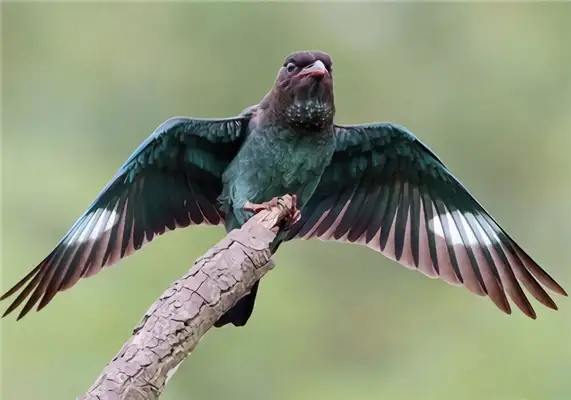
It is not too much trouble to have a farmed three-bowl bird, but it is enough to have a proper cage, a water can, a food can and a soft food can. The birds have little guts, so try not to scare them when raising them. The timid birds certainly like quiet environments, so they don't have to worry about being alone when raising one.
The temperature requirements of the bird are more stringent, he can't stand the heat and cold, and the optimal temperature should be above 15°C. So most of the bird is in the south. Households feed the birds regularly with raw meat, steamed eggs, fruit and insects and rice.