Designation: PET4920
English name: Introduction to Red-rupted Parrot Red Parrot
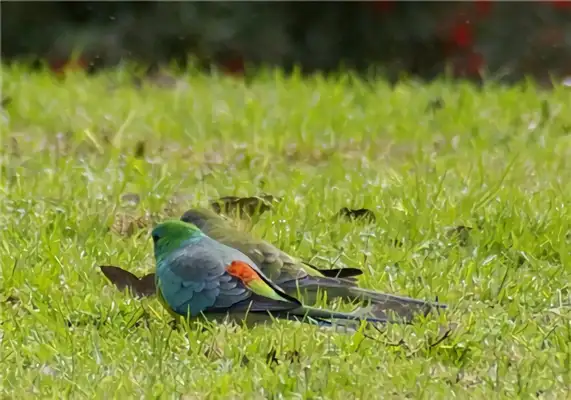
Red-rupted Parrot looks from a distance on its back like a shrinking peacock with a perfect pair of coloured feathers, mainly in the south-east of Australia.
Chinese literary name: Red waist parrot
Chinese alias: Red-ass parrot, Red-back parrot, beautiful parrot
English name: Red-rupted Parrot
Two words: Psephotus haematotus
Area: Animal
Door: vertebrate door.
Platform: Birds
It's a parrot.
Section of parrots
Family: Nautilus New Australia
Subcategories: 1
Distribution: South-East Australia, except Cooper's Creek area; north-east South Australia and south-west Queensland red parrot morphological characteristics
Parrots are different from dogs and cats, especially male and female, and many male and female parrots are difficult to distinguish, mostly by professionals. But red parrots can be identified on feathers. Let's look at the morphological features of the red parrot.
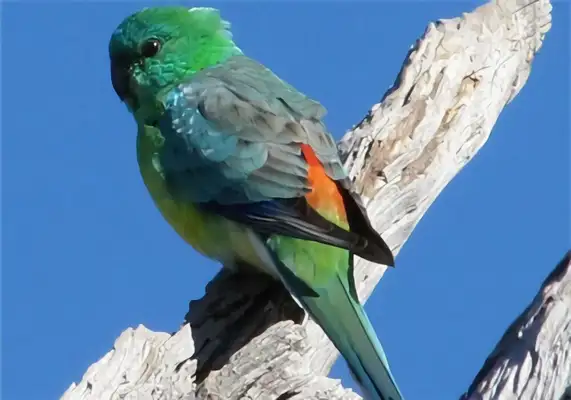
Red waist parrots are approximately 27 cm long and weigh 54 – 70 g, the head of which is green; blue on the forehead, front end of the head and lower on the cheek; yellow on the chest; visible yellow on the abdomen; white on the side of the tail; dark blue green on the neck and back; red on the lower side of the back; yellow on the side of the wings; blue purple on the feathers close to the wing bending, the internal plume and the external detection of the main plume; blue blue on the side of the tail and on the side of the wings; green on the side of the tail; white on the side of the plume; white on the side of the beak; and dark brown on the rainbow.
The female is olive grey, with green on the head, back and wings; green on the lower part of the back and above the tail; dark blue purple on the bending part of the wings, on the main flying feather and on its surrounding feathers; light blue on the middle side of the wings; white on the inside of the tail feather with light blue; and gray on the beak. Young birds are the same as adult birds, but the feathers are deeper; young males have a small number of red feathers beneath their backs, and young birds take four months to grow like birds. Red parrots raise knowledge.
Artificial parrots have a very active personality, are usually quiet and quiet, interact with people and are very popular pet parrots. The parrots should be fed regularly for their deworming. Red parrots are mainly found in open forest lands, orchards, eucalyptus bushes, savannahs, farming areas, tree-filled pastures, areas where about 1100 metres of high water flows; their tracks have been found in mangrove areas on kangaroo islands, sometimes in parks or gardens. The red parrot feeds the order.
Different parrots eat different foods, and even the same parrot tastes different. Although most parrots like grains of grain, when you feed them, you find what they prefer. What we need to know now is the food point of the red parrot.
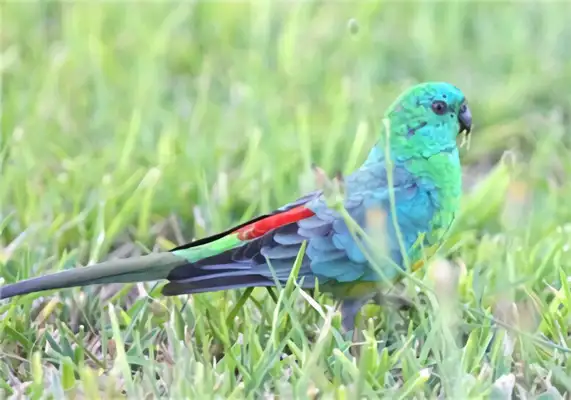
In the wild, they spend hours every day searching for food on the ground and prefer to find food under tall trees with thick shades; when flying, they are quite easy to find, but in dense forests, they are difficult to detect because the feathers of the body provide a fairly good cover; sometimes they go to the farms where they live or near the fields where they pick up falling grains; they go to the ground to drink water every morning after dawn, and then they fly to the place where they eat, and they go to water several times a day after heat or summer; when the sun is hot, they choose thick shades or bushes that are used to rest; and when they eat on the ground, they are often caught by birds or local Australian wild cats.
Red parrots feed mainly on grassland and shrub seeds, vegetation on the ground, buds of plants, berries, fruits, flowers, insects and their larvae.