Having a lovely “beloved” brings a lot of joy and joy to everyday life. But if you accidentally buy a “week dog”, it not only loses money, but it is even more painful for the owner. Because dogs like this are usually very spiritual and lively, but in most of the seven days or so there are problems and even death. In recent days, Ms. Mu, who lives in Jiangning, has asked the Zen Dynasty Group for help, claiming that the Alaskan pups, who spent $1,500 on their own purchases, have been coughing and running their noses since they came home, and have been checked at the pet hospital that the dog has been infected with a variety of viruses, such as small, ball bugs, and has not lived long.
1500 for the new "Sweet," less than five days later.
Ms. Moo told the journalist that in order to find a “dog companion” for her family's Chenari pups, on 22 June she had seen a two-month-old Alaskan pundits in a pet store on the second floor of King's House, King's House, in the Gangning District. The dog coughs, snots and diarrhea when he gets home. At first, she thought the dog was in a new environment and was going to consult at the shop. I didn't know that Ms. Mu just happened to have an argument with the boss at the door of the store, "The couple bought a sick dog here, and the owner's theory, and they called the police."
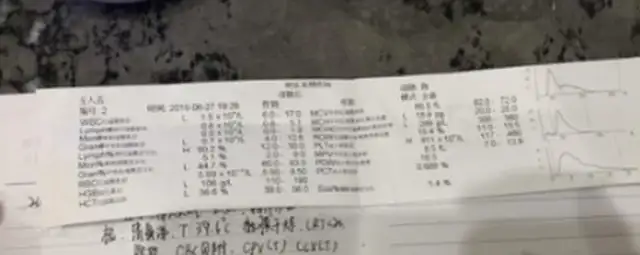
Ms. Moo suspected that she might have bought a sick dog, and on 27 June she took the dog to the pet hospital for an examination, which showed that the dog was infected with a variety of viruses, including tiny, ballworms. The doctor told her that there was limited room for healing and that the dog had little time left to survive.
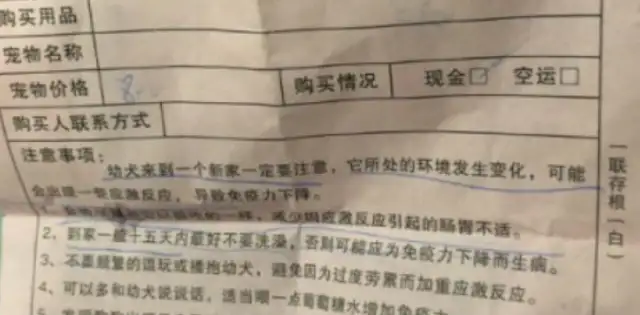
“The shopkeeper promised to be healthy, but not a sick dog.” The sad and angry woman went to her boss with the dog to ask for his return, but the boss said that the pet store would not be replaced under the pet agreement signed at the time of the purchase. “I don't know if I'm worried that they're keeping the dogs together. Ms. Moo also stated that when she returned the dog to the shop, the pet shop had not isolated Alaska from the other dog sellers and remained locked up.
A visit to a pet store: an infectious disease test to keep every dog healthy.
On 29 June, journalists found the pet shop where Ms. Mu bought the dogs, and had not entered the shop, they heard the dogs screaming. However, the sign at the door of the shop had nothing to do with the pet, and it had the words “the ancient paste”. In response, the shop staff indicated that the pet shop had opened less than a month ago, that the sign was in production and that it had not yet been possible to replace the name of the previous one.
Journalists entered the shop and observed that the pet shop had about 20 dogs for sale, each of which was held in a single cage, each of which was attached together, three rows of which were placed against the wall. The journalist did not see Ms. Moo returning her Alaskan pups.
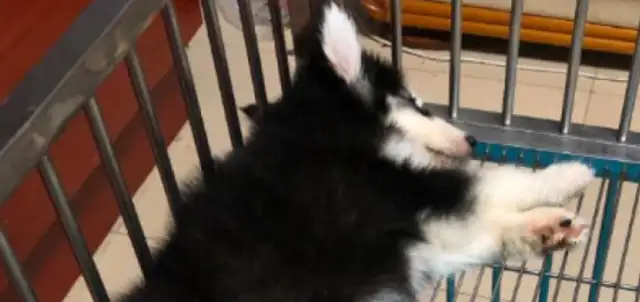
When a journalist offered to buy a dog, a staff member at the shop carried five dogs and displayed them on the fence outside the shop. Journalists observed the five dogs, all alive and well, with the exception of a bear with some visible tear marks.
One staff member described the dog sold in the shop from a dog farm in Nanjing, which was about two months old at a price of $1,000-2000 each. When the reporters asked whether the dogs were vaccinated, he said that the dogs were now vaccinated with one shot, and that the remaining two customers could either go to the pet hospital or fight in their shop, “If we do it in the shop, we can get a certificate for the vaccine with an 80-dollar imported vaccine”.
The staff member also assured that every puppy sold in the store was healthy, “We can do an on-the-spot epidemiological test, and you can check outside.” When the journalist asked what should be done if the dog bought back was sick, he said that it could be replaced in six months. “In six months' time, he has a major disease, such as a canine plague, and he can go back to the dog field for 200 bucks a day. We pay 120, the customer pays 80, and you get a new one.
Patient doctor: The virus has an incubation period.
According to Dr. Hukeygen of the Abell Pet Hospital in Nanjing, the microvirus has a latency period and the staff member's reference to “disease detection” on the spot is not very significant. "As a rule, dogs were lively when they were little. In the case of an incubated virus, its initial state would be very good, and an on-site detection of the virus would not necessarily be possible. It may be that you take the pets back for a few days, and there's no way to avoid it.”
Dr. Hukeygen also suggested that it would be preferable to purchase pets for family support and that the environment in which pet shops or dog farms are sold is more vulnerable. “Not to say how dirty the environment is, even if it is clean, but if a dog has an infectious disease, the dog's immune capacity is poor and it's a problem that can easily emerge. There are plenty of dogs in these stores, and the clerks may not be able to take them all into account.”
Doctor Hu reminds consumers that when choosing a pet dog, care must be taken to observe the nutritional state of the pet's spirit, appetite and hair: “For example, to see whether the eye is bright, whether there are tears red, the snot is clear, whether the poop is soft or not, it is best to measure the body temperature and see if there is a fever.”
Counsel: Consumer evidence is difficult
According to Jurise, the Jiangsu Point law firm, pet dogs are also, in legal terms, commodities, and the agreements entered into by both parties for the sale of pets have the force of law.
In the case of Ms. Moo, the small virus has a period of incubation, and if the pet shop is aware of the situation and sells it to the person in question, it is fraudulent and can claim a refund of three per cent under the Consumer Protection Act. It is, however, more difficult to prove whether the merchant is aware of the disease.
Counsel suggested that when consumers purchase pets, they may agree to make a down payment and keep the pets in the business for a certain period of time before taking them home, if they are healthy. The purchase is subject to a formal written contract of sale requiring the seller to provide a quarantine certificate for the purchase of pets and to obtain a timely consumption certificate. In addition, it may be agreed in the contract of sale that the seller is fully responsible for the fatal illness or even death of the pet for a period of time when the dog is purchased.
At present, Ms. Moo has indicated that she intends to sue the pet shop for settlement through legal channels.
(Source: Kiki News/Hon Yu)