No.: PET1791
English name: Home
Nature: timidity
National origin: Guinea, Liberia, Chad, Cameroon, Central African Republic
Illness: death
Life: An overview of the variety of Dutch turtles for about 50 years
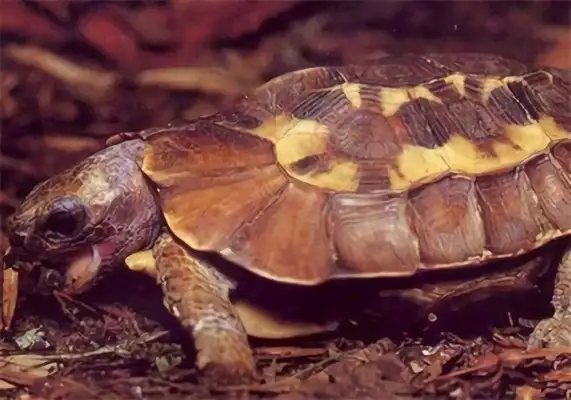
Dutch turtles are one of the more difficult species of land turtles, not because they are prone to disease, but because they are timid, so strangely violent deaths occur on Dutch turtles, and they are not easy to try.
Chinese name: Dutch turtle
Anonyms: Collapse turtles
School name: Kinixy shomeana
English name: Home 'shingebacktortoise
Context: Animals
Gate: Pipeline gate
Programme: climb
Tortoises.
Section: Marine turtles
Specimen: Hatchbackback.
Food: communion.
morphological characteristics: The maximum acetal length of 21 cm and only 1 assortment, the largest difference between the other turtles, lies in the hub joint structure at the 7th and 8th guilders on the back of the vest, which is tilted downwards from the front of the 5th vertebrate.
Lifestyle: The habitat is dominated by grasslands and moist grasslands and does not like over-humid areas.
Geographical distribution: Guinea, Liberia, Chad, Cameroon, Central African Republic
Reproduction: Eggs. Female turtles usually produce 2-4 eggs per child, lay eggs 2-3 times a year and hatch at 30 degrees of temperature for 110-130 days.
Lifestyle: Although leafy turtles are located in Africa, they do not like too much light, and a large area of shade is required for the farm. Dutch turtle morphological characteristics
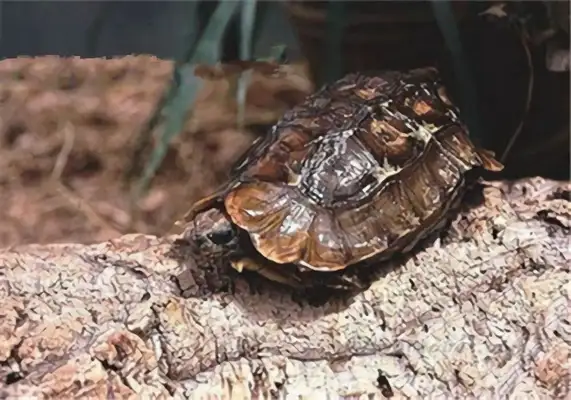
Dutch turtles, also known as Dutchback turtles, are the more common species of foldback turtles, which have similar appearances, making it difficult to distinguish. Below is a description of the classification of the folding turtle and the appearance of the leafy turtle.
I. The appearance of the Dutch turtle
Molotov cocktail vests at 15cm-20cm. The most significant difference is that the end of the back of the back of a leaf turtle is a 90-degree straight-down angle, while the back of an African turtle is a flat arc, with little attention. The distinction between females and males is still dominated by the tail, the big male and the small female. Females of the same age are slightly larger than males, usually with a maximum backnail length of 12-15 cm, while females can grow to about 20 cm.
II. Categorization of folding turtles
Fellback turtles are divided into six categories, most commonly the Dutch and bellback turtles, and other categories are African bellback turtles, as well as relatively rare leaf bell bell bell bell bell bell bells, laced bell bells bells and Natal bell bells bells. It is a common feature of all living on the African continent that the relevant sections can be reconciled in the back of the vest. It's unique for all turtles. The widest distribution and the largest number of bell-marked turtles are those representing turtle species. Knowledge of Dutch turtle care
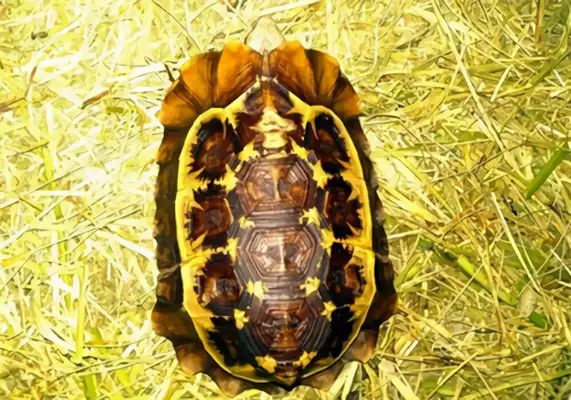
The demand for care is high in the Netherlands, which is a very challenging environment and feeder, and which is usually not sick, but often results in the death of the Netherlands, which does not explain the reason, and as the owner can only provide the best possible protection.
I. ELEMENTS FOR THE CARE OF THE HOUSE LARTER
Dutch turtles are timid and vulnerable to forced refusals, especially newly imported new turtles. Essentially, all the tortoises are not suitable for beginners and are more difficult species. Although they are spread in Africa, they do not like too much light, and a large area of shade is required for a farm. The majority of folding turtles are collected in the wild, are vulnerable to in vitro parasites and must be dewormed. It is not difficult to breed and hatch leaf turtles as long as they are able to adapt to the new environment.
II. On calcium retrieving by leaf turtles
There is a problem with crustacean malformation or calcium absorption in the Netherlands. It is therefore recommended that, in addition to artificial lighting to train individuals to establish a stable and regular biological cycle, it is desirable that individuals should also be allowed to perform sunbaths on days suitable for temperature. While allowing individuals to enjoy daylight baths, they can obtain thermal energy needed for normal digestion and biology, on the one hand, and vitamin D precursors in the body, on the other hand, which can stimulate transformation and allow individuals to fully absorb and use calcium. The environment in which the Dutch turtles live
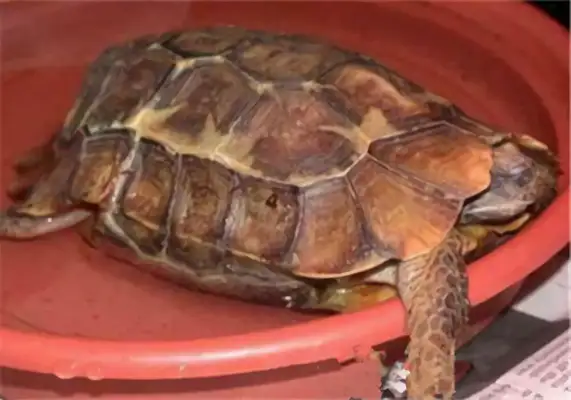
The demand for ambient temperatures and humidity is special in the Netherlands, and most wild leaf turtles live in deserts, but this is a turtle species that lives in deserts but does not like desert climates, and many owners try to restore them to their original areas of origin, often counterproductive.
I. Appropriate temperature of the Netherlands land turtle
Although living on a hot-climate African continent, Dutch turtles do not like dry and hot typical desert environments, so many lovers tend to create high-temperature dry environments with warmer and illuminating devices in their breeding processes, often to the contrary, among all folding turtle families. In addition to the warmer environment the rest of the species prefer warm and humid environments, with daytime temperatures better above 26°C when raising leafy land turtles, with hot spots at 32~34°C and at night between 20~22°C.
II. Appropriate humidity of leafy land turtles
Most folding turtles prefer wet environments, especially during the prolonged high-temperature daytime, where individuals tend to be immersed in ponds to regulate the temperature in the adhesive. It is therefore advisable to maintain a good air flow in the raising of these folding turtles to ensure that relative humidity can remain at around 75 per cent, in addition to setting impregnated basins or small ponds in the environment to allow individuals to regulate body temperature. The main point of the Dutch turtle.
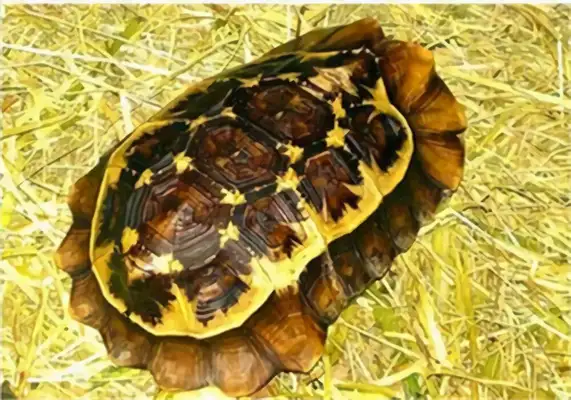
The special environmental and food requirements of the Dutch turtles, a turtle who is reluctant to eat only plants, are more likely to be a groceries turtle under field conditions, and the variety of food options available under artificially raised conditions.
I. Effort of the Dutch turtle
Although a land turtle is a land turtle, its environmental and food properties are quite different from those of other African land turtles. It is more of a red leg-like habit. It is a standard red-legged turtle who can feed high-protein foods such as snails or insects, or even within animals, in an artificially raised environment, while plants can choose wet fruit or leafy vegetables, although food is based on diversity and too monolithic foods can lead to multiple diseases and overnutrition or undernutrition.
II. Recommendations on breeding of land turtles in the Netherlands
There is a wide range of land turtles in the wild, with almost no objection to animal and plant-like foods, high demand for protein-based foods, vehicular vegetables, fruits, weeds, snails, beetles, etc. Fruit should be the staple food. They also require very high humidity, at least 80-90%. It's better to spill water sooner or later. Water basins are an indispensable element. Dutch turtles are timid and vulnerable to forced refusals, especially newly imported new turtles. Essentially, all the tortoises are not suitable for beginners and are more difficult species.