Designation: PET5393
Nationality: Cuba and its surrounding islands
Vulnerability: gastrointestinal blockage, parasitic infections
Life: About 10 years
Price: Overview of Cuban iguana species over 100
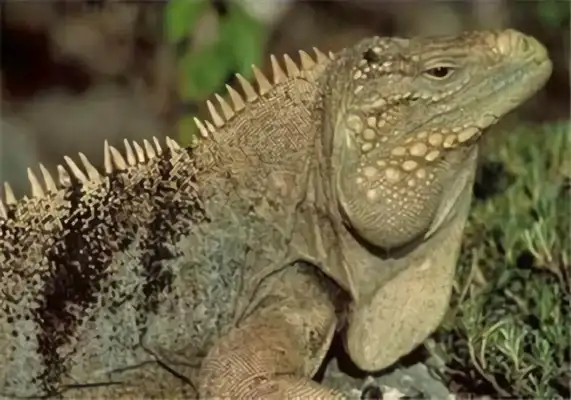
The Cuban iguana, also known as the Cuban green iguana, is the largest of its kind. Cuban iguanas are mainly located in Cuba and live in part on Puerto Rico, Little Cayman Islands and Cayman Brac.
Context: Animal Animalia
Gate: Chordata Gate
A: Reptilia
Objective: Squamata
Iguanidae
Iguana from Rock
Cuban Iguana C. Nubila
Distribution: Cuban iguana appearance in Cuba and its surrounding islands
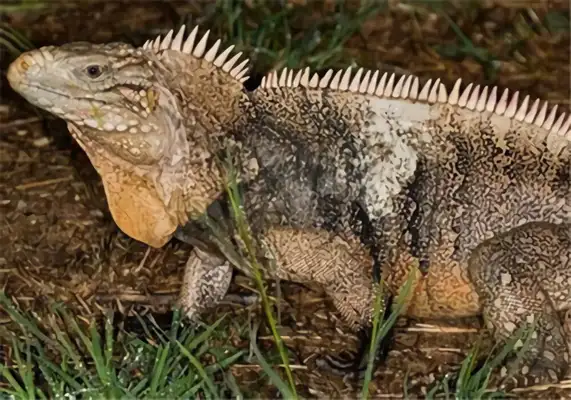
Cuban iguanas have a length of 32-54 cm, of which they have a tail length of 37-46 cm, and are significantly more male than female. Cuban iguanas prefer to live in coastal limestone areas and bushes during the day.
The skin colours of the male Cuban iguana are mostly dark gray bricks and the female skin colours are mostly green olives with dark stripes. Cuban iguanas have excellent visual and detectable shapes and mobility, and can see the wavelength of ultraviolet light, but they have poor vision in low light. Living environment of Cuban iguanas
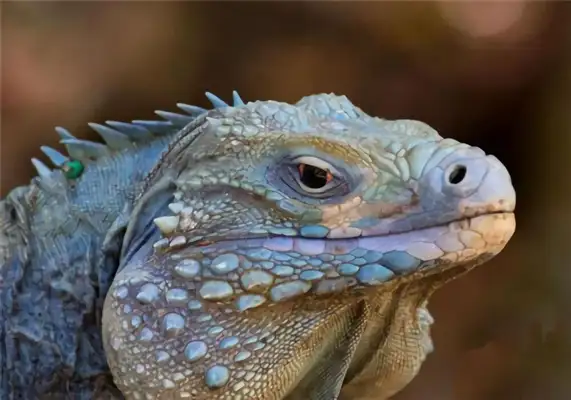
Cuban iguanas are the largest type of rock iguanas, mainly in Cuba, and can be seen in Puerto Rico, Little Cayman Islands and Cayman Brac. Due to their very large size, there is no record of artificial rearing.
Cuban iguanas live in coastal limestone areas and bushes and operate during the day. Cuban iguanas travel slowly, can run at short distances and can swim. Under-age Cuban iguanas live in groups and trees and live alone as adults. Males are highly territorial and aggressive towards invaders. Cuban iguanas are classified as vulnerable by the IUCN Red List. Cuban iguana food requirements
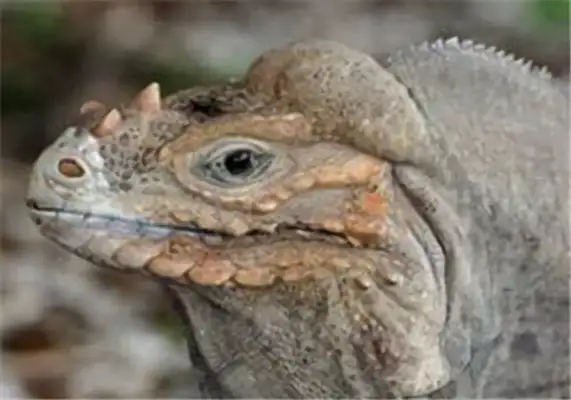
Cuban iguanas, also known as Cuba ' s green iguanas, are herbivorous and prefer to live in coastal limestone areas and bushes during the day. Because of their larger size, Cuban iguanas are slow to move, but can run at short distances.
Cuban iguanas are mainly herbivorous, including leaves, flowers and fruits, but occasionally eat birds, fish, crabs and carcasses. Under-age Cuban iguanas live in groups and trees and live alone as adults. Males are highly territorial and aggressive towards invaders.