No.: PET2006
English name: Dipsochelys dessumieri
Origin: Western Indian Ocean, Adabra Island.
Vulnerability to disease: Decay
Life: More than 100 years
Price: Overview of walrus species above 1.5 W
The name of the Adabra turtle for discovering the island of Adabra is a very large land turtle variety, and many friends of the turtles will try to raise such an expensive species, but there is also a risk that it will probably live longer than you, with a large diet and size. Adabra walrus is the price of a turtle, and the price of seedlings is above 1.5 W, but it is believed that as the number of human culture increases and market demand decreases, Ada will not remain so expensive. Adabra morphology.
Adabra has a high backnail and is round in brown or brown. Its legs are strong and support its heavy body. Adabra is like a tortoise head, long neck. High in the center of the vest, five pieces of vertebrae; four pieces of each side of the rib shield; nine pieces of each side of the visor, slightly serrated, slightly upward; one piece of the neck shield; one piece of the ass shield, larger. Four limbs big, column. The backs, limbs and tails are black and each vertebrae and rib shield has irregular black spots and skin wrinkles. Adabra has knowledge of turtle care.
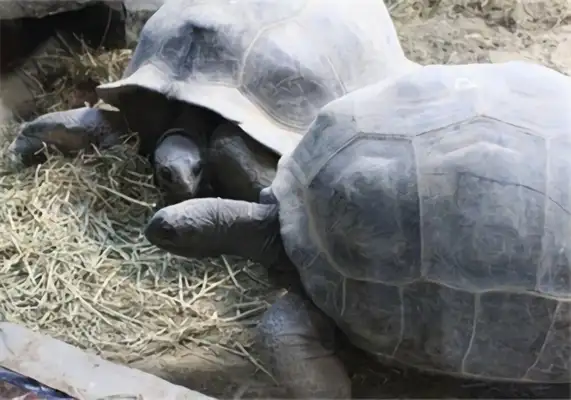
Adabra turtles are protected species, but in some regions artificially produced individuals are available for sale, which preserves both wild resources and market demand.
I. Status of wild stocks of Adabra walrus
The largest acetate in the Adabra elephant is approximately 130 cm in size, similar to the one in the Galapagos, the two largest in the world. The Adabra Islands were classified as nature reserves in 1976. There are no inhabitants on the island and no artificial facilities to damage the environment, except on the island of Adam Buraben, where there is a Natural Research Centre. Because of the scarcity of people, the Adabra turtle became the largest land turtle community in the world. And the size of the community is more than five times that of the Galapagos.
Is it illegal to raise Adabra elephant turtles?
The Adabra turtles in the market are legally imported artificially. The color of the whole body is black, with tall, round, black and bright backs, and the way is as strong as that of the king of the turtles, whose unit price remains high. The Aberdala turtle, which is artificially grown in Ada during the rest, is well adapted to an artificially grown environment, with diversified foods, with all kinds of cabbage or turtle feed, and calcium powder and gastrointestinal nutrients added to the vegetables. When he eats rich food, he is given more sun and helps him to be healthy. Adabra's living environment.
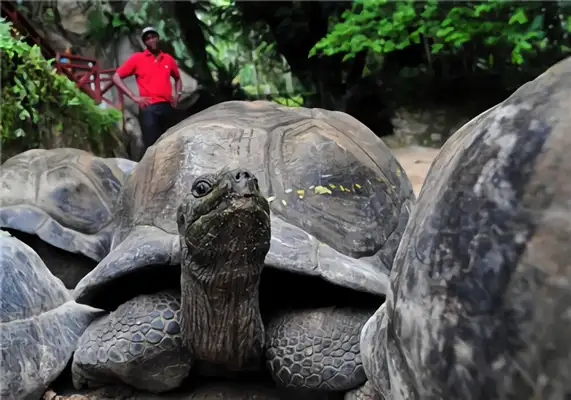
Aadabra has to ensure as much as possible that it has the same environment as it does in the field of origin. Ada can withstand drought, but in fact it prefers a wet environment. Aada needs to keep an eye on changes in ambient temperature. Aadabra does not sleep.
The rearing temperature is kept as constant as possible at 25 degrees, with the addition of a cat-and-dog heating pad to the bottom, in addition to the heating light bulb. Although they were suffering from temperatures below 15 degrees, it would have been better to have heating equipment, and UVA and UVB were using it better. The larger the environment, the better it is, the larger it is, and the higher it is, because of the rapid growth and huge size of the aphid turtles in juvenile form. Bottoms can be used as wood crumbs or trees, and even pastures, to keep the environment clean and often clean at all times. It would be preferable to have a place to rest and hide and then place a water basin for drinking and soaking.
Adabra, which is warm and cold, is particularly sensitive to temperature changes. Temperatures not only affect the metabolic speed of turtles, but also the frequency of feeding and feeding, so emphasis should be placed on temperature control in daily breeding. Temperature refers to the ambient temperature of the turtle, which is normally fed at temperatures of 19-30°C, and at seasonal exchange, the principle of less food is followed. If the temperature is suddenly reduced after feeding during the day, it should be increased in a timely manner, otherwise it is prone to indigestion of turtles, leading to gastrointestinal disease.
Aadabra turtles live on land, leaving faeces, urine and bait on the sand, so it is necessary to carry out good hygiene. The sand on the breeding grounds is disinfected with ultraviolet light (moving turtles out) or replaced in its entirety (applied to a small number of turtles) on a monthly basis and water basins, faeces and baits are cleaned up on a daily basis. The point of the Adabra turtle breeding.
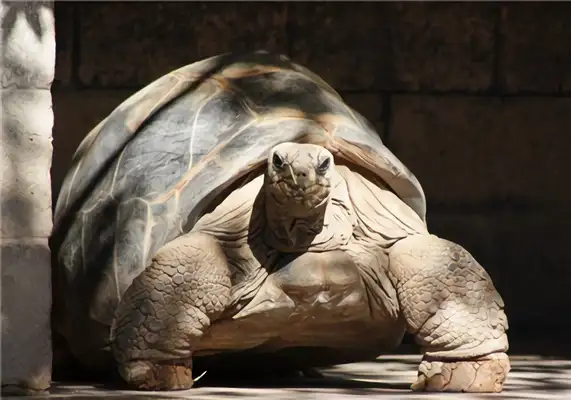
Adabra turtles are usually food-planted turtles who eat some plant branches in their natives, are facilitated by tall individuals and long necks, which guarantee higher foods, and are also a turtle that can travel long distances for food, with great perseverance.
Adabra is a herbivorous animal that eats grass, leaves and the roots of woody plants, but sometimes eats small invertebrates and rotting meat and occasionally even dead turtle bodies. Under artificial farming, Adabra turtles eat more fruit, such as apples, bananas and compressed vegetable food. As few fresh water is available to turtles for drinking only in natural habitats, they derive much of the water they need from food.
There are two main types of shells in Adabra. When the food provided in the habitat is mainly obtained on the ground, the shell on the neck is presented with a dome-shaped shape that extends downwards to the neck. When the food provided in the habitat is mainly obtained in a higher environment, the top crust will be more flat in order to facilitate the free extension of the neck to feed. In day-to-day feeding, the management and breeding of turtles requires careful, careful and careful monitoring of turtle activity, feeding, excreta and diary. Dissociate unhealthy turtles in time and separate them.