Designation: PET4517
English name: Missippi Diamondback Terrapin
Origin: United States, Florida's narrow area to eastern Louisiana
Vulnerability to disease: Decay
Life Life: A brief description of the species of Mississippi's drilled turtles for about 50 years
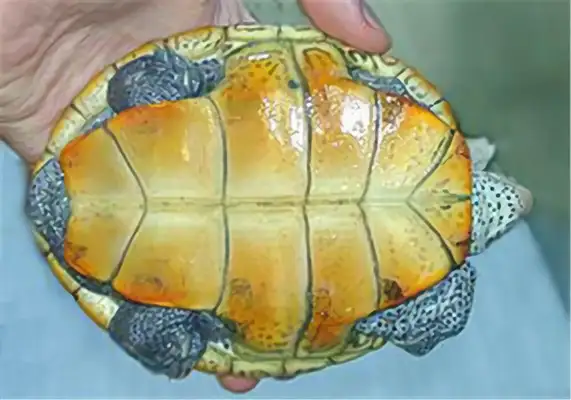
Mississippi, which is based in the United States, is a semi-aqueous turtle, with a small number of wild animals and a greater difficulty in raising them, so that there are few, less visible in the market, with high temperature requirements and hibernation at low temperatures.
Chinese literary name: Drilling turtle
Two words: peleata malaclemys terrapin pileata
English name: Missippi Diamondback Terrapin
Context: Animals
Gate: Pipeline gate
Amen: vertebrate Amen.
Programme: climb
Tortoises.
Subtitles: Curvature turtle
K: Zetoru
Yes: The diamond turtle
Cast: Mississippi Drilling Turtle
Eating: Eating in crustaceans.
Distribution: USA, Florida's narrow area to eastern Louisiana
morphological characteristics: Maximum nail length of 24 cm, lower vests, vertebrae and rib shield with co-centrifugal round wheels and ditch marks. The head is pale and has dark spots.
Classification: Disaggregated into seven sub-species, even among sub-species, with differences in colour and appearance. It's common to have a German drill, a strong drill, and a northern drill.
Lifestyle: the marshes that inhabit the sea and the sea.
Reproduction: The number and size of eggs per fetus, which were laid in April-July, varied according to place of origin. Mississippi Drill Turtle Characteristics
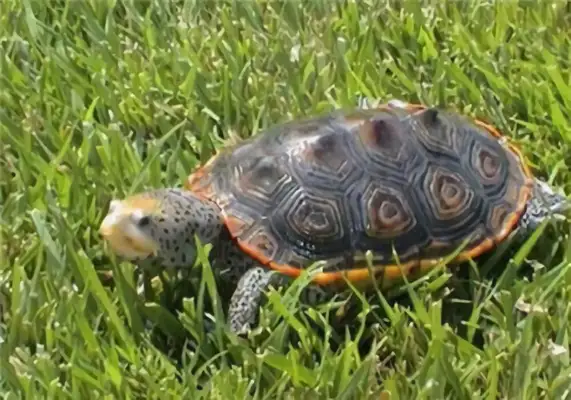
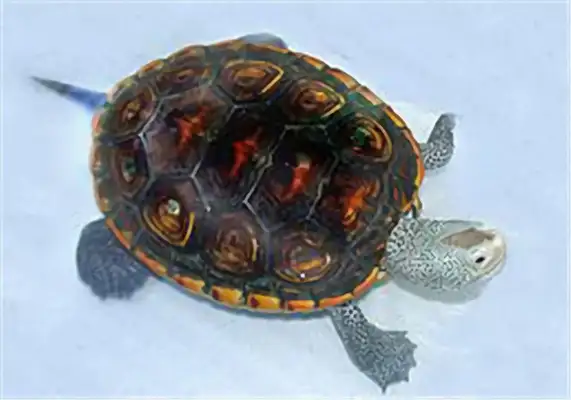
Mississippi's drilled turtles are darker than other species, with white head and limbs, black spots, non-observed backs of beryllium, orange or yellow, easier to identify and medium-sized.
The Mississippi Drill Turtle is one of the rarest species, similar to the Texan Drill Turtle's appearance, each of which is just light in a concentric circle, surrounded by a dark-coloured circle, with the outer crust similarly surrounded by a round of yellow or orange, with three beadomas being a visible “false-proof mark”, white colour, mixed head colours, different colours, and varying head sizes, not dense spots.
The back of Mississippi's drilled tortoises is straight in colour or orange yellow, with a concentric circle lined up, high ellipses, small pomegranates, a yellow-coloured outer circle, bright coats, skin-intensive stripes on the head and neck, white colours, light/dark spots on the back nails. Female turtles are large, usually 15-23 cm long, with a blunter head, short tail and thinner; males are smaller, usually with 10-14 cm long, sharper heads, long tails and thicker. Mississippi Drilling Turtle Care Knowledge
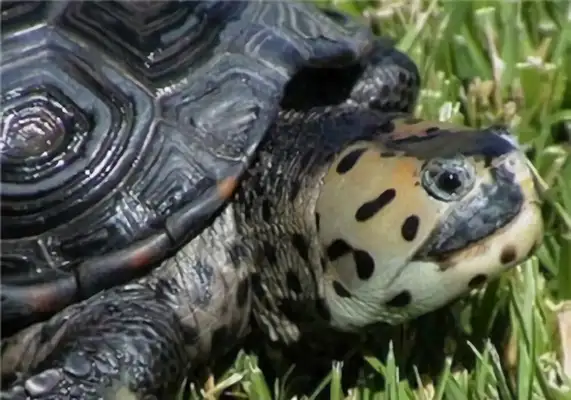
Mississippi has a relatively small number of drilling turtles, and the difficulty of raising them is greater. The Mississippi diamond turtles are not widely distributed, with only a small proportion of them detected and occasionally found in our pet markets in countries where wild diamond turtles are captured.
I. KEEPING KNOWLEDGE OF THE DRUG LOW
Drill turtles are the only species of North American turtles that can live in salty waters, so they are not small. There are different colors. Even the same sub-species may vary considerably, so it is difficult to distinguish. But the only common denominator, the drill, is the seven subspecies. They are carnal, and they eat exclusively like fish shrimp. crustaceans are particularly fond of crabs, gills, canteens, etc., so they have hard teeth to chew on. A small amount of coarse salt should be added to the water, otherwise it is prone to corrosive and contagious diseases, which must be detected in a timely manner. The use of penicillin powder to paint the disease directly has some effect.
II. Feeding of the Mississippi Drilling Turtle
Mississippi drilling turtles are generally healthier and more readily receptive to artificially raised environments than wild individuals. The Mississippi Drill Turtles live in water with salt, ranging from the marsh area near the sea to islands surrounded by pure natural seawater, and in the wild, their food consists of clams, shrimp, crabs, snails and small fish. There are also occasional plants, but mainly meat. Mississippi Drill Turtle Living Environment
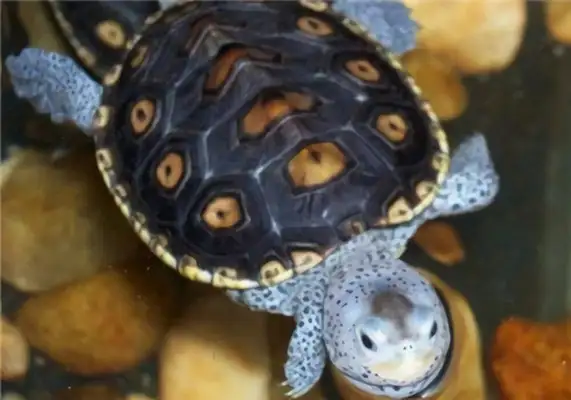
Mississippi is more environmentally demanding than a diamond-drilled turtle, with absolute perfection in terms of both water quality and temperature, light, and little difference between the environmental needs of juvenile and adult turtles.
I. Living conditions of the Mississippi Drilling Turtles
Mississippi's larvae can be raised in a 10 gallon fish tank (about 50*28*33 centimetres) with almost full water. They need a sun-burning platform and a heat source of light. It's made of a reflecting light at one of the angles of the tank. The lamp should be placed in a position where the temperature of the platform can be exposed to approximately 32 degrees Celsius. At the same time, the residence should be equipped with a full spectrum fluorescent lamp that provides UVB ultraviolet.
It was suggested that some aquatic plants, real or plastic, should be used to provide turtles with a sense of security and a place to hide. Filtering systems are important for larvae, and if water quality is not kept clean, turtles can easily have skin problems. Water temperature should remain at around 25 degrees Celsius.
II. TORTURE CONTEXT OF THE MIZIBY BETWEEN THE TREES
The male body of the Mississippi Drill Tortoise requires a minimum of 75 gallons (approximately 122*48*56 cm) and the female requires a minimum of 100 gallons (approximately 185*48*51 cm). One of the 100 gallons of water used for horses would be suitable to provide 60 cm depth and a large surface area for turtles to swim.
Large stones should be avoided in the tank because they leave cracks and cut gaps in turtle shells and are also vulnerable to rot and other fungi infections. The outdoor breeding environment, which provides protection against predators, has many advantages over indoors and should be seriously considered in the event of warm weather. It's safe to hide children's playholes in a safe area and make them an easy-to-regulate outdoor breeding ground. What's the point of the Mississippi Drill Torpedo.
Mississippi is less food-intensive than a drilled turtle, for which the food of a general water turtle is equally relevant, such as some frozen dry shrimp, and can be fed to some molluscs and shellfish, all its favorites.
I. Food selection for the Mississippi Drilling Turtle
Mississippi Drillbacks are meat-eating turtles, staple fish, shrimp, crustaceans. It is important to diversify foods by feeding small fish, both live shrimp and can normally reward canned shrimps for drying, and occasionally fresh food. Some websites abroad can see feeders who use the raspberry feed as their staple food and grow up healthy.
II. Feeding attention to the Mississippi Drilling Turtle
Not only does it pollute the quality of water, but turtles are also particularly vulnerable to disease. Feeding must be accompanied by other containers, with clean fresh water to feed, i.e. special canteens with small drills, while temperature differentials are too high to feed. Environmental temperatures vary by more than 15 degrees for various reasons, and must not be fed the same day until the temperature has returned to normal the other day. The last drug is a diet that is less fed, whatever the reasons for the stopover, such as hibernation, arrival of new turtles, early illness, etc., and must be fed less at first, and should be observed until everything is normal.