Title: PET1550
English name: Maureens annamensis
Origin: Mainly in central Viet Nam
Vulnerability: aqueous disease, white eye disease
Life: around 50 to 80 years
Price: Usually four or five pairs of turtles can reach $5,000 to $8,000. Antananarivo.
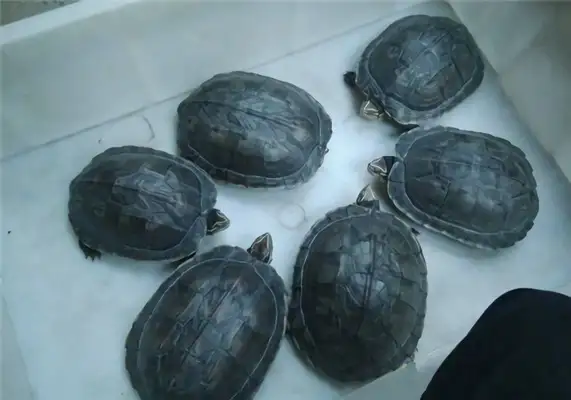
Annan turtles are a turtle that resembles yellow throats, but they are not widely distributed, and Annan turtles are moderate in size, with higher temperature requirements when raised. Annan turtles are Viet Nam-level protected animals, equivalent to Chinese pandas, so they are not common on the market and are expensive.
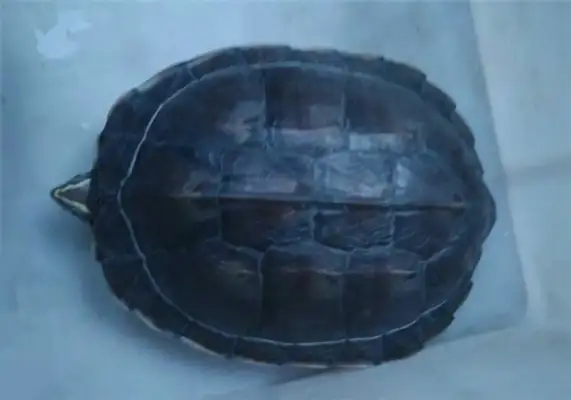
Annan turtles are more similar to yellow throat turtles. The biggest difference between the two is that the Annan turtle's back is black and brown, with two light yellow stripes on its head, which extend to the neck, and the yellow throat is brown with only one light yellow stripe on its side, which does not extend to the neck. The Annan turtles were rich in the 1930s, but they have not been discovered since 1941. However, they are sometimes found to have been sold as food and are not estimated to have been extinct from the field.
Chinese name: Annan Turtle
Alias: Vietnamese turtles
Latin name: Maureens annamensis
Biology classification: vertebrates, reptiles, turtles, turtles, Annan turtle species
Distribution: mainly in central Viet Nam
Habitat: aquatic
Lifestyle: Annan turtles have the habit of landing sunshells. The water temperature is above 22°C and about 10°C into hibernation. The Annan turtle is more active and fearless. After a certain period of time, they are able to approach people and climb with the master ' s finger.
(c) Eating: groceries, artificially raised conditions, appetite for small fish, shrimp, skinny pork, poultry internals and yellow powder worms, and occasional consumption of small amounts of bananas.
Form size: The length of the adult Annan turtle is usually 13-20 cm
Reproduction characteristics: There are fewer reports of reproductive practices in the field of Annan turtles. Under artificially raised conditions, the Annan turtles laid eggs in May and August. Females weighing 10.6 kg and 0.96 kg were spawning 1-3. The eggs are long, elliptical, weighing 10.8 g, with an egg length of 34.6 mm and a short diameter of 21.7 mm.
Difficulty to raise: harder
Hibernation: hibernation
Prices: Prices are expensive, usually up to $5,000 to $8,000 for 4 or 5 pairs of turtles. Annan Turtle Form Characteristics
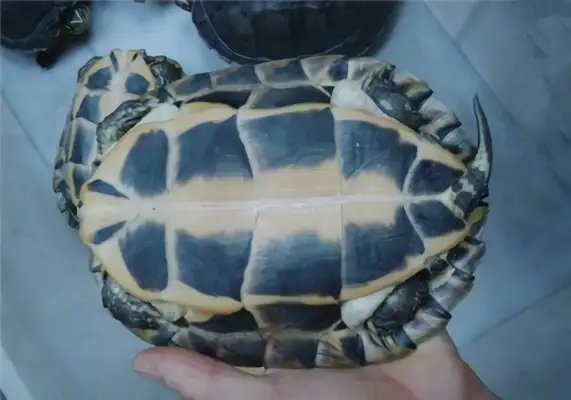
The head of the Annan turtle is dark, with three or four yellow rooms. The chest armour is yellow or orange, with black spots on each tortoise plate, brown limbs, fingers and toes. The male turtle is generally larger than the female tortoise individual and has a long back armour. The female has a wider central tortex, a flat abdomen, short tails, closer to the back edge of the excretion cavity; the male has a narrower central tortex, with a slight dimness in the centre of the abdomen, long tails, and the excrete cavity is further away from the back edge of the back. Annan Turtle Care Knowledge
Annan turtles can mate for a long time, with breeding periods of May-October each year; Guangdong has a strong spawning season between the end of April and the end of August, and June-July, when common females and males mate in water or on land. In the natural environment, mating takes place mostly at night and, under conditions of artificial breeding, often occurs during the day in a playground or pool. The eggs are laid north to south on the shore, the sand is soft, the well-protected site, and each of them is laid 1 to 3 times a year, with 4 to 9 eggs (deposit capacity), with a long elliptical shape, white ash and 10 to 20 grams of eggs. Annan Turtle Living Environment
Annan turtles are aquatic species that can be used at depths of 50 cm or 30 cm, with a water level controlled at one third of the depth of the container, or, if smaller (not exceeding 250 g), at one half of the depth of the container, with a water level that is too deep, where turtles can easily climb and flee, and where water can be used for the placement of plumes, weeds, etc., which can both cleanse water quality and be appreciated.
I. Environmental requirements of a child
It's not supposed to be too deep, usually 30 to 40 centimetres. Water is periodically exchanged during rearing, depending on the quality of water, and water pools and turtles are disinfected with potassium permanganate or bleach solution to prevent disease. For example, the size of the water in the pit is such that it can be mixed with fish and turtles, with 30 to 40 turtles per square metre, with appropriate combinations of some species of tungsten, tungsten, tungsten, and tilapia. In Guangzhou, as temperatures and water temperatures gradually declined, by December they entered the winter management phase of the turtle.
Environmental requirements for turtles
The good and bad quality of water has a direct impact on the health of turtles, who should be replaced with water three days in the spring and autumn, and should gradually change water for newly purchased turtles, i.e. for the first time in half, after a period of time, to replace the entire water in order to have an adaptation process in order to prevent turtles from reacting to running water. Water should be changed every summer and disinfected once a week. In winter, water is not usually changed. In winter, when the temperature is less than 10°C, the turtle enters a full hibernation period and at 15°C there is a creeping and feeding phenomenon, which should not be fed much, preferably to avoid disease. When the turtles hibernate, the internal water is replaced by wet sand, which allows the turtles to travel into the sand to sleep naturally. What's the point of an Annan turtle breeding?
The Annan turtle is more food-intensive, with the artificial breeding of baits such as pork, fish, shrimp, bread worms and, occasionally, bananas. In the spring and summer seasons, feeding can be done twice a week, with a relative increase in the number and frequency of feeding in the autumn, mainly with high protein baits, to promote the storage of more nutrients in turtles to meet the need for hibernation.
The hatching turtle weighs between 6.4 and 13 grams, averaging 9.75 grams. When the egg yolk is clean, it can be put in a big tub for a while. Upon entering the basin, the turtle was immersed in a 1 mg/L potassium permanganate solution. 0.2 m2 of capsules can feed 45 turtles. The water level in the basin is better than just flooding the back of the turtle. Water change once a day. Feeding is started for a week of dried chicken (duck) egg yolk or shredded pork liver, and after a week, it can be fed instead of broken fish or eels. The amount of bait delivered will be determined by the amount left by the turtle. The feeding takes place in the morning and evening.
It's not too long before the turtles turn to fish. The turtle pond is a cement pond or pond. Pre-battle turtles are immersed in 1 mg/upper potassium manganeseate solution or 5% salt water for about 10 minutes. The nutrient density is 80 ~100 m2/m2. Animal baits, such as fish, shrimp, snails and the internal organs of livestock, are fed mainly by plant-based fruit, vegetables and cereals, and can feed with protein content of around 40 per cent. Daily baiting is typically 4 ~6 % of the weight of the child turtle and 2 ~ 3 % of the weight of the turtle if combined feed, whichever is left. Feeding twice in the morning and late. The bait is on land and the remaining bait is to be removed in time. The bait should be timed, quantified, fixed, fixed.