In recent days, there have been social concerns about the killing of stray cats by owners in a small section of the city of Shanghai. It is known that there were more than 40 stray cats in the district, who were usually gathered in a central garden in the district, and one of the owners, who had been disturbed by them and put in drugs, had died and disappeared in large numbers. The matter is currently being investigated by the police.
In recent years, the treatment of stray animals has become a controversial topic for various reasons: it has been argued that the animals are poor and can feed themselves; it has been argued that they should be treated scientifically, catch birth control and then be released; and it has also been argued that the animals may carry disease and be vulnerable to injury and should be hunted...
What is the problem behind the proliferation of vagrants and how should this be addressed, and who is responsible for compensation for the injuries sustained by vagrants? On these issues, the daily Journalist of the Rule of Law has recently conducted an investigative interview.
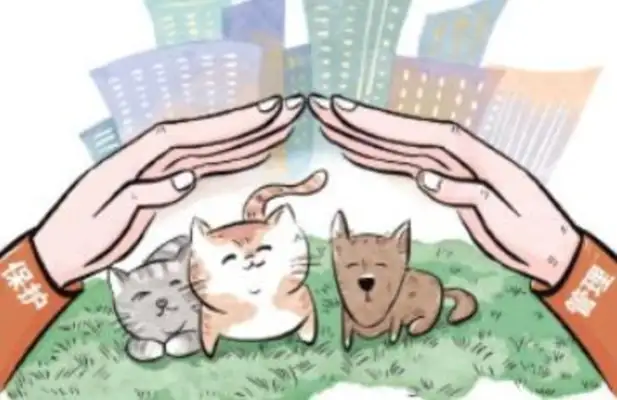
Ms. Sungdu, who lives in Sichuan, found that there have been many more stray cats and dogs in the region in the recent past, and many residents have complained about the situation. In order not to disturb the population, the property company had recently eliminated another batch. "It's cruel, but no choice. What should we do with stray animals?” Ms. Gao is helpless.
There are not a few who are as confused as Ms. Gao. Every day, a considerable number of animals are abandoned in cities, swimming in residential areas, parks, roadsides, garbage dumps and living in unsustainable drift. As a result, a number of social problems related to the ecological environment and the safety of the population, such as the carrying of disease by stray animals, the impact on the city, and the aggressive nature of these problems, have arisen. Today, this phenomenon is gaining momentum and strengthening governance is imperative.
I've lost control of the breeding.
More and more stray animals.
Ms. Lin, from Qingdao, Shandong, noted that one of her zealous aunts was feeding stray dogs on a regular basis, resulting in an increasing number of stray dogs in the community. “Most of these stray dogs are abandoned, and after eating and drinking, they begin to mate, resulting in an increase in the number of stray dogs in the community from less than 10 to more than 30 in six months.”
There was a time when more than 30 stray dogs were barking at each other in the middle of the night, and there was a number of complaints from residents. Ms. Lin found that the number of stray dogs had since begun to decrease, that some had disappeared and that others had died on the street.
In order to provide a good place for the remaining stray dogs, Ms. Lin started to provide assistance, and spent around $2,000 a month on sterilizing them, either in foster care at a help station, or helping them find adopters.
Interviews with journalists revealed that in recent years the presence of homeless animals has not been uncommon in the larger communities of life, and that in some areas there have even been groups of homeless animals.
According to the 2021 White Paper on the Chinese pet industry, in 2021 the number of stray cats was 53 million and the number of stray dogs was 40 million.
According to Chan Yafang, a professor at the Faculty of Law and Law of the University of China-South China, the main sources of drifting animals are abandonment, loss and reproduction. Owing to the absence of substantive legislation prohibiting and punishing the abandonment of pets, inadequate enforcement of canine management and the absence of any inquiry into underground breeding, cat-dog breeding and breeding are in a state of uncontrolled and disorder, and a growing flow of stray animals.
A large number of homeless animals are at risk. The Executive Director of Shanghai Valley believes that the first is the disturbance of the population and the second is the impact on social governance and the ecological environment, that “vagrant cats and dogs are prone to disease, and that non-sterilisation gives rise to a large number of puppy cats, causing ecological damage, and that some of the stray cats and dogs are sexually violent and vulnerable”.
There's a lot of vagabonds.
Who's to blame for the controversy?
An increasing number of stray animals are roaming the streets, leading to incidents such as “vagrant dog bites”. The reporter looked online and found more than 10 million copies of the results of the dog bite. In the case of wounded vagrant animals, many have chosen to kill them, which was once controversial.
In September this year, a man in Zhejiang Heining found a stray dog chasing after his son and then armed him to kill him. The police later criticized the man for his misconduct.
One of the questions left by the assault of stray animals is who is responsible? The interview found that many people had to deal with their own injuries because of the lack of owners of stray animals, but that there were exceptions, such as culpability of long-term feeders.
Shortly ago, while walking in the district, one of the families, Fong Si, was bitten by a stray dog on his right leg and spent $3243 on medical treatment. A claim filed by one of the parties against Xu, who regularly fed the stray dog, was rejected and subsequently brought to court. The court sentenced Xu to a certain amount of medical expenses for the compensation party.
This is a hot topic that has triggered online debate. Many netizens believe that the feeding of stray dogs is a manifestation of love and that it is not reasonable to take responsibility for good deeds; others believe that the feeding is done in a way that satisfies their own desires, leaving many risks, such as hygiene and safety, and that, if there is such a love, it should adopt stray dogs or send them to shelters.
According to the lawyer, Cao Hui, at Tianchengtai (Zinan) Law Office in Beijing, responsibility for abuse is assumed by the original animal breeder or administrator of an animal who, under the Civil Code, causes harm to others during abandonment or flight. Although the injured dog is a stray dog, some of the more fixed feeding practices inevitably create food dependency for the animals, thereby perpetuating their lives in the community and establishing a de facto rearing relationship with Xu. At the same time, the lack of control over stray dogs because they carry a large number of bacteria and have certain harmful properties increases the risk to the community ' s environment in intangible terms, for which he is liable. In addition, as manager of a small area, the small area property company should exercise its safety and security obligations within reasonable limits.
“If a stray cat or dog is bitten, it is recommended that the police be called at the first instance and that, if it is abandoned, the abandoned person be held liable accordingly. "A lawyer at the Light Law Office in Shanghai pays for immortality."
Scientific governance is imminent.
Harmony between humans and animals
In the context of the large number of homeless animals and the absence of legislation to refer to them, many netizens suggested the establishment of a shelter for homeless animals, where the caregiver can send sick animals to be treated and healthy animals to be adopted, while those carrying infectious diseases and untreated cats and dogs should be treated in a timely manner.
There are also suggestions for the introduction of a system of registration of stray cats and dogs, and the growing attention to the problem of stray animals and the growing number of groups working for the rescue of stray animals are indicative of the growing civility of society.
It was suggested that there should be sanctions for any arbitrary abandonment of pets and that abuse of animals should be punished in addition to moral condemnation. Prior to the introduction of the Petty Protection Act, these issues had not been addressed by standards and had become a social problem.
“The laws currently in question are primarily the Animal Vaccination Act, which provides for the control and disposal of stray dogs and cats and the prevention of the spread of the disease in the district by neighbourhood offices, commune people's committees for the coordination of people's organizations and villagers' committees. Despite the initial regulations, precision management has yet to be strengthened, and the reason why stray cats and dogs are difficult to clear is because of the large numbers of stray cats who leave their owners and begin to wander, while stray dogs are abandoned by their owners. It's not like I'm going to have to say it.
According to Chan Yafang, homeless animals are left to the grass-roots community (rural) and must be scientific, civilized and humane. She noted that, with regard to the management of stray animals, the concept of respect for life was being promoted in some places abroad, often through compulsory immunization programmes, the shelter system and TNR (capture-sterilisation-release).
“For irresponsible abandonment, legislation is essential. In the absence of national legislation, social norms such as the commune contract, the residents' pact, etc. may provide for the establishment of a public moral base, without abandonment or ill-treatment.
Journalists have noted that while some districts are more violent in dealing with vagrant animals, some are well-functioning.
According to Mr. Lin, the owner of a small area of the Anhum Saddle Mountain, there were more than 20 stray cats, mostly female cats. There are more cats-loving people in the community, and there are a lot of people who send cats for sterilization, and the property company invites pet hospital staff to arrest them, before they are released to the community after sterilization. Today, all stray cats have been sterilized in the sub-districts, which have established fixed feeding points for cats, and property companies have placed special brands to facilitate the placement of cat foods by owners.
“It is the TNR programme, which is currently the most humane and effective method of controlling the number of stray cats internationally. The programme not only prevents excessive growth of stray cats, reduces their noise and noise, but also reduces their risk of disease.” Cheong Yofa says.
In other cases, the adoption of mobile cats and dogs has been encouraged through small programmes, with some success. In the case of Shenzhen City Management and Integrated Law Enforcement, a small programme entitled “Shenzhen dog service” has been introduced in which citizens can register missing dogs, adopt stray dogs and advise on raising them. According to staff members, these stray dogs can recover an average of 500 or 600 per month and are raised and managed by the reception centres, where they are regularly examined and vaccinated.
Chan Yafang has also taken the lead in promoting the “Sea Sky Model” in the Yang Street and Sea communities in the Chandong district of Zhejiangzhou, which explores the path to a bottom-up ecological and animal civilization by nurturing community social organizations and developing community conventions. They go door to door to house to register their pets, establish community animal records and quickly find their owners if they are abandoned.
“Scientific management of vagrant animals in grass-roots communities (rural) and reduction of damage caused by vagrant animals is the long-term solution for human beings to live in harmony with animals.” Qianfang says.