Designation: PET2934
English name: Pterophyllumaltum
Origin: South America
Epidemic: vertical, white
Life: around 5 years
Price: An overview of the fairfish species of 50-190 Egypt
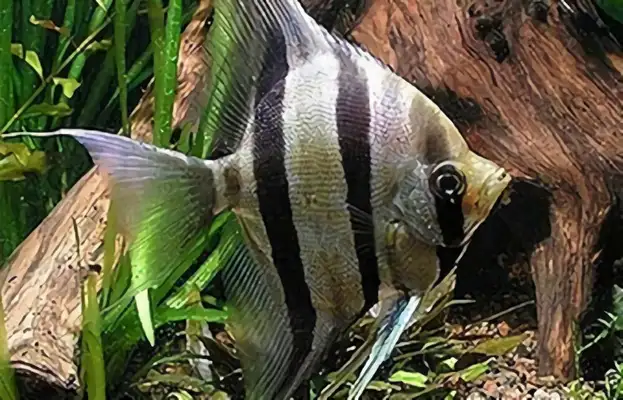
Egyptian fairyfish originates from the Orinaco River in Venezuela in South America and the Rio Orinoco basin in Colombia and its upstream tributary, Rio Atabapo. Egyptian fairyfish usually last four to five years, and the longest Egyptian fairyfish can last about eight years, and the Egyptian fairyfish that is fed by humans can be kept with you for a long time, as long as it is scientifically bred, paying attention to the observations of day-to-day breeding. Egyptian fairyfish are not a very difficult species to breed, but it is important to be careful that the water is rich in sour oxygen and the water is wide enough not to be frightened. It should be noted that Egyptian fairyfish are not suitable for mixing with small fish. The Egyptian fairyfish, when chosen, must be very careful about the stretching of back fins, tail fins, ass fins, whether broken or defective, preferably with a particularly long flag pole, which in its entirety does not look too dark.
Chinese literary name: Egyptian fairyfish
Latin name: Pterophyllumaltum
Don't call it "Fountain of the Crossbone."
Context: Animals
Gate: Pipeline gate
Amen: vertebrate Amen.
FIND: GROUND
AMA: AGAIN
Ko: The Lee Fish Section
It's a fairyfish.
Distribution area: morphological characteristics of the Egyptian god in South America
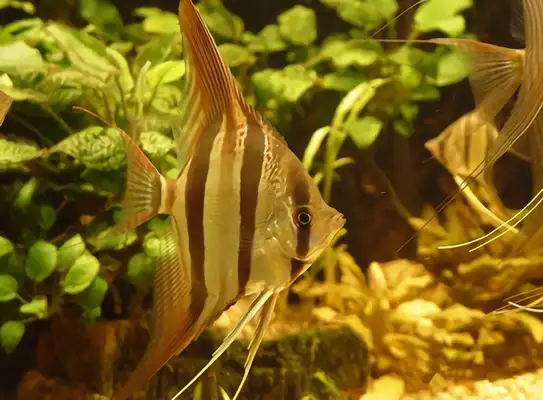
Egyptian fairyfish are among the largest species in the species of fairies, and their stripes are in deep coffee colour. However, it is also because the Egyptian fairyfish is wildly infested that it is difficult to breed artificially, and it is no longer easy for new fish friends to be successful. Egyptian fairyfish are similar in shape to fairyfish, but they are larger, 15 cm long, yellow in silver ash, yellow in the back, shallow in the abdomen and small brown spots in the back. There are four vertical black stripes on the side. Black-eyed, red-eyed. The forehead has a higher angle than the average fairyfish and thus appears to have a slightly higher mouth. Their back fins and ass fins also appear to be higher and longer than ordinary fairyfish.
When picking fish, very careful attention is paid to the length of the back fins, tail fins, ass fins, whether broken or defective, and the back fins are best matched by a particularly long flag pole, which does not look too dark in its overall colour, and sometimes too deep in colours, which means that there are parasites, such fish must not, and their attitude and shape, etc., are the focus of consideration, as can be seen clearly from the eyes of Egyptian fairies and common fairies. But it's a little bit more complicated with another close relative, commonly known as the sub-Egyptian fairy, who, according to German fish scientists, has written about his body. The number of rows is 41-47, the number of curves below the back fin is 28-29, and the number of curves above the hip is 28-32. Profile of the Egyptian fairyfish living environment
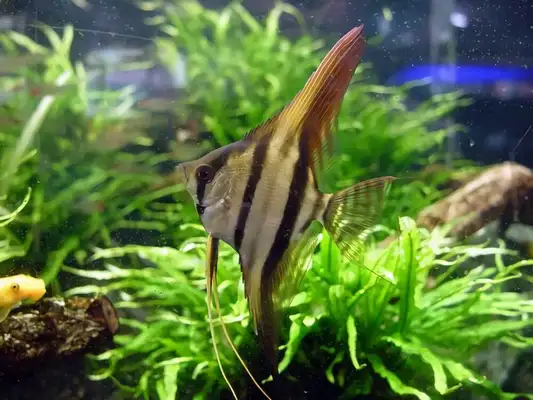
Newlywed fish friends are generally not fit to breed Egyptian fairyfish, and the success rate in breeding is low because of the difficulty of breeding and the difficulty of identifying males and females. The most growthal water temperature of the Egyptian fairfish is 24-28°C, suitable for total hardness: 1-3dGH, acid alkalinity: 5.0-5.8 per cent of the aerobic soft water, requiring the abundance of soluble oxygen in the water, the breadth of the water, the appetite for fresh baits, the preference for quiet environments, and the vulnerability to shock. It is not appropriate to mix with small fish. Like all the other fish watching, the Egyptian fairyfish that enters the jar would be better served with a little yellow medicine. Particular attention needs to be paid to the quality of water, water temperature, water exchange and mixing of Egyptian fairyfish during breeding.
I. Water quality
Water quality should remain soft water with low acidity, while pH should preferably be between 5.5 and 6.5, with total hardness at 0 ~3 °dH.
II. Water temperature
Egyptian fairyfish are more resistant to cold than other species of fairyfish, are more afraid of temperature loss, are prone to disease at temperatures below 25°C, and are best kept between 27 and 30°C.
III. Water exchange
It is desirable that the amount of water exchanged should not exceed one third of the total volume of water, and that used stored water, though adjusted to pH, soft and hard, and temperature, is used, is still subject to differences in water quality, generally referred to as “better” and can easily stimulate and cause disease to fish.
IV. CORRUPTION
The weak resistance of Egyptian fairyfish to disease should be avoided, so as to avoid the introduction of viruses from other fish species that had been infected with Egyptian fairyfish for several reasons. Egyptian fairyfish feeding technique
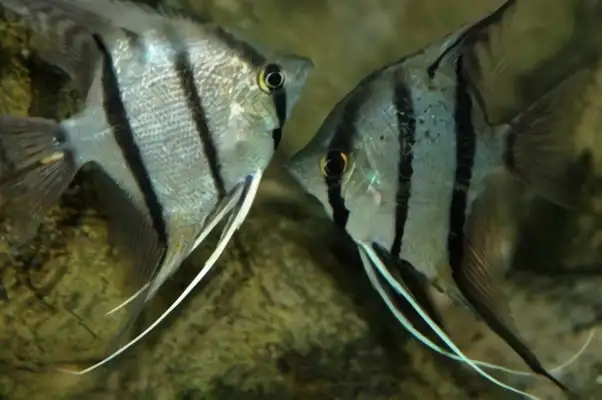
Egyptian fairyfish are particularly fond of eating live baits, which should be washed first to reduce unnecessary pathogens. Since Egyptian fairyfish were originally inhabited in the Amazon basin, they were rich in food, available for all kinds of food, and they were grocer fish. Feeding is a very important issue if you want to raise it in aquariums, for example, the Egyptian fairies, which are easy to obtain, and which make it easier to feed Egyptian fairies.
i. Refrigerated lechon: Almost all fish prefer food, but because the source is not very clean, most of them have bacteria, feeding long-term fish is prone to disease, and it is recommended that if a healthy fish is not fed, it is better not. However, it would be better to have a good bait for a fish without appetite, to feed it for a while, and to wait until the fish stabilize, before other baits are replaced.
II. Frozen shrimp: The shrimp is a crustacean living in seawater, unlike daphnia, but it's a shrimp because in semi-brackish waters, some fresh water sprouts do not have a source [because the scabs and fresh water do not survive, so there are no problems with scabies] It's rich calcium, and it's an excellent bait for a tall Egyptian fairy, but it's a good choice to use a shrunk shrimp as a staple.
Fish for burgers: It is usually an excellent feed for the seven-coloured fairies, because its ingredients are very nutritious to fish and can make them fatter. It's also a very good feed for the Egyptian fairy, but burgers can easily contaminate water quality, so a small amount of food is fed to eat immediately, without the bait. [You may not get used to it at first, you will stop feeding for one day and then you will get used to it.
In addition to the baits mentioned above, you can feed with artificial feed. Add a time-feeding device, which would be more suitable with thin slices, but don't let your favorite fish eat too well, otherwise it's very picky. One more time without too much feeding would pollute water quality. Here, I do not recommend feeding, but just add feeding at work. After all, the Egyptian fairy is so precious and so strong that it must be looked after with your care!