Designation: PET1850
English name: Missippi Map Turtle
Character: lively, stupid.
Origin: Mississippi River Basin from central to southern United States
Vulnerability to disease: decomposition
Life: About 50 years
Value: $10-20 Mississippi map turtle
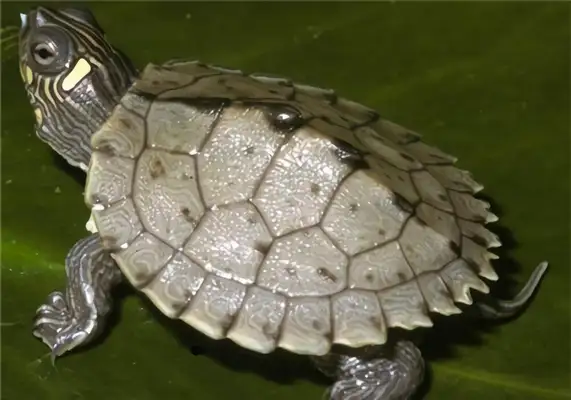
Mississippi map turtles are the most common and cheap of map turtles, and they are similar in colour to Brazilian red ear turtles, so they are usually sold together at very different prices and are popular.
Chinese literary name: Mississippi Map Turtle
English name: Missippi Map Turtle
Two words: Graptemys kohnii
Context: Animals
Gate: Pipeline gate
Programme: climb
Tortoises.
Section: marsh turtles
Yes: Map turtle
Cast: Mississippi Map Turtle
Distribution: Mississippi River Basin from central to southern United States.
Size: male 4 and female 7 and 10.
Eating: In the wild, they eat screws, clams, insects, larvae of insects, shrimp, rotting meat, and a small number of plants.
Living environment: soft bottom rivers, lakes, ponds and oxen lakes. Mississippi map turtle.
Males of 3 1/2-5” (8.9-12.7 cm); females of 6-10 cm (15.2-25.4 cm). The back-to-back olives are brown and carry dark brown spinach and interconnected ring tattoos. It is green in the abdomen and has a pattern of dark lines, which are extremely varied and complex. The yellow stripes of the neck were therefore prevented from reaching the eye. On the chin is a circular spot. White eyes are obvious, and their pupils are black. The male has long, long claws on his front feet. Mississippi map turtle.
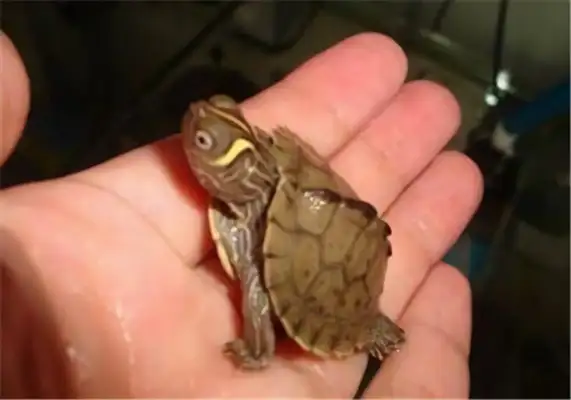
The Mississippi map turtle is a very well-bred pet turtle, many of whom are used as entry-level water turtles, and it is easy to feed Mississippi map turtles with a small box of water and small grain.
Mississippi map turtles and florist turtles are essentially the same as Brazilian turtles. By definition, life is carried out in water, so water must not be scarce. High water levels must be higher than heat sticks, which should not be allowed to surface, otherwise they would be explosive. Put some stones or tanners in the tank so that they can climb up and breathe so that the water does not choke. After using a heating bar, remember to cover the mouth of the tank with a lid or glass or a plastic sheet so as to ensure that the water and air temperatures inside the tank are similar. It's not like it's hot.
Water change in winter is a matter of attention. Heating sticks must first be removed and then taken out in 10 minutes. The turtles then put a box of water in the tank and covered it with cloth to keep it warm. Then change the water, then put the heating rod, and when the temperature rises, put the turtle in. Mississippi map turtle.
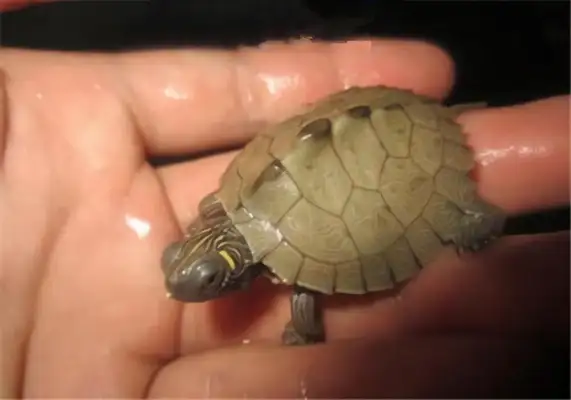
Mississippi is less environmentally demanding than map turtles, some of which can grow healthy in small glass tanks, and some of the owners will carefully adapt the environment to turtle growth, control water quality and raise density.
The Mississippi map turtles love to tan their backs, so they need a tan point, a UVB lamp above the tan point, and a hot bubble. If the water is too low, it is recommended that you use water-sink heaters. They're all swimmers, so the water should be as deep as possible in the breeding grounds.
For an adult-only Mississippi map turtle, it is recommended that at least 40 gallons (more than 55 gallons) of aquariums be required, and for a female, at least 90 gallons (more than 100 gallons). This would provide sufficient swimming areas and would allow filters to maintain good water quality. If we are to raise more Mississippi map turtles, we recommend at least 20 gallons of water tank space for every male, and at least 40 gallons for every female. Mississippi map turtle.
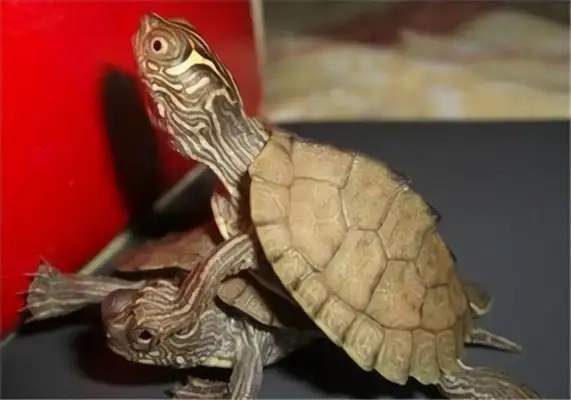
Mississippi map turtles are raised in a manner similar to Brazilian turtles and in a manner similar to the choice of food, providing turtle food during the childish stage, gradually increasing some meat food to ensure full nutrition, but this is a time for attention to water quality.
It is recommended to be formed three times a week, but tortoises can do so once a day. Mississippi's map turtles are sensitive to vision and smell, so they're good at stealing food. Under artificially raised conditions, animal baits, such as fish, pork, animal internals, americium, snails and blood insects, are preferred. The larvae, the red filaria (waterworms), the yellow powder (breadworms), the maggots, etc., cannot carry thorns and bones in order to prevent turtle injuries.
It's better to feed fresh raw meat, boiled meat hard and turtles don't eat hard. Mississippi's map turtles love shrimp. Adult turtles or elderly Mississippi map turtles eat plants such as vegetable leaves, rice, molluscs, etc. under conditions of extreme hunger, but are rare. Tortoises eat essentially meat. Mississippi map turtles have no selective feeding time and are fed day and night. There are predators in situations of hunger and there is a tendency to eat. Mississippi map turtles are easily defecated after new water changes or food, so be careful to maintain water quality.