The mirror is also an important invention in the history of humankind, where the development of human civilization has made humans more sensitive to dress-up, allowing them to see their faces directly, so that they can better adjust their makeup and caps. At the same time, we humans know very well that the people in the mirror are themselves.
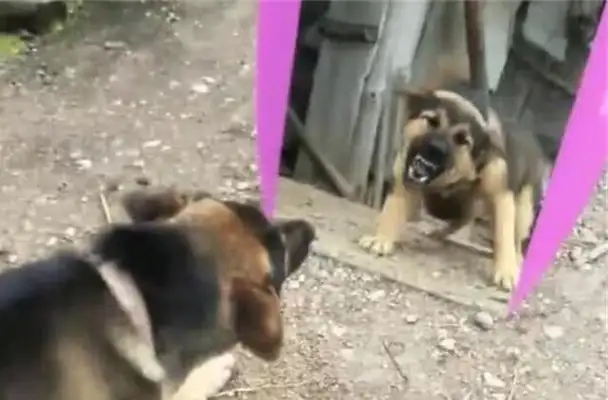
And recently there was a video on the Internet where a dog barked at a mirror by the side of the road (possibly moving furniture), and saw himself in the mirror thinking that he was one of the same kind, even rushing to look behind the mirror, and running back to the mirror and then beating and barking. Apparently, the dog was able to see himself in the mirror, but did not recognize that the dog in the mirror was himself.
Dogs, like other mammals, have developed visions. It's just that the chromosomal cell composition of the dog in the retina varies, depending on the cone cell and cone cell composition, is more sensitive to the dark and bright changes in the object and less sensitive to the colour, which gives the dog an excellent night vision. They also have clear visions in their eyes, but colour images of higher greyscales are so that some friends find their own dogs watching TV and react to their own kind.
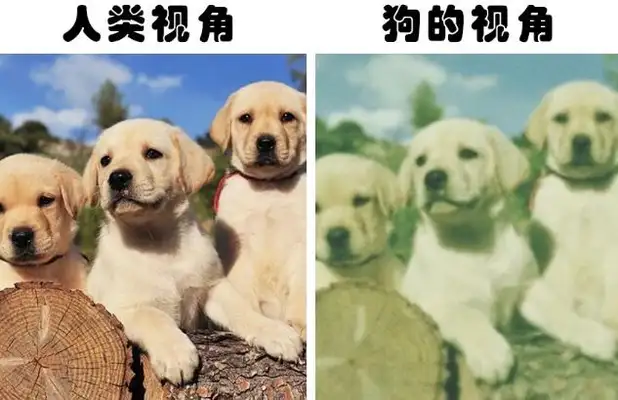
Dogs can see themselves in the mirror, but they see themselves as another individual of the same kind, not as themselves, suggesting that the dog's perception of himself is somewhat flawed. They need more information to identify themselves, like the smell. Marc Bekoff of the University of Colorado at Bordeaux did an experiment on his own dog Jethro. Five winters in a row, he wiped out Jethro and wet snow with other dogs and moved to other areas. He found Jethro finding his urine area faster than any other dog.
But in the sense of smell, it's not as direct as visual information, and it takes time to react, and in the mirror experiment, dogs do not smell the dog in the mirror, because it's itself a reflection of light. Dogs are not able to identify themselves in the mirror, indicating that they have some knowledge of themselves, but this knowledge is rather inadequate, which prevents them from passing mirror tests. Mirror testing is also used as a reference indicator for testing animal IQ.
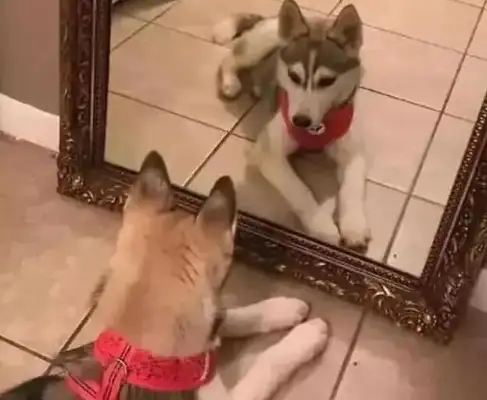
The experimental design of mirror tests is probably this way, marking a relatively hidden place on the animal, which can only be observed through the mirror, and then observe the animal's own performance after looking at the mirror, if it looks at itself after looking at the mirror and looks at itself, which means that it is itself and realizes that the image in the mirror is itself. At present, only a few of the animals tested in mirrors, such as chimpanzees, chimpanzees, some species of dolphins and beluga whales, are highly intelligent species. chimpanzees even play games with human phones.
There is, however, some controversy about mirror testing, where dogs often rely on smell to gather information from outside, and do not brush their hair as often as chimpanzees, which makes them less interested in their hair, so that some do not react much to their pet dogs with red hair, or green hair dogs, much less to mention a less visible mark on them. But they can identify themselves and their peers by smelling, and some of them leave their cubs behind.
This is also the case in the early childhood of humankind, where young children have limited knowledge of themselves, so that they often treat part of their body as something external, such as their own feet, and it is more common for a child to hold his or her own feet. It is also difficult to recognize yourself in the mirror when you are a child, but you can “interact” with yourself in the mirror, for example by beating your hands and playing with yourself in the mirror. As they grow older, they are able to notice the uniqueness of their appearance and recognize themselves in the mirror.
In more complex experiments, such as dripping of dog urine in cans and other odourful substances, dogs can still identify which cans have their own urine, but it takes more time to get interested in the fresh smell. That means they recognize their urine and they recognize other scents, just like chimpanzees can recognize themselves in the mirror. If humans do such experiments, they can't find anything, because humans are heavily reliant on vision and about 85 per cent of information is visualized.
These phenomena suggest that different animals rely on different types of information to identify the surrounding world, which does not yet serve as a measure of whether or not they are self-conscious, but can affect the behaviour of animals, who are generally aware of their uniqueness but need to do so in different ways.