Designation: PET6056
English name: Fneled Lizard, Fnelled Dragon
Nature: Wing and live
Vulnerability: cartilage
Life: Overview of umbrella iguana species for about 15 years
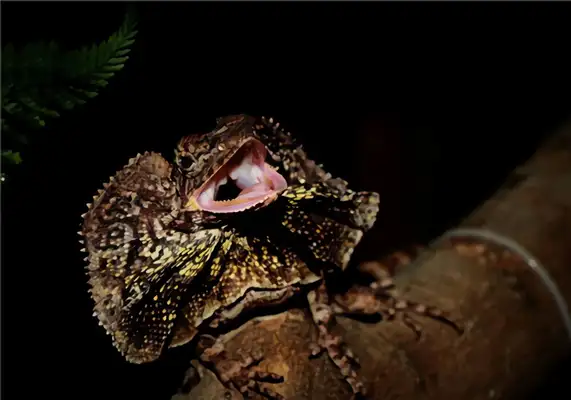
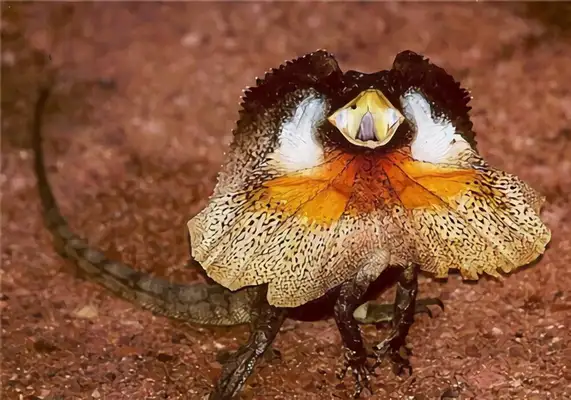
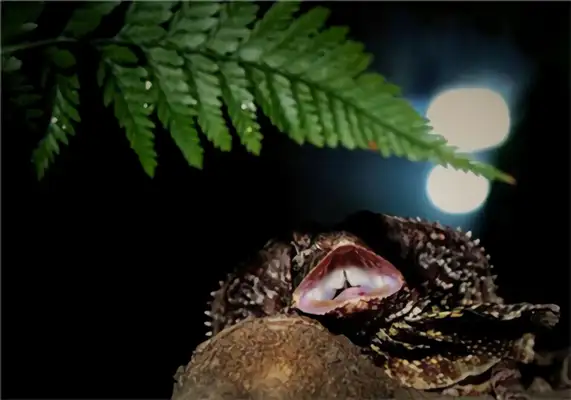
Fnlled Lizard, Fnelled Dragon, by definition, looks like an umbrella with a thin tail like an umbrella handle. This form of appearance can only be immediately opened when there is tension or when there is an external enemy, with an open mouth and a full deterrent.
It is not easy to distinguish females from males, especially at the larvae stage, and in general the adult male form is much larger than the female, the head and the cervical umbrella are larger, the tails are longer, the faucet cavity is condensed and the color is more visible and mild. Mainly in northern Australia, dry grasslands, bushes and forests in southern New Guinea.
Chinese literary name:
English name: Fnlled Lizard, Fnelled Dragon
Area: Animal
Door: vertebrate door.
Scramble
I've got eyes.
Iguana!
C: Iguana Section
The cape iguana.
Cast: cape iguana
Distribution: Northern Australia, dry savannah, shrubbery and typhus in forests
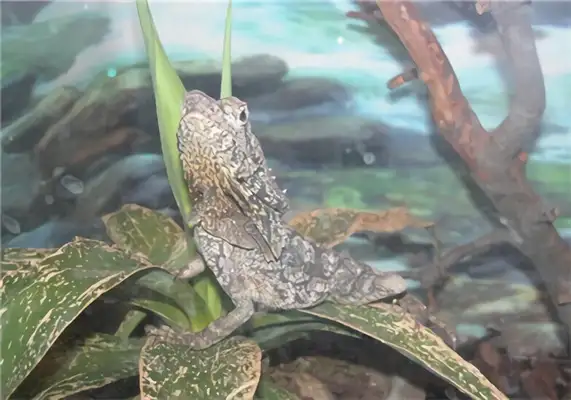
The iguana is of Australian origin and is described by experts as one of the most representative lizards in Australia, with a size of approximately 80 cm. The most significant feature of this lizard is that when threatened, a large umbrella cape is erected and its mouth is opened with physical postures, the main purpose of which is to protect itself from harm.
With a long and thin tail, the tail alone accounts for two thirds of the length, with an umbrella collar cortex around the neck supported by a tongue bone. The larvae's circle is small and grows as they grow. The large and medium-sized lizards are black, brown or brown, with dark, irregular stripes on their backs and sides, while the colour of the umbrella cape is bright, mostly regional. It is not easy to distinguish females from males, especially at the larvae stage, and in general the adult male form is much larger than the female, the head and the cervical umbrella are larger, the tails are longer, the faucet cavity is condensed and the color is more visible and mild. Paraguana living environment
For a reptile to survive in the wild, the iguanas are mainly found in trees. For a reptile, it is certainly necessary to have the basic material they need in the context of a home-breeding environment, and for the iguanas to adapt to the temperature of the home-breeding environment and the temperature of the hot spots to be strictly controlled. So let's see what the paraguana's requirements are for living conditions.
As iguanas are tree-dwelling iguanas, it is necessary to select higher containers on the rearing containers, which are most recommended at a height of three times the size of the individual and four times the width of the container, depending on the width of the vessel, so that the spatial size of the adult iguanas is striking, and the bottom selection is more flexible. It is possible to use reptile sands, pellets, white mats, sterile beds, earth-brilling and even old newspapers. If softer materials (e.g. considering pregnant females) are needed, wood from softwoods are recommended for domestic use abroad, not only for softer materials but also for better warmer effects.
You can plant some rocks in the breeding space, which I think is the most beautiful and natural of them, and it's easy to get there; not only can the rocks increase the beauty of the environment, but they can also help the lizards to smooth their skins, and they can draw heat through warmer light exposures to improve the greenhouse effect; yet, for a lively and crawling paragus, the leaf-watching plant avoids planting a set, as it may be destroyed in a short period of time, otherwise the woody plants that are larger and not harmful to reptiles are selected.
If large wood plants are planted in space, it is not necessary to plant trees, which are indispensable for tree-dwelling lizards, but also for water basins, which require relatively high environmental humidity, which, in addition to facilitating their water consumption, is conducive to maintaining environmental moisture and does not require shelter, as iguanas are usually found on trees.
It is recommended that ambient temperatures be set at around 21-28°C and that hot spot temperatures be maintained at 38°C, preferably not too bright, with the use of ceramic heaters combined with UVB lamps, or with the choice of fluorescent or full-spectral lamps to provide simple lighting, but such lamps cannot produce the required UV mass, so that natural sunlight must be provided on a regular basis to help umbrellas break out the required vitamin D3. Iguana breeding knowledge
The iguanas are not only easy to breed, but also very gentle and lively. In addition to the extraordinary appearance of umbrella iguanas, there is also the advantage that some sperms with male iguanas can survive in female iguanas for several years and can produce fertilized eggs for several years after mating. Paraguanas are the few species of lizards that are best suited to be pets. However, there is still a struggle between the same species, so it is important to be careful about the shape of the hybrid. It is of a daily nature, so that the rearing box is primarily high and the base material can be scrapped with paper skin, with dry branches placed to climb. Iguana feeding order.
In addition to the environmental problems of raising paragus, domestication and diet are considered by many parents. The survival of umbrella iguanas is mainly based on the consumption of insects, followed by small animals such as cricket, bread worms and cockroaches. In the case of family breeding, the option of buying or even catching can be used to meet the food requirements of the paragus.
The size of the iguanas is large and mainly meat-based, and their diet is wide. They can be provided in terms of meat, such as crickets, bread worms, super-precipital worms, cockroaches, etc. They can be provided by big people with milk rats and mice; sometimes the iguanas also eat vegetable foods, such as green leaves, beans and certain fruits, and some individuals can even accept fish shrimp meat or artificial feed, and friends interested in providing diversified foods may wish to try it.