Designation: PET1426
English name: Trinidad Chevron Tarantula
Vulnerability: eating diseases
Life: Overview of tiger tail varieties 4-5 years
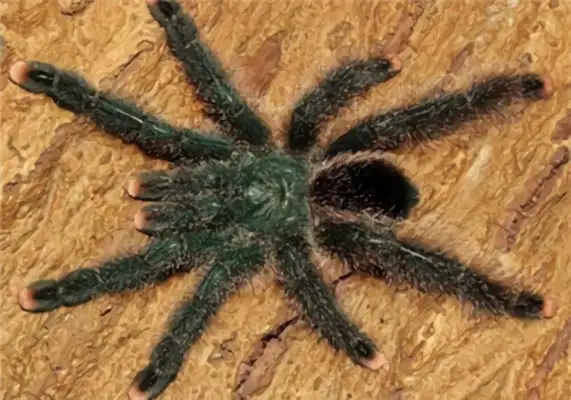
Trinidad Chevron Tarantula, alias Trinidadian, has a complex history, originating in the Trinidad and Tobago rainforest, and this species of tree habitats from the Caribbean island countries is a classic category that was introduced earlier to pets for bird spiders. They're all olive green, red at the tip of each leg, and black at the abdomen, which is the name of the tiger tail.
Chinese literary name: Chirida Tigertail
Chinese aliases: thousands of lidars
English name: Trinidad Chevron Tarantula
Two by Psalmopoeus Cambridgei
Area: Animal
Growth: Rapid
Distribution: Mileda (i.e. Trinidad and Tobago) Tiger tailing characteristics
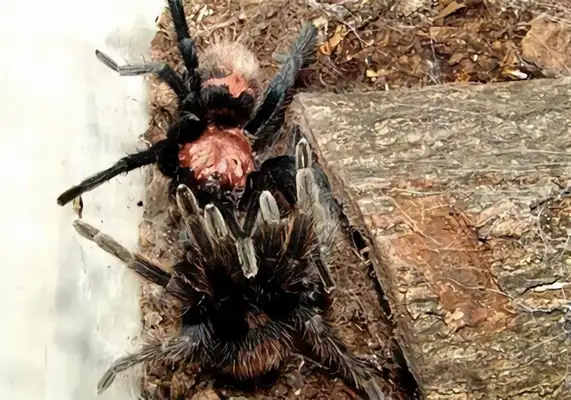
The adult Trinidad Tiger Tail spiders can grow 17-18+cm in size, and they grow very fast, and they usually grow into adult shapes in about two years compared to other spiders.
Like their own relatives in Asia, Selenocosmiinae, the rain forest, in general, is quite aggressive for individuals of 6 to 7 cm or above, whose toxicity is also high among many pets. Their young children are similar to the Venezuelan sun tigers of their own accord, and there are visible “tiger stripes” on their abdomen. Trinidad and Tobago's tiger tail environment
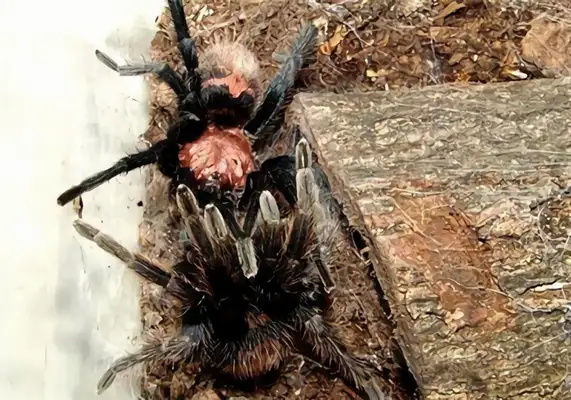
A macaw with potential.
Chirida tiger-tailed spiders have an aggressive nature and are very agile, and they are not suitable for the species chosen by a new hand-breeding pets. A lot of players like to try new breeds to feed, but whatever spiders do first is to set them up.
Gives a higher space to a tiger-tailed spider in Trinidad because he is a tree spider who is good at climbing trees, living on them, nesting in them and giving him a small plate of water. The larvae and the love of digging holes should be properly pressed when raising the larvae. For temperature 26-28°C and humidity 85%, wet peat, coconut brick, clay is recommended as the base. Care should be taken to maintain a certain humidity on the stockbreeds and to provide a piece of bark for them to hide. If they get scared, they'll run to the nest, instead of spilling out the rearing box and disappearing in front of you. Chirida Tiger-tailing knowledge
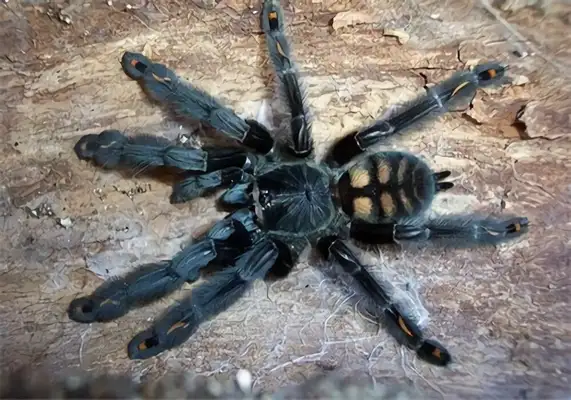
The ability to escape like all the other spiders, especially young spiders like children, is more fun and you can't hide. Such spiders are more edible, resistant to hunger, resilient and easy to raise.
A thousand-rida tiger Zhu needs only three basic conditions for food, moisture and shelter to grow, spit and reproduce. There is also a need for regular spraying for spiders during rearing.
How often do you spray water?
As far as my breeding experience is concerned, I don't use water sprayers to spray water, but instead add water to one corner of the rearing box, wetting the soil, with three advantages: first, spiders who are not frightened by water spraying, and second, the rearing box will have dryer and wetter soil, which will be available to spiders, but you can't do it with a culturer, and third, the humidity in the rearing box will not change too much in a short time.