No.: PET3217
Epidemic diseases: anchor disease, aqueous disease, albino disease
Life: 5-6 years profile of stone frog species
Stone frogs grow at a very fast rate and have a very high value for food. They are believed to have been eaten by a large number of people. They are rich in nutrients, fine in flesh, delicious in taste and have the effect of supplementing themselves. The provinces of Zhejiang, Anhui, Jiangxi and Fujian are China's largest food users. The stone frogs, who have been heavily hunted, are now one of the priority wildlife protections in Jiangxi and Anhui provinces. Stone frogs are also widely cultivated for food. Stone frog morphology.
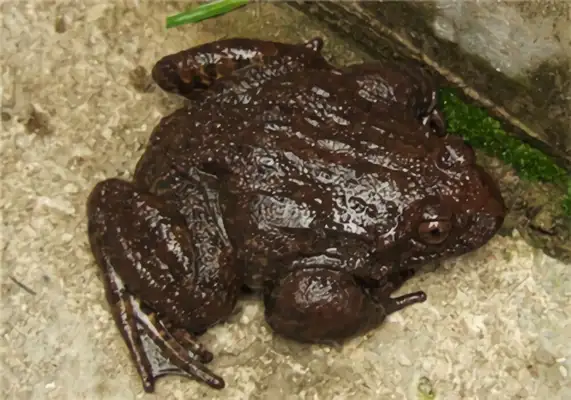
A natural weakness of stone frogs is their poor vision, so they catch only live bait when they eat, and they eat at night, usually in caves during the day, so many people choose to catch them at night.
The stone frogs grow in strips, have thick tails, dark yellow colours, and spread small black stars, with black “V” trajectories on the back of their bodies and tails, snapping kisses, strong adsorbency, large and strong. Frogs are typically 10-13 cm long, weighing 150-250 g or more and can be larger than 500 g, have rough skins of stone frogs, have dark gray back skins, have many oils on them, have broad and flat heads, have rounded kisses, highlight the lower lids, have almost equal distances between the two eyes, have more males than females in the same age, have very strong front limbs in mature male frogs, have thorny pelvis in the chest, have light yellow in the stomach, have no thorns in the female chest, and have white abdomen. Stone frog living environment
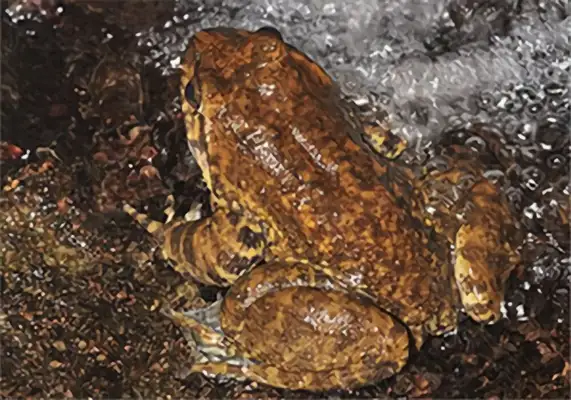
Stone frogs are reptiles that are resistant to cold and heat, with suitable temperatures ranging from 15 to 25°C, with abnormalities and even death occurring in excess of water temperature, and in cold winters they fall to hibernate and, if water temperatures are higher than 12°C, some of them will be in or out of the cave. So how do the stone frogs raised by their families set them up?
The good and bad of the environment directly affect the growth and reproduction of stone frogs. Frog ponds are not subject to location restrictions. In general, breeding grounds are suitable where water quality is good, drainage is convenient, the environment is quiet, the winter and summer is cold, drought is free, management is easy, and flight is protected.
Stone frogs are the most frequent, consuming and growing seasons, with no regulation of body temperature and its ability to keep warm. Temperatures change with external temperature, with the appropriate growth temperature ranging from 18 to 26°C, with the highest temperature ranging from 24 to 25°C. The spring and autumn seasons are the most frequent, feeding and growing seasons. The months of April to June and August to September are the best periods for the reproduction of future generations, when water temperatures exceed 30°C and when dietary activity is reduced. When water temperatures fall to 12°C, frog metabolism is weak, and when it enters hibernation, frogs close their eyes, do not eat, rely on fat bodies to sustain life activity, do not respond to external stimulation, and when the water warms up to the right temperature, the frog becomes active again. The death toll of a stone frog is around 31°C and varies from season to season. Stone frogs can also endure a long-term 0°C environment, but the water cannot freeze, and the lack of oxygen in the ice leads to death.
Frog ponds can be built indoors or outdoors, with ventilation, coolness, no direct light from the sun, cascading outdoors, low-intensity, simple indoors, courtyards or out-of-the-field ponds, all good places for stone frogs.
Artificial stone frogs tend to be well nourished and pooled in such a way as to conform as far as possible to the lifestyle of the frogs, to the conditions of water, land, caves and feeding, to create a favourable living environment and to facilitate the management of rearing.
Frog pool.
The size of the pool is generally from 4 to 10 square metres, with an area of 0.8 metres high, with a depth of 0.1 to 0.15 metres deep inside the pool, with a surface area of 3 per cent, with a shelter of 3 pebbles, with larger pebbles laid on the bottom of the pool, with a dark light and 80 per cent wetness, creating an ideal ecological environment in which the stone frogs can live, contributing to their growth and development, thus increasing the rate of spawning and fertilization.
Incubator pool
The area is 1 square metre, the pool is 0.5 metres high, the water is 15 to 20 centimetres deep, the water quality is fresh, pH6 to 8 and sufficient oxygen is sufficient. It can also be replaced by a large, elliptical face basin.
Tung Ji.
The size is 3 to 4 square metres, the pool is 0.8 metres high, the water depth is 3 to 10 centimetres deep, pH6 to 7, and the surface is 2 :1 and it is better to keep a herd of the same size per pool.
Frog Pond.
It covers an area of 4 to 6 square metres, is 0.8 metres high, has a water depth of 10 to 15 centimetres, has a surface of 2 to 1 centimetres, has a small stone of 3 to 5 centimetres laid inside it, has a rock den, has good water quality, and has a pH value of 6 to 7.5.
Froggy ponds are well shaped in rectangular shape, with a slightly tilted bottom, draining water from the pool at its lowest level, with water, land, caves, table, etc. inside the pool, and a net cover on its mouth in order to prevent the flight of the frogs and hostile biological attacks. Plumbs are installed on the upper side of the pool near the bottom of the net. The new ponds cannot be used immediately, they are disinfected with disinfection (de-alkalinity) and are immersed in water many times to feed frogs. Stone frogs raise knowledge
Stonefrogs have always been a delicious meal on the table, and more importantly, they have been classified as state protected animals. Artificial reproduction is therefore key to the successful cultivation of stone frogs, both to meet their demands and to protect the growing number of them in our country. So where should we start with the artificially produced stone frog? The Stone Frog Feeder.
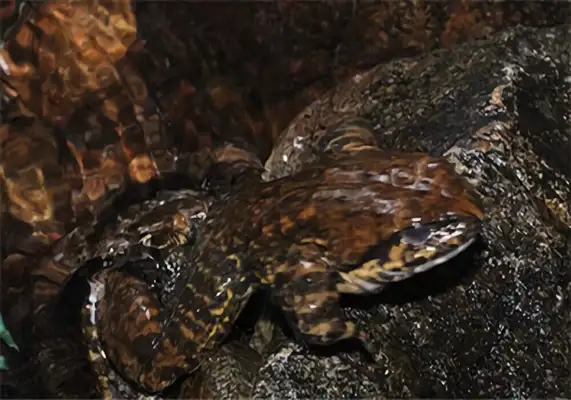
Stone frogs eat mainly animal foods such as mosquitoes, insects, etc. Stone frogs usually come out at night for food and sleep in caves during the day (indigestion). Many people wonder why stone frogs like to hunt at night, and we'll go down to the main reasons and their food requirements.
The stone frog, whose eyesight is poor, can only feed live live baits, sending dead food to its mouth and not taking it. When a food target is found, it jumps up and goes straight to the target, throws out its tongue with slime and grabs the food in its mouth.
Incubation of the membranes, which hatched in four to five days, they began to feed when they were consumed. Anatomically observed in the intestines are plant shredding, small cyclic algae, filamental algae, water sponge, moss, grassworms, fibrous caterpillars, daphnia, rotor worms and silicate algae, algae, algae and algae. Some high protein baits, such as yolk, soy milk and fish powder, can be fed to artificial breeding.
Food for stone frogs is mainly mosquitoes, small insects and insect larvae. By the time it turns into a frog, its food is wide-ranging, with anatomical observations of 47 frogs and 57 foods found in the stomach and intestines. For example, insects, beetles, spiders, horses, snails, snails, snails, shrimps, crabs, fish, sands, earthworms, young snakes, small birds, etc.