Designation: PET4811
English name: Jewel Cichlid
National origin: Ghana, Congo River in Togo, forest streams in the Nile basin Medium
Vulnerability to diseases: fish plague, white cloud disease, skin disease, rotting tail disease, etc.
Life: Overview of ruby fish species 6-7 years
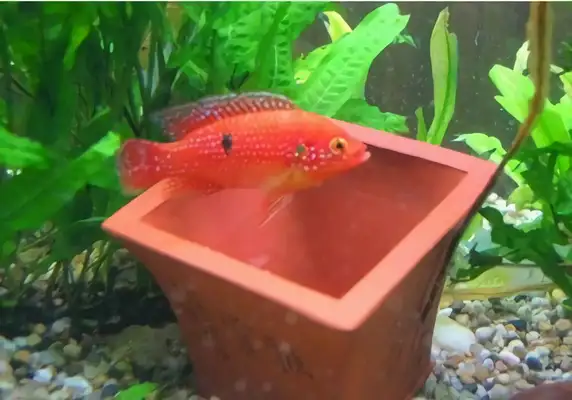
ruby fish are colorful, especially females during reproduction. In addition to being used as a reward, ruby fish are raised as experimental animals, and ruby fish are violent and highly geographical in nature and must be treated as ruby fish.
Official Chinese name: Double-Standing Fish
English name: Jewel Cichlid
Latin name: Hemichomisbimaculatus, Gill
Classic: Tsimakako (also known as Liao Fish, Fish hatching, Cichlidae)
Origin: Forest streams in Ghana, Congo River in Togo, Nile Basin Medium
Length: physical characteristics of ruby fish 12-15 cm
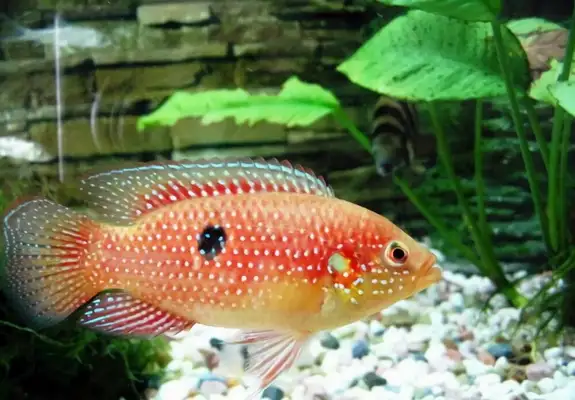
The body of ruby fish is strong and easy to breed, but since ruby fish have a temperamental character, are prone to attack other tropical fish and are likely to swallow other species, they are kept alone as much as possible.
The ruby fish are swirling, slightly flat, tail fins are fanned and the rear edge is flat; it can be 16 cm long. The red edges of the ruby fish are red in their backs, red in their abdomen, red in their back fins, hips and tail fins, with red and blue little spots all over their bodies, like stones placed on their bodies, and they are spectacular, one of the famous fish viewers. The female body of ruby fish, up to about 10 cm, can be used for reproduction, and the male fish individual is smaller. The colour of the body during reproduction has become more attractive, especially for females. ruby fish breeding environment
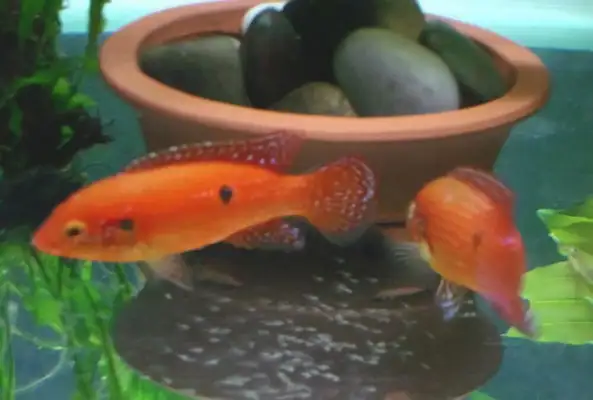
In order to raise ruby fish, it is recommended that they not be raised in a watercage tank. Because ruby fish have a habit of excavating, it is recommended that the bottom sand should be used for special sands, and that the grass planted should be very careful to avoid being dug out by ruby fish.
Like most cynics, it reproduces with its own pairs and displays strong child-friendly behaviour. The best conditions for reproduction are pH 7.0 to 7.2, hard 7-9, water temperature 25 to 28°C. Like laying eggs on smooth stones or smooth flats. ruby fish do not require high water quality, are more appropriate for neutral water quality, and weak acidity and weak alkaline water quality are not. It's not very difficult to breed this fish. Unlike other African herds, these fish are not hatched, but breed in an open manner. In breeding, the male cleans a bed on a smooth rock and guides the female to lay eggs. The eggs were rounded up in approximately 250-300 pieces. They tend to fish eggs in about three days, hatch small fish, and move freely after five to six days. The fish will always look after them and know that the young fish are free to eat. The ruby fish.
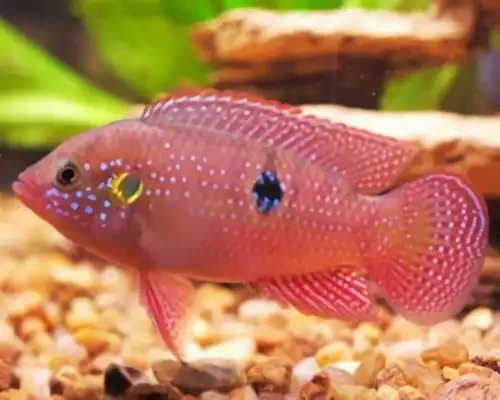
The ruby fish consumes a relatively large amount of food and is an easy breed. It is worth noting that since ruby fish have a rough temper and prefer to eat juvenile fish, it is recommended that they be raised separately.
ruby fish are strong, fed, easy to feed, have no strict requirements for water quality, prefer neutral water, and grow at temperatures above 20°C. A ruby fish eats nothing but animal bait. After a smooth trip, the fish use egg yolk as an opening bait, and five days after growing, gradually join the feed-coated powder to start taming. The method of edible domestication is to mix egg yolk with water for feed into a slurry paste, with the weight ratio of egg yolk to feed powder on the first day being 3:1, 2:1, 1:1 on the next day, 1:1 on the fourth day, 1:2 on the fourth day, 1:3 on the fifth day, and on the sixth day all fed with feed powder. After 20 days, all of them grew into naïve fish.