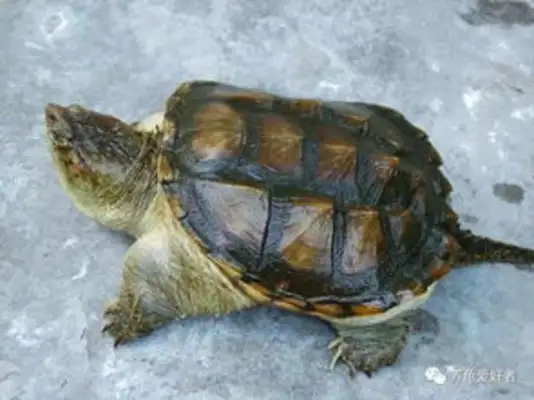
First, the species overview of the crocodile turtle, known as Alligator snapping turtle, is one of the largest and most violent freshwater turtles in the world. They are mainly found in rivers, lakes and wetlands in the south-east of North America, such as the Mississippi River Basin and the Mississippi Delta. They are famous for having the characteristics of crocodiles in the head and forearm, in the form of crocodiles, in large size, with strong shell backs, and with a strong bite.
Crocodiles have a highly adaptable physical structure, with strong tails and sharp beaks making them the best hunters in the water. Adult turtles can be over 60 centimetres in length, or even up to 80 centimetres in the case of individual individuals, which are large turtles. It also has a long life expectancy of over 50 years.
II. The gator character is sensitive and tends to be territorial. They live mostly alone in the wild, often hidden in the grass or mud during the day, and come out at night. They are more aggressive, especially when they bite with sharp beaks or raise their bodies to warn when they feel threatened.
However, if properly raised, tamed crocodile turtles can become less aggressive over time, especially in stable environments and regular feeding, and can show a slight degree of moderation. The eyes and huge bodies that look at are often amazing and more like their might and strength.
Thirdly, there is nothing more important about breeding techniques than modelling their natural environment to allow them to live in safe and comfortable conditions. The following are some of the key techniques: land-based crocodile turtles are freshwater turtles, but they require enough water to swim and lurch. The depth should normally be 1.5-2 times the length of the turtle shells, allowing them to dive freely. A land area will also be provided for their sun, rest and defecation. Land can be made from foam or waterproof platforms. Temperature and lighting should be kept at 25-30°C and not below 20°C at night. The use of UVB ultraviolet lamps to give appropriate amounts of radiation contributes to calcium metabolism and bone health. The exposure to sunlight is critical, but if in-house, it can be replaced with UVB lamps. Alligator diets are meat-based, preferring fish shrimp, crabs, frogs, insects, etc., and feed some mixed animal and plant feed. Feeding should be quantitative and regular, once a day or another day to observe their appetite. Be careful not to feed too much fat to avoid obesity. Cleaning and maintenance regularly replaces some water sources and maintains clean water quality. Use of filters and water exchange to reduce bacterial growth. Tortoise shells can be cleaned lightly with soft brushes to keep clean and avoid parasitic infections. Health Watch observed changes in the behaviour of turtles on a daily basis, such as whether they were active, whether their appetites were normal, or whether they were excreted abnormally. If abnormalities are detected, timely medical attention should be provided.
iv. Hair care (a turtle does not involve hair care, but it can be understood as shell care) although the turtle does not have hair, the health of its shells is equally important. The shell should remain clean and bright, with no spots or cracks. Normally, the surface of a shell can be polished lightly with a soft cloth or sponge to help remove dirt. Avoids hard scratching the crust.
The calcification and hardness of turtle shells are related to the health of turtles. Turtles can be replenished with calcium chips or calcium powder to ensure normal growth and hardness of their shells. Be careful not to over-fed calcium, causing, for example, shell deformation or calcium deposition.
In conclusion, it is important to focus on their ecological environment, imitating nature, and to observe and care for their health. They're not just the masters of the pond, they're precious pets. Patience and care are the secret to becoming a master of turtles.