Designation: PET1735
National origin: India, Thailand, Myanmar
Vulnerability to diseases: albino disease, rotting tail disease
Life: 5-6 years ' overview of seven starfish species
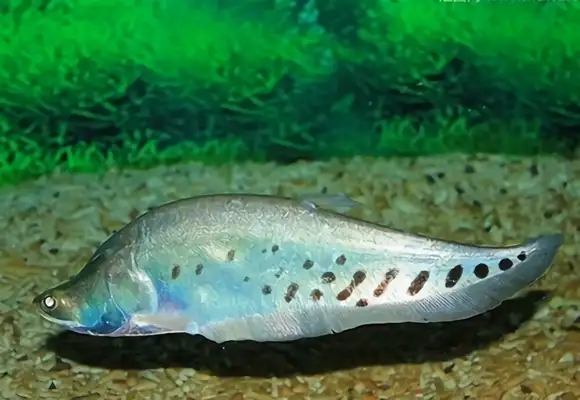
The seven-star swordfish, which is large, can grow up to 1 metre, and night-walking fish, are recommended for rearing in large aquariums. The seven-star swordfish don't swim during the day, like to move at night and eat. The shape of the seven starfish is also very special, as can be seen in the pictures of the seven starfish.
Don't call it a bowfish, a seven-star flying knifefish, a toothfish, a flower knife. Fish
Fit water temperature: 25-28°C
Fitness Hardness: 6-9dGH
Chinese literary name: Seven Starfish
Eating: predatory fish that eat good animal bait
Origin: India, Thailand, Myanmar
Context: Animals
Suitable alkalinity: 6.5-6.8 octopus
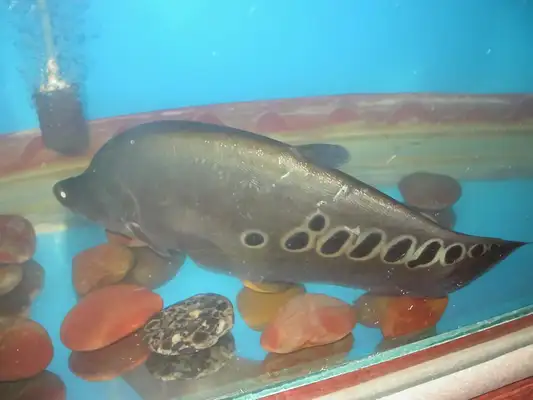
The seven-star swordfish are night-watching fish and prefers to hunt and operate at night. It is recommended that fish not be mixed with small-scale fish viewers, since they have tiny teeth in their mouths.
The seven-star swordfish can be up to 1 metre long, and the rearing in the aquarium is shorter. The fish had a high back size, which gradually narrowed from abdomen, hips and tails and extended back to the tip of the tail, which was like a knife. The back fins are short and transparent, and the hips extend from the abdomen to the tail, and are connected to the tails, forming a thin edge of a first-degree width, which resembles a blade. Deep in gray, there are elliptical black spots on both sides of the body, which gives the seven starfish a name.
The average size of a seven-star swordfish is 80-90 cm. The first half is thick, the tail is small, the back bow is raised. It is black, with 3-10 purple-side black spots on the side from head to tail, in an irregular number, increasing or decreasing owing to fish. There are no black spots on the larvae table, with only 10 to 15 dim slants, before they become black spots. Seven-star swordfish breeding environment
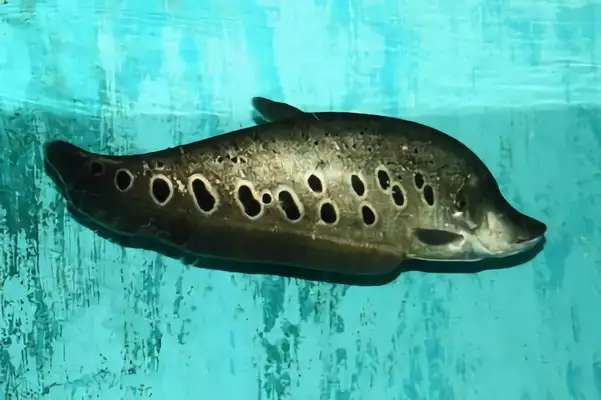
Since the seven-star swordfish are night-viewed fish, it is possible to provide them with as much light as possible when raising them, and it is proposed to place a place in the aquarium for the seven-star swordfish to hide, making it easier for them to adapt to the environment.
It will be more difficult to artificially reproduce seven starfish. During the day, it was largely hidden from the shadows, such as the false mountains, before coming out to eat the fish at night. Fish of similar size can be combined, preferably in a fish tank where it hides false mountains or sunken trees or high water grass, with water temperature of about 25 degrees and low acidity. A PH test paper can be purchased, and water is regularly measured at PH, 6. Between 5 and 7 is the best. The mixed fish also need to be less acidic. The seven starfish feed the order.
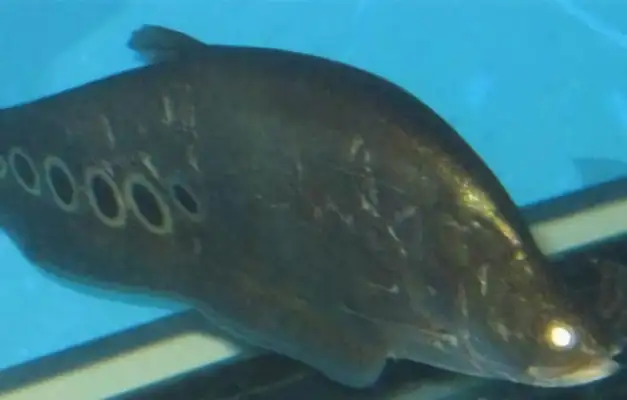
It is important that the seven-star swordfish be kept aware of their night-watching fish, mainly in India, Myanmar and Thailand, and that they be fed as bait, but also of the nutritional balance of the seven-star swordfish.
Seven-star swordfish are nightfish, which generally prefers to feed at night, so be careful when feeding. Like dark places, you'd better put a place in the jar where it hides, which makes it easier to adapt to the environment. The seven-star swordfish have tiny teeth in their mouths and are easy to swallow, so they are advised not to mix them with small fish.