Designation: PET2168
English
Nature: Moderate
Origin: India, Pakistan, Bangladesh.
Vulnerability to disease: decomposition
Life Life: 50 years or so for an overview of Smith's leatherback turtle species
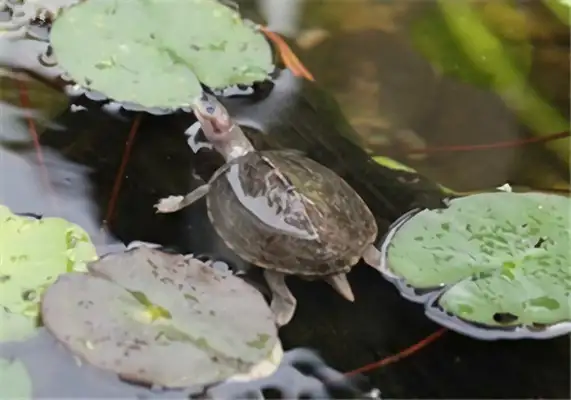
The distinction between the Smithback turtle, which is not a very common species of leatherback turtles, is that there are two sub-species, one of which is Smithback turtles and the other of white-footback turtles. The distinction between the two sub-species is simple and there are no black spots on the abdomen of whiteback turtles.
Chinese literary name: Smith Leatherback
Two words: Pangshura smithi
English
Context: Animals
Gate: Pipeline gate
Amen: vertebrate Amen.
Programme: climb
Tortoises.
AAA: Tortoises
Section: Tidal turtles
Yes: The leatherback is
Cast: Smith Leatherback
Distribution: India, Pakistan, Bangladesh.
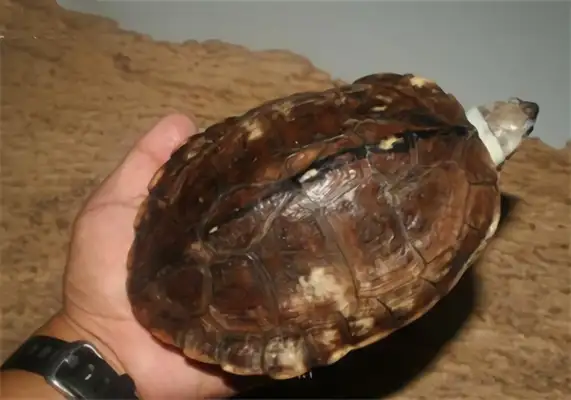
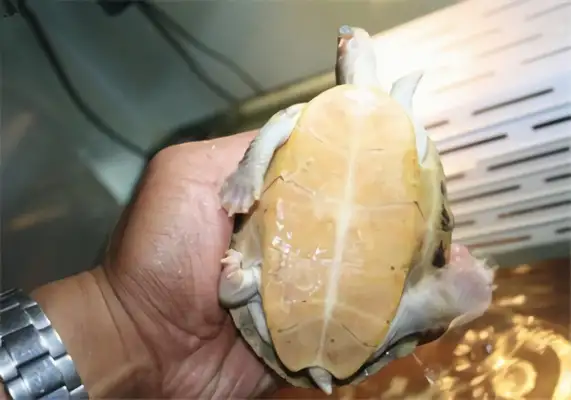
Appearance characteristics: The abdomen of the Smithback turtle is yellow, with black stripes, darker skin on the outside and a black stripe on the middle of the back nail.
Living environment: living in the mud of the riverbed and enjoying the sun bath.
Eatability: In general, turtles with high backs tend to be herbivorous, but this species is impurity. Under artificial feed conditions, artificial feed and goldfish, for example, are eaten with 10 cm for males and 23 cm for females. Smith Leatherback Form Characteristics
The abdomen of the Smithback turtles are yellow, with black spots on their outer skin, with a black stripe on the middle line of their backs; their subsamples have no black spots in their abdomen, their skins are less molanite, their skins are lighter than the Smithbacks, their body heights are not very high in them, and their backs are slightly olive-coloured brown. Smith Leatherback Care Knowledge
Smithback turtles have their own requirements for ambient temperatures, and it can adapt to a wide range of temperatures, but try not to change ambient temperatures quickly, which can cause disease. Typically, the temperature floats in a range not exceeding 5°C, and the Smithback turtle can adapt.
I. The Smithback Turtles for Temperature and Hibernation
The physical and mental well-being of Smithback turtles can be assured only when artificial small ambient temperatures of turtles are consistent with natural habitats. General tropical turtles at 27 ~ 38°C and temperate turtles at 20 ~ 35°C. Some Smithback turtles die at temperatures around 5° C above the appropriate temperature limit. When temperatures are low, turtles are inactive (matrix voltage). For the purpose of breeding turtles to be fed artificially, they should be protected against excessive or large fluctuations in ambient temperatures. When temperatures are around 10 degrees Celsius, turtles begin to hibernate.
II. SMITH RANCH ENJOY
Temperature rises to about 15 degrees Celsius, and turtles start to operate, and some can even start eating. It is common practice to regularize turtle feeding and activity at 25°C. Temperatures around 30 degrees Celsius are the best feeding, activity and growth temperatures for turtles. So, in the country ' s Mid-Range downstream region, the months of April to October each year are the feeding and activity period for turtles; the months of November to March of the second year are the hibernation period for turtles. Smith's Leatherback Environment
The requirements of the Smithback turtle for the environment are similar to those of the Brazilian turtle, which can be referred to in terms of water quality control or temperature adjustment, and which like Brazilian turtles likes to tan their backs, so there is also a sunscreen in the environment.
I. Quality Requirements for Smith Prism
It has been observed that the acidic requirements of the Smithback to the water are neutral or alkaline, and that there is corrosiveness if water quality PH is below 6.0, so it would be preferable not to use large amounts of sunken wood in the rearing process, which, by leaching, releases large amounts of corrosive acid, thereby reducing the PH value in water. It seems that turtles in South-East Asia prefer neutral or alkaline water quality.
II. Adaptation of the ambient temperature of the Smithback Turtle
For temperature. After all, they're tropical turtles, and when temperatures are below 18 degrees, they're less aloof, their appetites are largely extinct and skin problems arise. And when the water is at 25 degrees or more, they're quite lively.
iii. Smith Leatherbacks
Like most water turtles, they love suntans as much as Brazil does. In the absence of tan areas, their skins are problematic, and decomposition is a common problem, but as long as they are given a tan area that can dry their bodies offshore, the decomposition situation will improve in a few days, so raising this turtle tan and tan light is essential. The point of Smith's Leatherback.
Smithback turtles are greasy turtles, which can provide turtle food in their breeding, as well as some meat food and vegetables. The choice of turtle food can be based on half-water turtle food. Some water turtle foods are not well-suited for nutrients and feed more food a month before hibernation.
I. The Smith Prism Food Choice
The Smithbacks are very edible and generally tend to be more mundane, but they eat everything. Tortoise food, vegetable leaves, watergrass and so on. It's worth mentioning that they really like the guacamole. The aqueducts do not eat the same green water as the leaves, and he does not see any green juice, which is convenient for water quality. We like to eat half-water turtle food, and they eat other kinds of turtle food, but considering that we don't want him to eat too much protein, so half-water turtle food is better for them.
II. SMITH DRIVING TRENDS
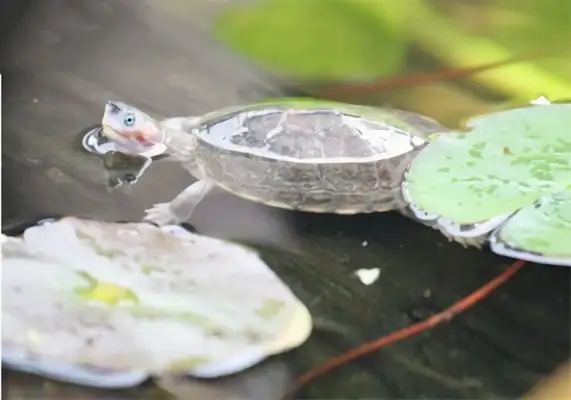
The whole thing says they're elves. The main thing is his face and looks are so interesting. The light blue eyes are clear and transparent, as though the elves, together with their lively personality, and their high swimming skills, were able to swim backwards and forth, with a sharp brake and a sharp turn, so flexible. When you're ready, you see people coming around, white claws and red heads. What a bunch of other people. As the individual grows, it can be said that the female Smithback turtle grows significantly faster than the male. The male individual is largely ungrowing, while the female individual is more than three times the size of the male individual.