Designation: PET4859
English name: Hyla Chinensis
Origin: Central and Eastern China, South of Henan, Northern Viet Nam, Taiwan
Vulnerability: carcasses
Life: Overview of 6 Chinese tree frog species
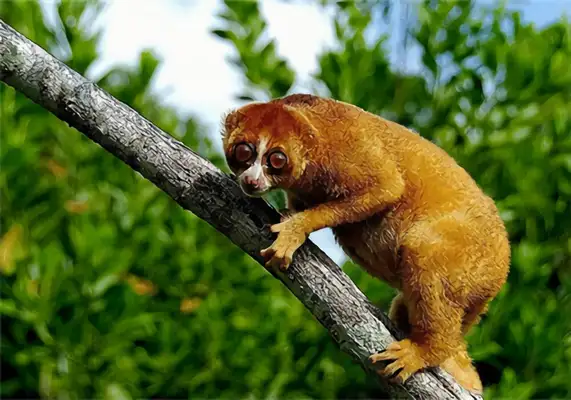
Tree frog.
Many people see the name of a Chinese tree frog, and it is natural to think that this breed of frogs comes from China and that, in addition to China, the presence of Chinese frogs has been found in northern Vietnam. Like other tree frogs, Chinese tree frogs belong to tree-dwelling animals, and if you want to find them, you have to look up to the tree, but it is always difficult to find them because of the shade of leaves or branches. In a particular case, however, the Chinese frog would return to the ground, that is, when it rains, so finding the trail of the Chinese frog in the rain is absolutely the best time.
Of course, not every province in China has Chinese frogs, which are now found in the central and eastern regions south of Henan, but not elsewhere.
Those who know about tree frogs should know that they are also kind of “deep-in-the-dark” animals, and that they tend to fall down on trees during the day and become active from dusk, with the exception of Chinese frogs. Thus, if a tree frog is raised, the feeder may face the problem of listening to the symphony at night.
Chinese literary name: Chinese tree frog
Two: Hyla Chinensis
Context: Animals
Gate: Pipeline gate
Amen: vertebrate Amen.
Programme: amphibious programmes
ANALYSIS: SLUE ASPECTS
Objective: No tails.
AA: New Toad
Section: Toad Section
Yes: Rainfrogs
Castes: Chinese tree frog morphology
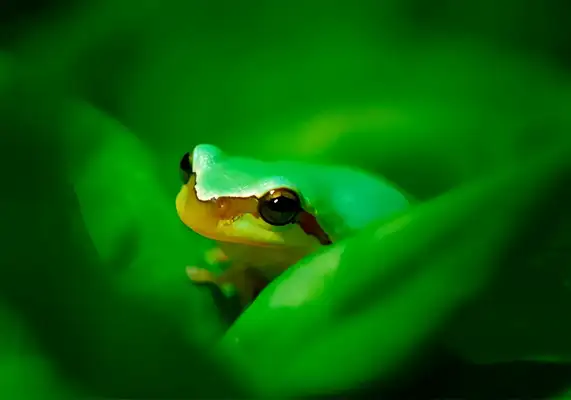
Tree frog.
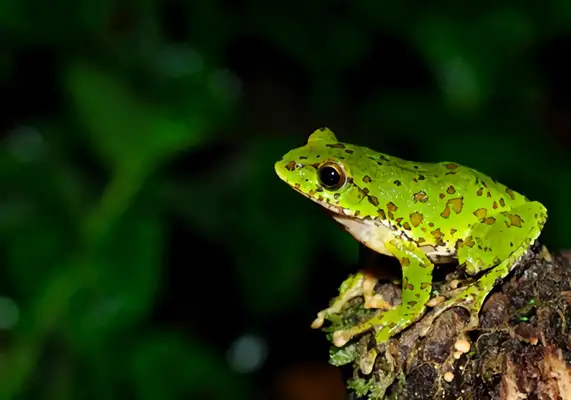
In addition to being tree-dwelling animals, two other particularly important reasons are more difficult to detect in China, both of which are related to their morphological characteristics: The Chinese tree frogs are not large frogs, but they are smaller in size than large frogs, and they will be ignored without attention. 2. The colour of the Chinese tree frogs and the surrounding environment can be described as perfectly integrated, and this “invisible technique” helps the Chinese tree frogs escape many of their natural enemies' eyes.
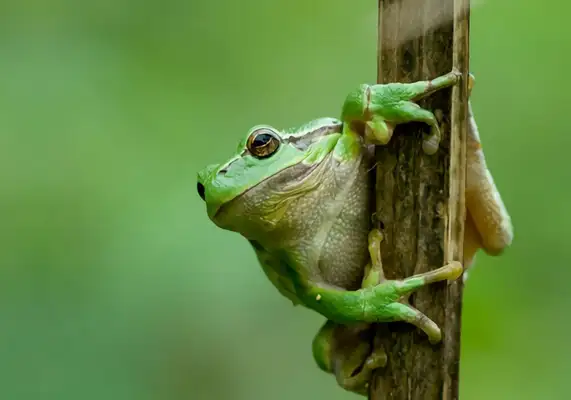
As noted above, the Chinese frogs are not large, they are up to 30 mm long and female frogs are generally larger than male frogs. Small Chinese frogs are not only better able to hide, but also move relatively faster. In order to adapt to tree-dwelling conditions, Chinese tree frogs have large suctions, which help them to remain firmly attached to the target tree when they “flying” between the trees.
The color of tree frogs tends to change as the environment changes, and since Chinese frogs have long lived in the woods, they tend to be similar to the colour of leaves and green. And when it rains, if the Chinese frogs return inside, their bodies will turn from green to brown near the ground. Of course, certain parts of the body of Chinese tree frogs also have fixed colours, such as yellow inside their thighs, usually with black stripes, etc.
The back limbs of the Chinese tree frogs are strong and longer than the front limbs, so they are first-class jumpers. However, although they are “abundant”, their range of activities is limited, and even in nature they do not migrate far away. Chinese knowledge of tree frog care
Tree frog.
It is not easy for Chinese frogs to take care of them, first to feed them, primarily to understand the characteristics of them, and then to make appropriate adjustments in conservation based on those characteristics or habits. We all know that Chinese frogs like to climb, so it is important to take into account the climber's choice when placing a frogtray for Chinese frogs. It is important not just to find wood and use it as a climber. A good climber not only provides a better living environment for the Chinese frogs, but also reduces the maintenance burden on the feeders, so it is extremely careful to choose the climbers. An experienced feeder usually advises you to use grasswood with deworming effects. Of course, if there is a better climber, you can choose according to your own conditions and actual circumstances.
In addition to climbing, bottom selection is a major feature of Chinese tree frog care. Most feeders are now choosing coconut shells as their base. If the soil is used, the frogs are more susceptible to soil, and in the course of their exercise, the soil is filled with tatters, which are difficult to clean. In addition, another drawback in the use of soil as a base is that the faeces of frogs are hidden in the soil, which is more difficult to clean.
When raising Chinese frogs, there are also two issues that feeders need attention — environmental humidity and temperature.
I. Environmental humidity
In general, the environmental humidity of the Chinese tree frogs is maintained at around 30 per cent, and many feeders also set up water at the bottom of the frogtray to meet the requirements of the Chinese frogs.
Temperature
Frogtray temperatures are about 3 degrees lower than outdoor temperatures, and do not as much as possible keep them at high temperatures for long periods of time. Chinese Frog Living Environment
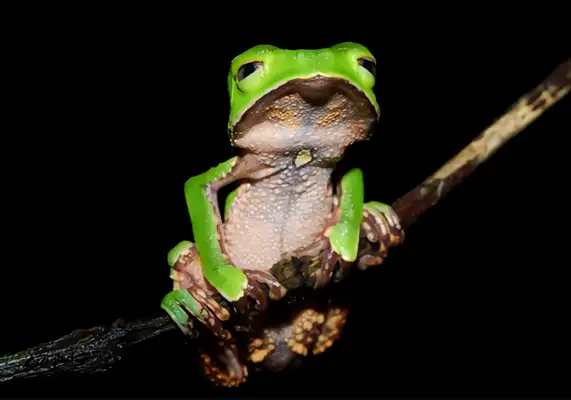
Tree frog.
Chinese tree frogs generally live in darker and humid areas and do not like to be exposed to sunlight, so they try to hide in the shadow of the woods during the day. If the climate is too dry, Chinese frogs are equally unable to survive well, so a suitable living environment is vital for Chinese frogs. When raising Chinese frogs, the feeders create a living environment as close as possible to their natural environment.
I. Humidity and temperature
In general, feeders in the South do not have to worry too much about these two problems, because the air in the South itself is much more humid and the temperature is not too low. Instead, the main concern is to avoid keeping Chinese frogs at high temperatures for long periods of time, otherwise problems can easily arise. Feeders in the north are required to do their job of maintaining environmental humidity and controlling temperature and, if conditions do not permit, try not to raise Chinese frogs.
II. Frogtray placement
Bottoms, reptiles and plant choices are particularly important for Chinese frogs, who may die if they fail to meet their needs. But beyond these points, it may be easier for the owner to ignore the other point — the height of the frogtray. For Chinese frogs, frogts may not be too big, but they must be high enough to have enough space to move.
Of course, such problems may also be encountered by feeders in raising Chinese frogs, and when you have problems, you need to consult with experts or senior friends around you immediately to avoid accidents. Chinese tree frog breeding requirements
Tree frog.
Many people may have the impression that if they can fit into their mouths, they can eat. Is that true? Chinese frogs are the most sensitive to living foods, and normally, insects of the right size fly from the eyes of Chinese frogs, etc., will be hunted at the right time. If the feeder finds that the food that he was supposed to feed the Chinese frogs is no longer living, you can shake it in front of their eyes with a hammer, and many Chinese frogs will swallow it as soon as they see it.
Some feeders also buy bread bugs to feed the Chinese frogs, while others glue them to various nutrient powders before feeding them in order to keep them healthy. Before doing so, however, the feeder must make sure that this will not cause any problems to the Chinese frogs, otherwise an unexpected situation will only make you regret it. In addition to breadbugs, small insects can feed Chinese frogs as food, and small insects are good food for Chinese frogs, but it is difficult to get access to them, so bread bugs are the number one choice for the feeder.
Feeding does not have to be done daily, and the feeder can adapt to the growth of the Chinese frog. Although the feeders do not feed on a daily basis, the regularity of the feeding must be ensured, and it should not occur at too long or too short intervals, and once it is determined which day to feed, it should not be changed at will. The adult Chinese frogs feed two or three times a week, and if they are full, they will not continue to eat, and the owner will be able to judge whether he or she is feeding too much or too little by observing the food of the Chinese frogs.