Designation: PET4022
English name: Black-breatsed Leaf Turkle
Character: Fear of cowardice
National origin: Yunnan Phesi, Guangxi Guilin, Guangdong, Hunan, Hainan, Viet Nam, Indonesia, etc.
Vulnerability to disease: food denial
Life: 30-50 years
Price: Summary of Maple leaf turtle species, $100-500
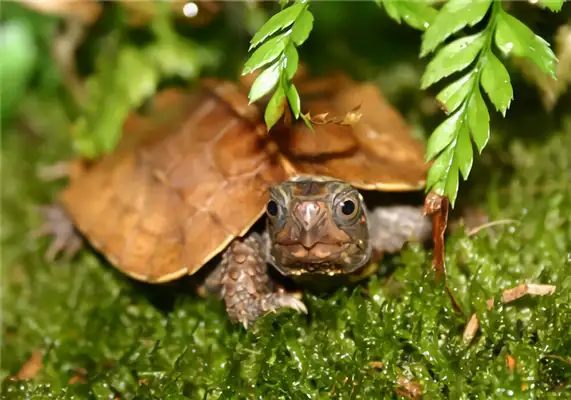
Maple turtles are what we often call turtles, and because they look like a maple leaf, they have a wild presence in our country, but they belong to the State for the protection of animals, and they are notoriously difficult to feed, so it is suggested that no newbies should try.
The tortoise is smaller in size, having a size of only 120 mm and a width of 78 mm. Its head is light brown, its head is small, its back is smooth, it has an upper beak hook, its eyes are large and sharp, and it has light yellow stripes on the eye to the neck. It is called the “twelfth turtle” because it has three elastics in its center and has 12 teeth. The abdomen are brown and black, with light yellow stripes on both sides, and the bridge is visible, with a suture between the abdomen. The rear limbs are light brown, with red or black stripes, fingers, toes, and short tails.
Chinese literary name: Maple leaf turtle
Chinese alias: turtles, black-bread turtles, longtail turtles, turtles, turtles.
English name: Black-breatsed Leaf Turkle
Two words: sengleri
Context: Animals
Gate: Pipeline gate
Amen: vertebrate Amen.
Programme: climb
Tortoises.
AAA: Tortoises
C: Turtles
Aako: Ako, Fresh Water Turtle
Belongs to: land turtles
Crop: Maple leaf turtle
Distribution: Yunnan Pheixie, Guangxi Guilin, Guangdong, Hunan, Hainan, Viet Nam, Indonesia, etc.
Price: Relatively cheap, but more difficult to raise, usually at around $100. Maple leaf morphological characteristics
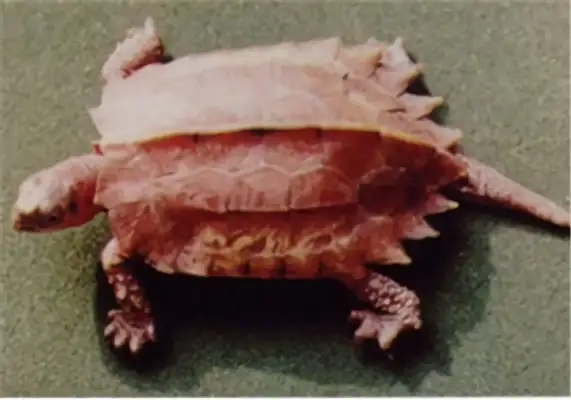
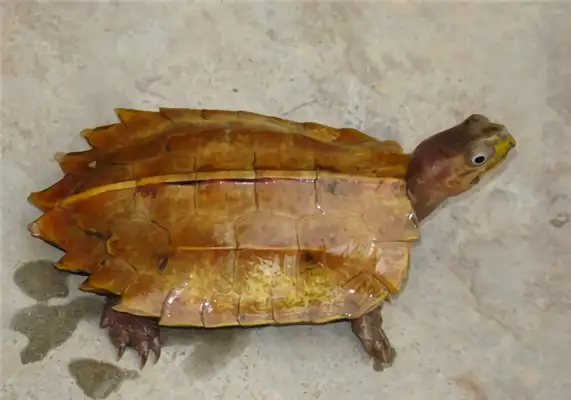
Maple turtles are a relatively common turtle in our country. They are remarkable, easily identifiable, with long backs, but not wide, and have a lot of teeth on their tails, making him look more like a maple leaf.
Maple leaf turtles are semi-water-dwelling turtles with smaller sizes, with adult backs only 120 mm long and 78 mm wide. Its head is light brown, its head is small, its back is smooth, it has an upper beak hook, its eyes are large and sharp, and it has light yellow stripes on the eye to the neck. It is called the “twelfth turtle” because it has three elastics in its center and has 12 teeth. It's called Maple Tortoise because it's shaped like Maple Leave. Its abdomen are brown and black, so it's called the Black Chest Turtle.
The abdomen are brown and black, with light yellow stripes on both sides, and the bridge is visible, with a suture between the abdomen. The rear limbs are light brown with red or black stripes, fingers and toes. The female has a flat abdomen, short tails, and a leak hole is closer to the back of the abdomen; the male has a cavity in the centre of his abdomen, long and thick tails, and the excretion cavity is further from the back of hisbdomen. Mapleback Turtle Conservation Knowledge
Maple turtles are less daring, so it is usually more difficult to raise, and it is easy to refuse to eat if they are careless, but they are highly interactive with people who are familiar with the environment. Newly purchased turtles should be placed in paper boxes or other containers, with wet sand, a pot of water in the dark corner. Feeding a variety of foods every day does not disturb the turtles until they are fed. Maple leaf turtle living environment
For maple turtles, the soundness of the environment is key to successful breeding. Wild turtles have high environmental requirements and need quiet, more hidden corners to adapt to the environment, i.e., new turtles come home for a while and try not to disturb them.
The turtles are small, less adaptable, difficult to raise and have a low survival rate under artificial rearing conditions. Newly introduced turtles should be placed in dry paper boxes or containers, with sand laid inside and a drinking water basin. A variety of foods are fed daily, and the turtles are not moved until they are fed.
Use of sand
Tortoises are semi-aqueous and should be raised on sand, which is 3-5 cm thick and is replaced once a month. Tortoise utensils can also be laid in half shallow water and half sand patterns, except in winter when all sand must be laid (with the exception of heating). The sand can be damp in the summer and dry in the early spring and late autumn.
II. Daily environmental management
The turtles are warm and afraid of the cold, and the breeding grounds are higher during the breeding process. The establishment of a diary to document on a daily basis conditions, especially temperature and diet, are key to the proper raising of turtles. Only by mastering the temperature of the land turtle ' s living environment and eating, can it be right to take some precautionary measures to the land turtle, such as timely warming when the temperature is low; if the land turtle stops eating, consideration should be given to whether the turtle is ill, turtles move and food is replaced.
iii. Be careful with winter breeding.
Healthy tortoises are naturally hibernate, leave them on the sand, drill themselves deep in the sand, cover the surface of the sand with warmth such as cotton or straw and inspect them once a week. The following year, turtle recovery was good and bad and had a direct impact on turtle health. Newly recovered turtles are weak and should not be fed in large quantities, and should be fed in small quantities, bearing in mind changes in temperature. Weak, thin turtles can warm up, raise ambient temperatures to about 25°C, and feed and manage normally. Maple turtle feeder.
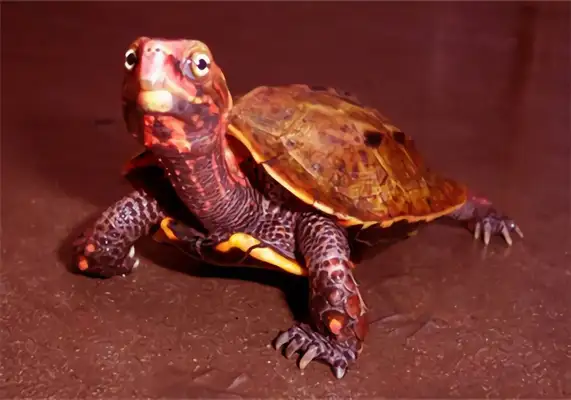
When Maple Turtles succeed in feeding, it becomes easier to raise, as this means that Maple Turtles are already familiar with the state of the environment, at which point they will be able to spend the dangerous period of raising, and will become more and more close.
Food choices
Maple leaf turtles like to eat fresh little insects. Like earthworms, crickets, bread worms, etc. For those who move small insects or animals, it is almost possible to feed them, but the acupunctures or crayfish and turtles are exempted, while the webmasters usually supply cricket for staple foods, occasionally feeding the aphids, barley worms or off-legged weeds, as well as small fish, cat foods, fresh-born mice, etc., and occasionally supplying papaya bananas, oranges, grapefruits or mangoes, or other sweet and fragrance fruits to the vegetables.
II. Attention to feed
Calcium powder and vitamin supplements are provided every two weeks, and calcium powder and vitamin supplements are distributed over food. The feeding time is mostly at dusk or evening, because it is more active and has better appetite. In terms of diet, each maple leaf turtle usually eats about 2-4 crickets and two barley worms at once and feeds five times a week. There are also turtles who like to drag food into the water for food, and who drink or soak in the pool in the morning and noon hours, so the feeder should change water every day.