Designation: PET5017
English name: Psammodynastes pulverulentus
Vulnerability: oral inflammation
Life: Overview of violet snake species 10-15 years
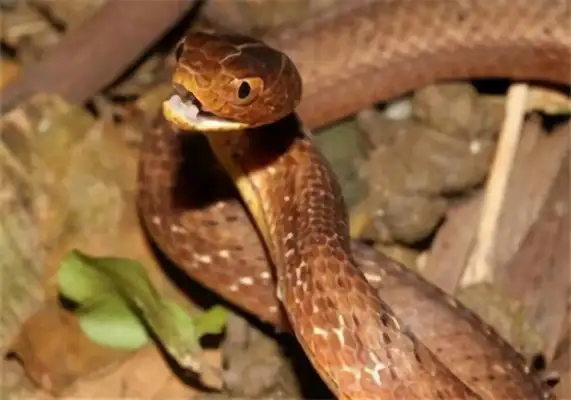
The viper, alias Tea Zebra, has a slight toxicity, but bites do not kill humans, with the vast majority of violet snakes surviving at an altitude of up to 1620 metres. The species ' s model origin is in Java, Indonesia. Be flexible, move around day and night, climb trees.
Vibula is mainly located in Nepal, Sikkim, India, Myanmar to Laos, Viet Nam, South Malaysia to Indonesia, Philippines, Taiwan and mainland China, such as Fujian, Jiangxi, Hunan, Guangdong, Hong Kong, Hainan, Guangxi, Guizhou, Yunnan and Tibet.
Chinese literary name: violet snake
Chinese aliases:
Two names:
Area: Animal
Door: vertebrate door
Scramble
I've got eyes.
Section: Snake Section
A violet snake.
Specimen: violet snake species
Distribution: The country is located in the south-east of China, the south-east coast can be found in the north of the country, and the northeast of China is recorded in the south-south of the lake. They also live abroad in areas such as Malay Island. Viper form characteristics
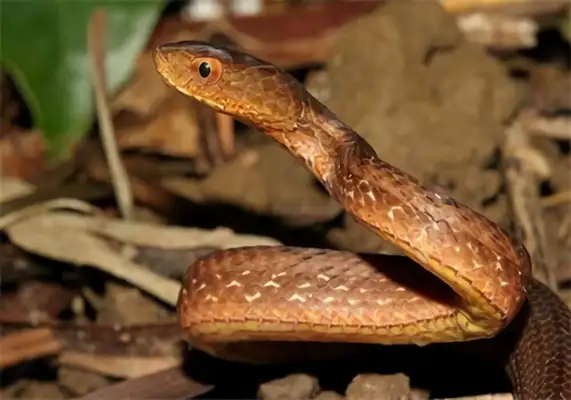
By definition, the viper has a very similar back color to that of violet sand, and many people therefore call it a teabean. The adult viper is about 471 mm long. The main distribution of viper is in the south China, north of the south-east coast of Candafou, and the northeast of the centre of China is recorded as Hunan Changsha. They also live abroad in areas such as Malay Island.
The viper has the back teeth; the head is large and the kiss is obvious; the eye is large and the cheek is dim. On the back is purple brown; on the back and on both sides are symmetrical tan stripes, extending backwards, with most irregular “twilight” stripes or webs on the back. 17 rows of the central back; 148-166; complete anal; 42-57 pairs. Viper living environment
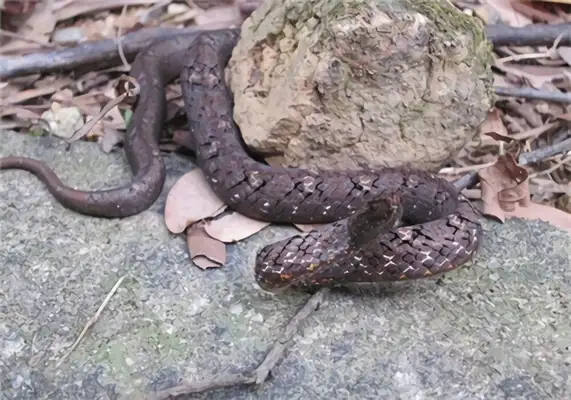
A viper raised from childhood will not normally attack unless it deliberately provokes it. It likes to climb, it likes to live in trees, so families need to design a living environment similar to nature.
Viper live in the wild in the plains and hills, 80 to 600 metres above sea level. Living in dense wood, flexible and mobile day and night, families can put some piece of bark in the rearing box, some dead leaves, two trees to climb and a water basin.
Most vipers prefer warm and wet environments, where they prefer the most small animals, and they do not like to operate on the bare ground, because that is not conducive to hidden access to their prey. They sleep when the weather is too cold or too hot, and fall is their most active time, feeding around and saving energy for hibernation. Viper raising knowledge
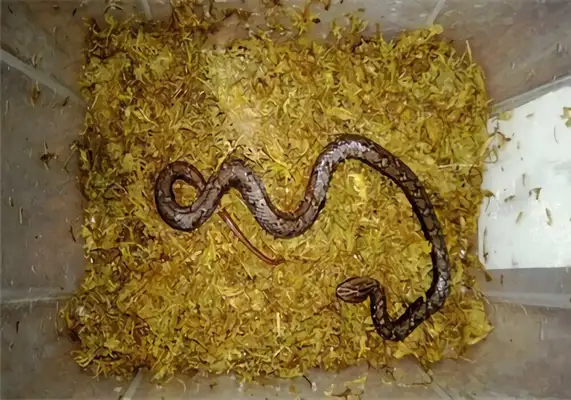
If it is preferable to purchase artificial reproduction, it is not recommended to catch it in the field. Because snakes that survive in the wild have a stronger heart and a less temperate temper, and artificially produced snakes have been exposed to humans since they were young, so they don't run away.
The purchase of wild snakes not only destroys wild snake resources but also threatens to be bitten at all times. Because wild snakes are very afraid of people, any nearness to them is considered a threat.
In food, care is taken that snakes eat only live animals, such as frogs, rats and birds, so don't expect it to eat ham sausages or burgers. As for feeding, it is usually possible to feed snakes once a week and 70% at a time. A warm bath of a few minutes (25 degrees) per week.