Designation: PET5247
English name: Narrow-banded Krait
Vulnerability: oral inflammation
Life: Brief description of silver ring snake species, 10-15 years
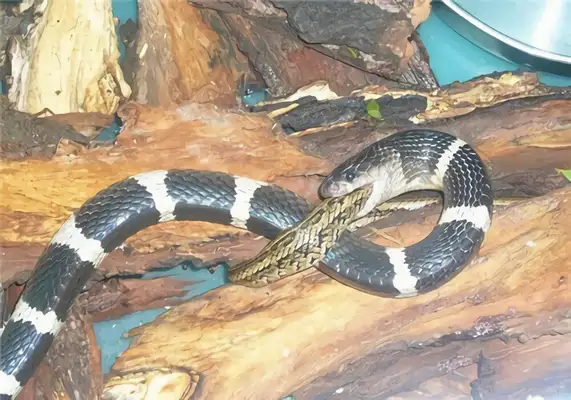
Narrow-banded krait is also a toxic snake, which bites and then usually does not feel pain, but rather sleep addiction. The whole body of a silver ring is organized between the white ring and the black ring, which is narrower, has a long tail and is about 1 metre long.
Chinese literary name: Silver Ring Snake
Chinese aliases: white snake, white velvet snake
English name: Narrow-banded Krait
Two names: Bungarus multicinctus
Area: Animal
Door: vertebrate door.
The reptile.
I've got eyes.
Cobra.
The ring snake.
Specs: Silver Ring Snake
Distribution: South-West, South, Taiwan, Myanmar, Viet Nam
Region: China, South China, South-West China and Taiwan, as well as Myanmar, Laos, Silver Ring morphology
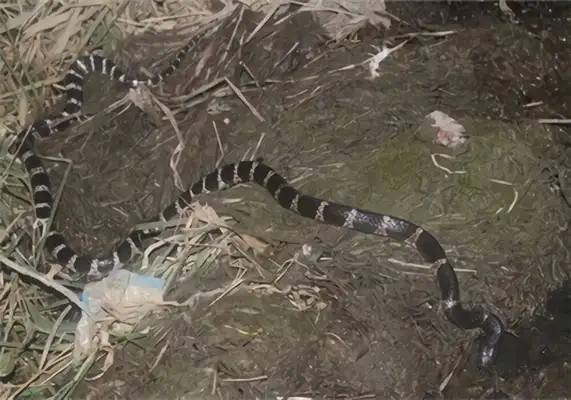
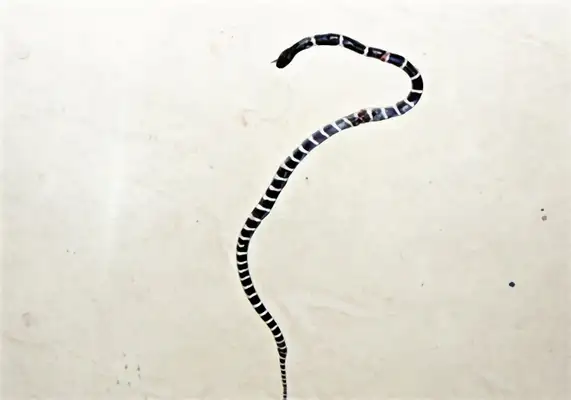
The silver ring snake has an elliptical head, about 1 metre long, and the more obvious feature is that it has black and white stripes on its back and looks very beautiful. The abdomen, the upper lip and the neck are all milked white.
The silver ring snake runs in 15 rows, with a single line (spread) extending to a hexagonal. The hills, which live in plains, mountains or near trenches, are often found near homes. When the night and the day rise, he is pleased to hunt for yellow rolls, mudslides, frogs or other snakes on a wet road or between the stones of the water. Eggs, 4-18. Silver cyclic snakes are neurotoxic snakes, small but highly toxic. Nice and slow, and if you don't hit it, you don't bite. The young snake matures after three years. Silver cyclic snakes are highly toxic, with a pair of shorter trachea at the front end of the upper cheekbone. At first, it was not clear that a person had been bitten, that pain was low and that after hours, failure to provide timely treatment often resulted in respiratory paralysis. A silver ring snake is a drug supply. Incubation of 7 to 10 days of young snakes, known as white snakes, has the effect of irritating and convulsing, treating diseases such as rheumatism, wind convulsions, tetanus, syphilis, etc. Silver-ring snakes can cure convulsions caused by high fever. Silver Ring Snake Living Environment
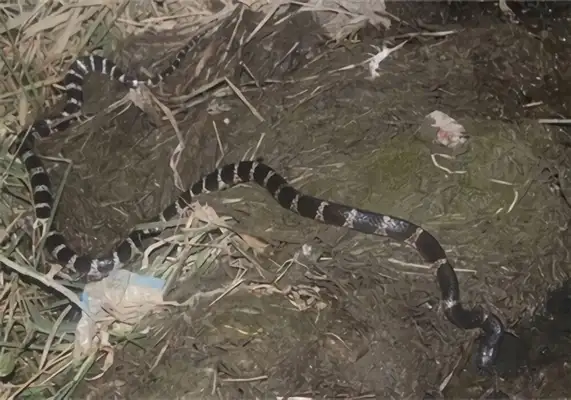
Silver cycling snakes do not like too bright a breeding environment, and the walls can be considered black or grass green as close as possible to the colour of nature when the home is raised. In the case of snake fields, it is suggested to be located in isolated, high terrain, near water sources.
Silver ring snakes like to be damp and rearing with regard to ventilation, cleaning of water and provision of hygienic foods, otherwise they will suffer from oral ulcer and skin diseases. The silver ring snakes are very active at night and often use the top of the kiss box in their boxes, so many of the silver ring snakes that are kept in their boxes have a broken kiss, which should be noted. It is proposed to use larger rearing boxes, preferably of the same length or more, and more stable individuals can use two thirds of their rearing boxes.
In combination with their preference for a dark, humid, acidic low-wood environment, they can place sunken wood or stones in their rearing boxes for their hide or lay a small amount of leaves on the moss to keep them wet and provide water containers for their swimming. The acid base is of great importance to the silver cyclic snake and is one of the keys to seducing it to eat. Of course, newspapers are also being prepared to eat, but the ink smell of the paper may soon cause sudden refusal, so it is not recommended to use the bottom of the paper alone, but to add dry leaves to the paper and a wettight box to make it dry or wet. Silver Ring Snakes
The silver cycling snake is a timid person who reacts when frightened, and it should be carefully raised, whether by beginners or lovers, as it also attacks its own kind under the same roof, so it is not recommended to mix.
There are many parasites in the silver ring snake. The lightness of parasitic disease weakens the body, causes other diseases and causes serious deaths directly.
During incubation, the temperature of the ring snakes is 20 - 27°C and the relative humidity of the air 50 - 70%. The incubation period is 42 days.
In the early months, snakes need a large amount of nutrient supplementation, and in November, they need to accumulate nutrients to prepare for hibernation. The two months should be as full as possible. The most suitable temperature for snakes is 18 - 28°C, 10°C for hibernation and 5°C for freezing to death. Therefore, it is important to be warm during the winter, to cover 20 centimetres of straw on the corset of the snake room, to close the door, and to put dry grass, paper crumbs and sacks on the chamber. The silver ring snake feed.
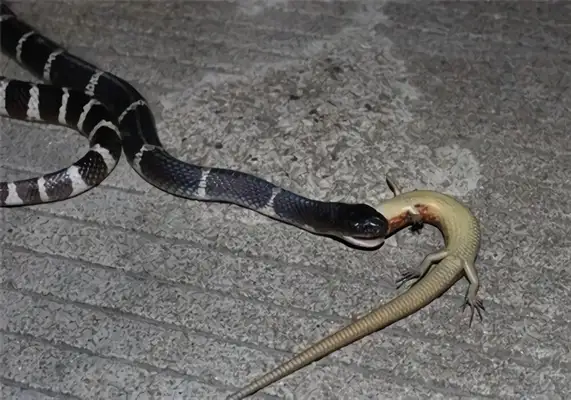
Silver ring snakes, like many snakes, are predators, especially living ones, which in the wild often prey on a variety of small animals, including other snakes. A lover should choose to feed the snake at night, without having to feed daily, one or two times a week, and the best day after defecation.
The newly arrived snake should give it two to three days to adapt. In terms of food, the milk rat is the preferred, followed by the mud, the silver ring snake is very neurotic and cannot be harassed for two days after full meals, otherwise the risk of vomiting is very high. Different foods can be provided after eating, e.g. yellow tarts, snakes, frogs, etc.
Snakes are grown on the basis of a mixture of around 500 grams of young snakes by females and males at 10:1. The amount of food consumed by a snake is small, and a snake eats approximately 1-2 kg in one year, mainly on aqueous, yellow and mud. Every evening, a small amount of yellow, mud, etc. will be put into the feed pool before the silver ring snake leaves its nest, whichever is finished. In general, 50 grams of mud can be eaten by 10 snakes and, in general, some more frogs can be caught, etc., in the snake field, so that snakes can eat freely. The snake eats nothing but live food, and he does not eat dead food, and the dead shall be taken out of the pool. In early May, snakes needed a large amount of nutrient supplementation, and before November, snakes needed to accumulate nutrients to prepare for hibernation. The most suitable temperature for snakes is 18 - 28°C, 10°C for hibernation and 5°C for freezing to death. Therefore, it is important to be warm during the winter, to cover 20 centimetres of straw on the corset of the snake room, to close the door, and to put dry grass, paper crumbs and sacks on the chamber.