Designation: PET2438
English name: Galah
Origin: Overview of the species of pink parrots in Australia
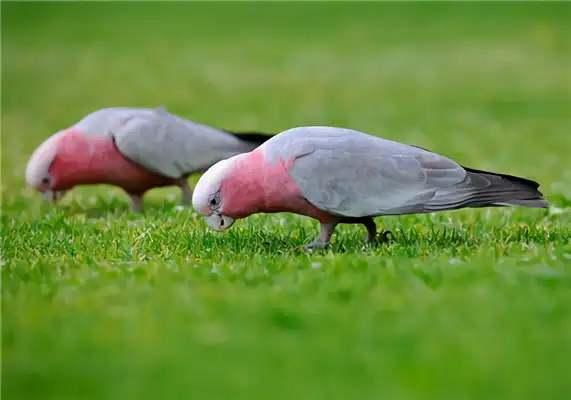
The pink parrots are one of Australia ' s most widely dispersed parrots, and because of their charming feathers, they have become the pet birds that many people love. It is worth noting that pink parrots may become aggressive when they mature.
Chinese literary name: pink parrot
Latin name: Eolophos roseicapillus, Cacatua roseicapila
Don't call it a rose parrot, a red parrot, a rose parrot.
Context: Animals
Gate: Pipeline gate
Programme: Birds
Look: Parakeet.
Section: parrot section
It's a parrot.
Crop: Pink parrot
Asian: 3
Named by Vieillot, 1817
Name in English: The foreign appearance of the Galah pink parrot
Pink parrots are mainly located in the eastern, central and northern parts of Australia and were also introduced to Tasmania. Pink parrots like to dwell in forests, grasslands, semi-arid areas and are among the pet birds that many people love. The pink parrots consist of three sub-species with a length of 35-36 cm, weight of 270-350 g, bird body of dark pink, a forehead, head crown and neck of white light pink, wings and tails of grey; the inner feathers above the lower abdomen, anus, secondary cone, hips, and tails are all white. Pink parrot breeding environment
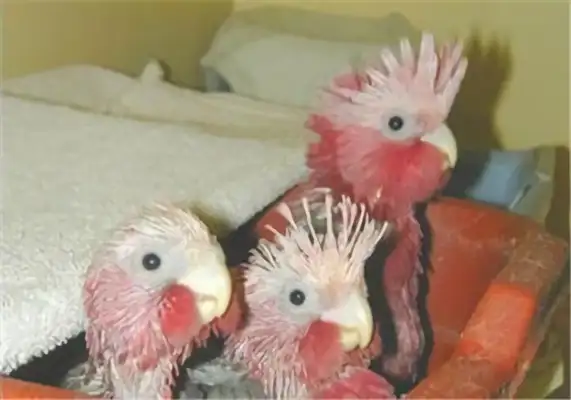
The distribution of pink parrots, although very wide, is also on the 2012 Red List of Endangered Species ver 3. 1 Underweight (LC). Artificial macaws need to be aware of the circulation of air in the breeding environment, and drinking water should be kept clean.
The pink parrot prefers to be found in forested areas, grasslands, semi-arid areas, pastoral areas, parks, and in the gardens and towns of human activity. In Northern Australia, there are frequent activities in mountain forests, while in Southern Australia they tend to live in temperate forests in the plains. During the summer, most of them are found in forested areas, mainly near cool, cool rivers. In winter, more arid woodlands are preferred to live in more moderate areas at sea level. During the year, visits were also made to urban parks and gardens. This bird likes open areas and almost always avoids dense forests.
Pink parrots usually come together in loose groups, sometimes in large groups of nearly a thousand people on certain pastures, screaming loudly and dumbly, and often acting together with the big sunflower parrots. It is a grocer that consumes a variety of plant seeds, such as oats, wheat or many weeds. Insects and their larvae, berries, buds, flowers and seedlings are also ingestion. There are many ways to drink water, either by standing at the edge of the pond or by swallowing water in flight, or by landing in the middle of the pond and immersing the beak in the water. Like to feed on the ground. Vegetable crops cultivated by farmers, as well as food for sunflower fields, are particularly preferred, often resulting in extensive crop damage. Artificial breeding birds are active and curious, even when wild birds are easily tamed, they are pet birds that many people like, but may change personality and become aggressive when they mature. A pink parrot.
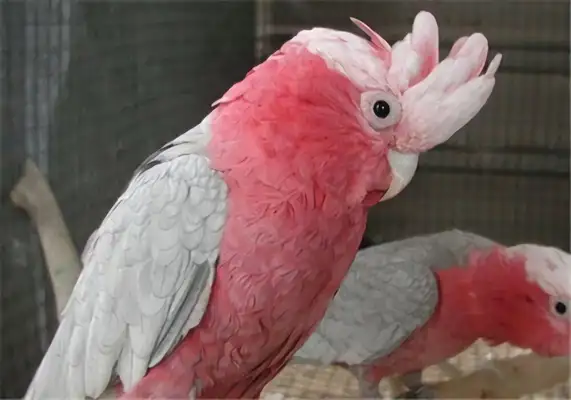
Pink parrots are one of the most widely dispersed parrots in Australia, also because they have very attractive feathers and are therefore a favorite pet bird. The puffed parrots can refer to their food requirements in a wild environment.
The pink parrots are hybrids that consume a variety of plant seeds, such as oats, wheat or many weeds. Insects and their larvae, berries, buds, flowers and seedlings are also ingestion. There are many ways to drink water, either by standing at the edge of the pond or by swallowing water in flight, or by landing in the middle of the pond and immersing the beak in the water. Like to feed on the ground. Vegetable crops cultivated by farmers, as well as food for sunflower fields, are particularly preferred, often resulting in extensive crop damage.