Designation: PET4987
English name: Double-bandedDwarfCichlid
National origin: Peru, Manaus and Colombia
Vulnerability to diseases: albino disease, rotting tail disease
Life: An overview of the sheik species 5-6 years
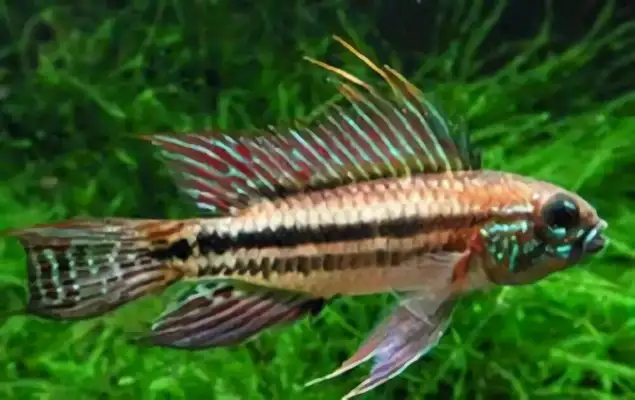
Chiefs were first found in 1906, and wild sheiks prefer to live in the rainforests of the layer of leaves, so they are raised to use black water as much as possible. It is easier to raise herds of sheiks, and it is enough to keep an eye on water quality and temperature stability.
Origin: Peru, Manaus and Colombia
Foreign name: Double-bandedDwarfCichlid
Chinese name: Chief Nishi.
Fits to water temperature: 25-27°C
Time of discovery: 1906 Chiefs short-forming
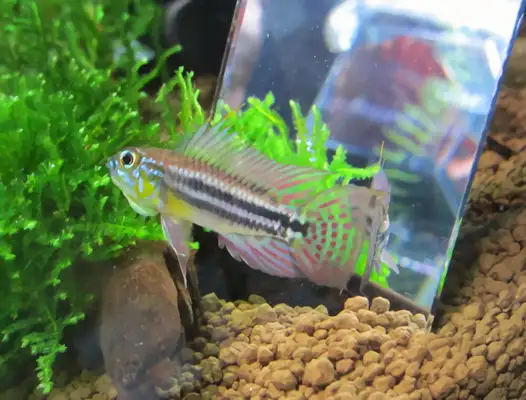
The sheiks are somewhat aggressive, so if they do not reproduce, it is recommended that they not be mixed with other animals, but the sheiks are less difficult to breed. So what are the characteristics of the shape of the chief's truffle? The average adult is 8-10 cm in size.
The gill caps of mature chief giraffes are covered by red spots and above the sideline on the top of the surface, and the gill-coloured strips below the back fin are particularly striking. The tails of the male chief, with a fork in the upper and lower fins, each stretching out a part of the fins and bearing the tails. With almost 10 thorns on the back end, when fully stretched, it was as beautiful and powerful as the crowns worn by Indian chiefs.
The tails of the male chief, with a fork in the upper and lower fins, each stretching out a part of the fins and bearing the tails. With almost 10 thorns on the back end, when fully stretched, it was as beautiful and powerful as the crowns worn by Indian chiefs. Chief's short-skinned environment
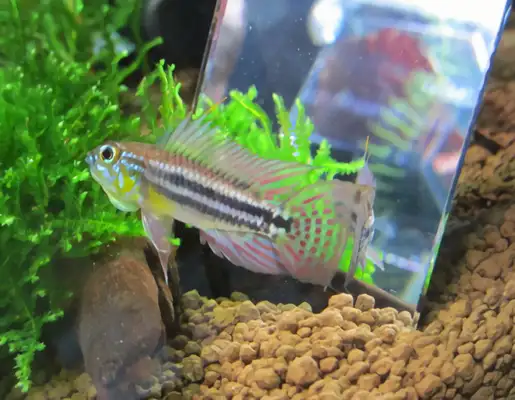
It is relatively easy to raise herds of sheiks, since sheiks prefer to live in thick leaves in the rain forest when they live in the wild, so care should be taken to add black water for water. Chiefs may choose suitable varieties to mix, but breeding periods are not recommended.
It is easy for shears to be raised, to be careful to keep nitrite concentrations at normal intervals and to provide nutritious bait, and, of course, other water quality and water temperature requirements are not negligible. The breeding of sheiks is a problem, with their spawning capacity usually between 40 and 60, but the incubation rate of fertilized eggs is low and has been a major problem for successful reproduction.
The water quality of the sheiks requires total hardness (gH): 2-6dGH, acid alkalinity (pH): 5.0-60. The shearing of sheiks requires the addition of black water for water quality treatment or the placement of grass mackerel in the filtration system as a filter. Chief Nishi likes old water and does not need to change water frequently. More than 10 days for a third of the water supply and about three months for a full tank change. The chief's short-snack feeding point.
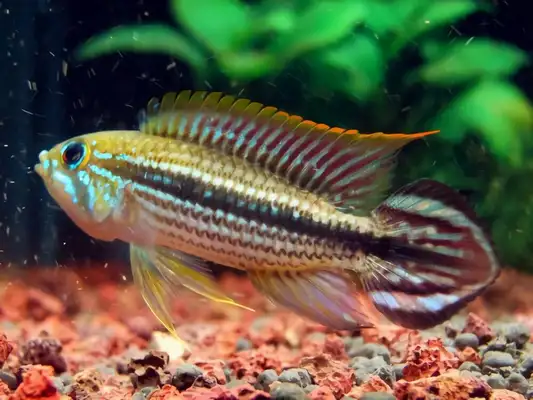
It's easier to feed a chief, but it's important for science to feed a chief. It's the chief's shorts that are more scientific.
Feeding the sheiks suggests one or two times a day and two times a day. One in the morning and another in the evening, if it does not hold the weight of the feeding, do not feed too much and feed half the size of the fish head. Chiefs are easy to accept artificial feed, but do not feed artificial feed for long periods, but also feed more live baits such as earthworms and red bugs.