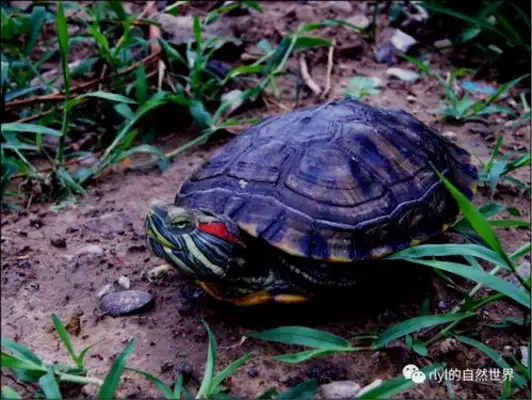
Red-eared Slider, known as Trachemys scripta elegans, is a widely ploughed freshwater turtle originating in south-eastern North America. They are known for the coloured graphs on their backs and the obvious red spots on both sides — “red ears”. This turtle is medium-sized, typically with a shell of 15-30 cm and a lifetime of more than 20 years, and is one of the pet turtles that children prefer.
Red-eared tortoises belong to semi-aquatic animals that like to swim in the water and also tan in the sun. They are resilient, sexually active and curious, and they are a very suitable pet for family raising. II. Characteristic characteristics
Red-eared turtles are relatively gentle, but also with a little curiosity. They like to move freely in the water, but sometimes they also choose to remain in the sun. They are smart enough to remember the voice of the master, even to a certain extent. Because of their activity habits, it is fun to observe their behaviour on a regular basis.
However, red-eared turtles also have some territorial awareness and occasionally compete for food or space. They are sensitive to changes in the environment and prefer stable living conditions. On the whole, they both enjoy time alone and show some sociality, but be careful not to be unduly disturbed. Conservation of environmental aquariums: It is recommended to select large aquariums of more than 60 litres to ensure sufficient activity space. At the bottom, safe sandstones or weeds can be laid to increase the sense of nature. Water quality management: Water temperature is maintained at 24-28°C and PH at 6.5 ~7.5. Water is regularly exchanged to keep water quality clean and to avoid bacteria. Water cycle: Water filters can be installed to help keep water quality clean and reduce conservation difficulties. Sun tan zone: Set a tan or sunlight so that turtles can tan enough to promote health. 2. The main foods of dietary management: red-eared tortoises are groceries that feed herbs, fruits, vegetables and special turtle foods. Common feeds include insects, small fish, leaves and fruits (e.g. watermelons, apples, carrots). Frequency of feeding: turtles feed 1-2 times a day and adult turtles feed every few days. Attention: Avoid feeding high fat or fresh food and ensure food diversity to provide balanced nutrition. Temperature and light UV lamps: daily electric bathing for not less than 10 hours to help turtles synthesize vitamin D3 and promote calcium absorption. Heating lamps: Heating lamps are set to maintain water temperature to avoid the health effects of low temperatures. 4. Health management regularly observes the eyes, shells and skin of turtles with abnormalities. Shells should be smooth and non-fiscal, with bright eyes. If a turtle is found to have a reduced appetite, an abnormal behaviour or a softer shell, he or she is treated in a timely manner. iv. Hair care (actually, shell and skin care of turtles)
Although the turtles do not have hair, their shells and skin also require daily care to ensure health. 1. Crust care cleanness: frequent wiping of the surface of the shell with wet rags to remove dirt and parasites. Smash the sun: the sun for turtles contributes to the synthesis of crustal minerals and the generation of vitamin D3, avoiding the softening of shells. Skin care keeps water quality clean and reduces the risk of fungi and parasitic infections. In the case of skin pathologies or parasites found, appropriate drugs are used in a timely manner or specialized veterinary assistance is sought. V. Attention and conservation recommendations to avoid sudden changes: to maintain the stability of ambient temperatures and water quality and to avoid severe temperature changes leading to turtle injuries. Reasonable space: Turtles should grow up and properly upgrade aquariums to ensure that they have sufficient room for manoeuvre. Preventing escape: Covering aquariums to avoid turtle escape or dangerous conditions. Moderate exercise: encourage turtles to move in water and improve their health.
Overall, the conservation of red-eared turtles is both a test of care and interesting. By providing proper environmental and scientific breeding management, they can grow healthy and become a pleasure in your life. And pets are a duty and a pleasure. Enjoy the process, and take care of your green companions.