The rearing containers may not seepage from chemical substances. No land, no heating lights. However, it was suggested that a UV-B lamp for reptiles should be set up so that in the absence of sunlight, turtle bones could grow healthy. Water quality is very important, and good filters are necessary. Biochemical filtration systems are beneficial in controlling concentrations of nitrate root and ammonium ion in water in Central Asia and no harmful gases such as hydrogen sulfide are produced in a fully dissolved oxygen environment. Water for rearing is to be fed through. Water: Why do we call water "crawled"? Because there's chlorine in running water. Chlorine is largely harmless to humans for disinfection, but chlorine and hypochloric acid in water can easily irritate and infect bacteria in turtles, so it is preferable to tan the sun for some time and to allow sufficient volatilization of chlorine in them. The remaining heavy metal ion and chlorine in the water mix of water quality tranquilizers should be pumped and pumped to ensure safe water consumption. The duration is 2-3 days. Ultraviolet lamps can kill bacteria in the water and can be considered for installation, but attention must be paid to the methods used to avoid killing turtles together. Sufficient sunlight can contribute to the growth of plants in water and indirectly improve water quality, although it is often the case that cash turtles also prefer to bite water and grass. Rich turtles like to dig sandstones at the bottom of a tank, and smooth sandbrush is a good base. However, too thick a base may be difficult to clean and easily lead to turtles being misfed, so some breeders prefer to feed a tank without a base.
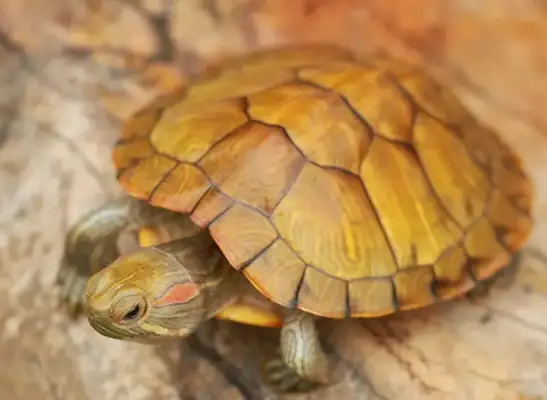
Since cash turtles are highly aquatic, juvenile turtles can be fed directly into fish tanks, but the size of a turtle can be around 50 cm, which should be expected by each feeder before choosing to raise them.
They do not have the habit of suntanning and rarely come to shore, so they can not lay land in fish tanks unless they are necessary for reproduction. Although at the origin of origin, tortoises live at the bottom of a body of gravel and silt, there is no harm in not laying the base in artificial breeding. The use of rock drifting logs, etc., to build places for turtles to hide, would help them to stabilize their emotions. And if more than two turtles are raised, because of their aggressive nature, a safe haven must be provided. The selection, however, must be smooth and non-arranged so that the skin of the tortoise is not scratched, resulting in surface infection. Nor should they create dead corners to prevent the accumulation of food residues and excreta from preventing the cleaning of fish tanks. Due to the lazy nature of the feeding turtles, who rarely take the initiative to eat, some medium-sized fish can also be combined to increase appreciation, but turtle rearing density must be kept to a minimum.
Good and bad water quality is critical for turtles, such as those who live in water for a long time, so water filters must be installed and UV lamps installed to curb the growth of bacteria and fungus in water to reduce skin infections. A study of the pig's nostrils showed that the bottom of the riverbeds in these areas was rich in lime, resulting in a weak alkalinity (pH8.0-8.3). This is sufficient proof that pH8.0-8.3 is the best water quality for pig noses. For water temperature, it must remain between 26 and 30°C.
Studies have shown that nipple spasms in the throats of cash-seeking turtles are able to absorb oxygen from water entering the mouth and function in a manner similar to thorium. Therefore, the authors recommend adding gas pumps to the aquariums and increasing the oxygen content of the water, which would facilitate underwater exchange of gases by turtles. Last one. Next one.