Designation: PET2182
Vulnerability: ballworms
Life: 5-6 years of Yunnan rabbit species
Yunnan rabbits are both flesh and rabbits, unique to our Yunnan map, growing on a small scale and adapting to a very small range of environments, and are therefore not widely promoted, with only a small percentage of people raising them. Yunnan Rabbit is a meat-skin-type rabbit that is adaptable, disease-resistant and growing fast. Yunnan Rabbit Form Characteristics
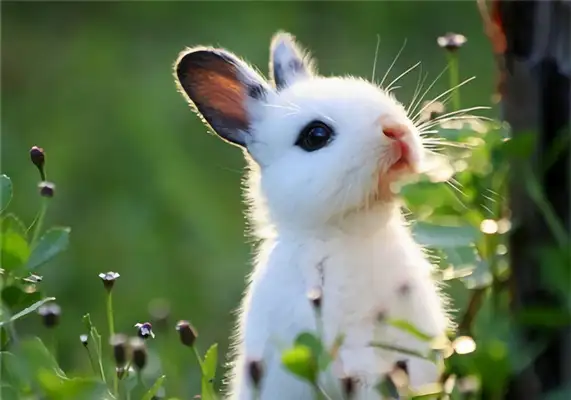
Yunnan rabbits are small, are older species, are not genetically modified and do not look as perfect as professional meat rabbits, but Yunnan rabbits are more adapted to the local environment, so they tend to breed more locally.
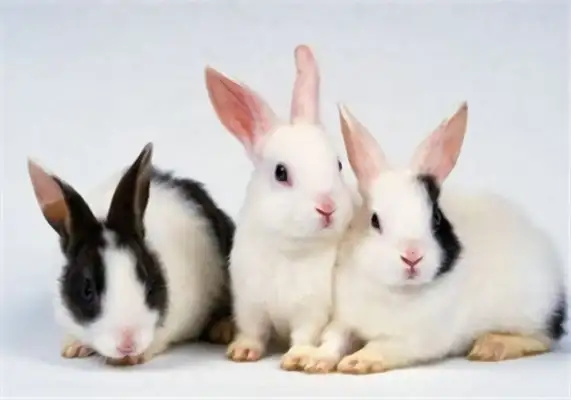
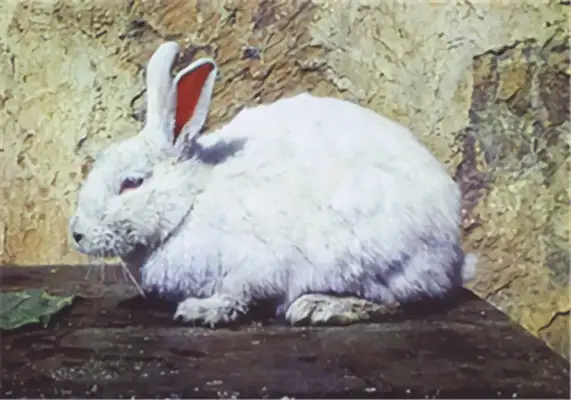
Yunnan Rabbit is a meat-skin-type rabbit that is adaptable, disease-resistant and growing fast. The ears are short and straight, the lips are sharp, the eyes of white rabbits are red or blue, and the eyes of other fur rabbits are blue or black. The fur is predominantly white, followed by grey, black, black and white flowers, and a few of them are brunette, grass and yellow.
Yunnan rabbits have ears of 7 to 10 cm, ears of 4 to 6 cm wide and ears of 0.1 to 0.15 cm thick. Adult mothers weigh around 2 kg. Mother rabbits generally begin planting when they weigh 1.4 to 1.5 kg in the 6-7 month period, giving birth to 7 to 8 hues a year, with a survival rate of over 90 per cent. In Yunnan, the slaughter rate was 58.7 per cent at the age of August and 60.5 per cent at the age of one year. Yunnan Rabbit Care Knowledge
The most important thing for Yunnan rabbits, as an income-generating project for rural farming, is not just how to feed, but how to prevent and contain diseases better. In many regions, rabbits are raised in the same way, so it is difficult to control the epidemic if there is a large-scale disease.
Regular immunization
Weaned rabbit rabbits in Yunnan should be vaccinated with 1 ml per rabbit, with another 2 ml per rabbit after 10 days. It is administered once every four months. Vaccination should be done, one shot per rabbit, and mixing should be strictly prohibited in order to prevent human infection.
Regular feeding prevention
In the case of Yunnan rabbits, preventive medicines are systematically and scientifically regularly fed. After weaning, rabbits who prevent ballworm disease feed one piece of chlorobenzene per day for 45 days. The prevention of gastrointestinal inflammation and diarrhoea can be fed into diarrhea, with 1 g per rabbit per day for 15 to 20 days. The ethanol is mixed in rabbit feed every two days, with 1 slice per rabbit for 15 to 20 days, to prevent Bacillus haremia and to promote growth. Also, every 10 to 20 days in the summer, the bacterium is fed.
III. Periodic disinfection
Once a year after spring, a complete disinfection is carried out both inside and outside the Yunnan hare field and every 10 days thereafter. The number of sterilizations varies according to season, usually once in the autumn and half months and once a month in winter. Sterilizers can be used interchangeably for various uses such as carbide, fungicides, disinfection, bioplasm, sodium hydroxide, Lysol, etc. Yunnan Rabbit Living Environment
In order to improve the productive capacity of Yunnan rabbits, a good living environment for rabbits must be created. Rabbit houses should be built in high ground, ventilated, lighted, clean and dry and in a quiet environment. The rabbit's home, 20-30 cm from the ground, is typically walled by wooden gate bricks, separated by a small room of 62 x 70 cm or 70 x 80 cm and equipped with a slab. Frequent cleaning of rabbit houses, hygiene and reduction of disease. What's the point?
Food choices for Yunnan rabbits are based on locally available foods, and there is no need to choose strange foods. Yunnan rabbits prefer to eat some higher-fibrous foods, such as dry grass, etc., which can be added by their owners.
I. Feeding methods
Yunnan rabbits are herbivorous animals, with approximately the same content, but with slightly different feeding methods. Because Yunnan rabbits do not have the habit of storing things, they are fed twice a day, one at a time. Evenings are more fed this evening because of night animals.
II. Selection of feed
Yunnan rabbits need to be rich in vitamins, minerals and trace elements, as well as high levels of crude fibre to promote intestinal creeping, help digest and prevent hairball disease. Fats are low enough to prevent Yunnan rabbits from becoming obese. High fibres contribute to normal discharge of Yunnan rabbits, with even nutrients.
Don't give Yunnan rabbits cooked, frozen, corrupt, fried, chocolate, coffee, candy food. Vegetables are not recommended for Yunnan rabbits because they are sweaty pesticides and have too much moisture, and Yunnan rabbits cannot control their own intake, although they can eat fresh grass.
The diet of Yunnan rabbits is likely to change according to weather, decrease due to heat and increase cold. It's normal, indoctrination. Yunnan rabbits also need water, except that the urine of Yunnan rabbits is condensed urine (like human sleep) so they need less water than other animals, but not less.