Nautilus larvae are small animals that require careful care and patience, and they have higher environmental and rearing requirements. In order to raise a young parrot, it is first necessary to understand their basic lifestyle and the need to raise them. Next, we will present some important concerns for the conservation of young birds and help you to provide a good living environment for them.
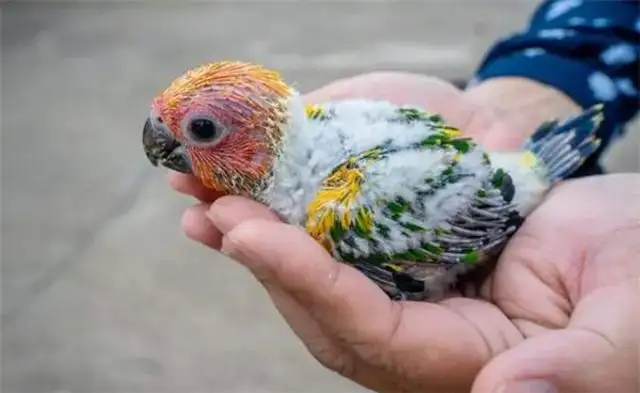
1. Prepare necessary equipment
In the conservation of parrots' young birds, in addition to the feeding mix and raising of the environment, it is necessary to prepare the exclusive feeding equipment, suitable cages and thermometers for parrots. Feeding equipment should be chosen for parrot size, which is easy to clean and preferably not easy to dump, in order to avoid pushing the equipment down when young birds eat. Bird cages should be selected for the size appropriate for the growth of the young bird, ensuring that the space is open and well ventilated, while taking care of the safety of the cages and avoiding injuries to the young bird. Thermometers help you monitor the temperature of the parrot ' s young bird ' s environment and ensure that it lives at comfortable temperatures. These preparations will help you take better care of the young parrots and make them healthy.
2. Preparation of suitable food
Nautilus larvae require special feeds, which are usually rich in high proteins and essential nutrients, which contribute to their healthy growth. You can buy parrot feed at the pet store, specially designed for young birds, to ensure that it contains sufficient nutrients. In addition, you can prepare soft foods, such as fruit or vegetable mud, which can be diluted and given to young birds. These soft foods provide additional nutrition and are more digestive for young birds. Ensure that feed is fresh and clean and replaced in a timely manner to maintain the health and vitality of young birds.
3. Controlling feeding temperatures
It is important to ensure that the feed temperature of parrots is between 38 and 40 degrees Celsius, so that food is not too hot or too cold to facilitate ingestion. Thermometers are used to monitor the temperature of feed and to ensure that the temperature is appropriate when feeding. If the temperature is too high, it can wait for some time to cool it; if the temperature is too low, it can heat the food properly, but ensure that it is not overheated. This ensures the comfort and safety of the young parrots when eating.
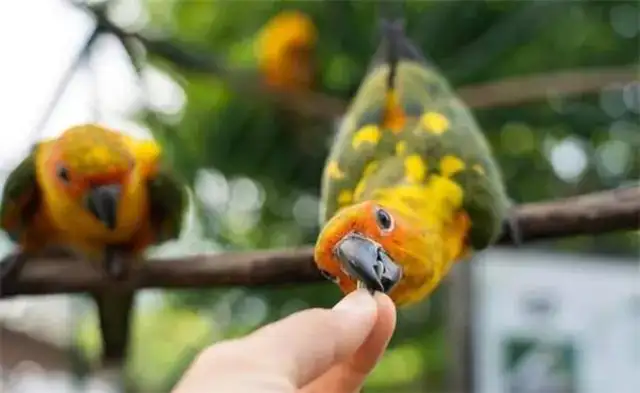
4. Frequency of feeding
Newly born young birds need to be fed every two to three hours because their stomachs are so small that they are unable to absorb enough food once in a while. As young birds grow, their stomach capacity increases, the frequency of feeding can gradually be reduced to every 4-6 hours. This process needs to be adapted to the growth and weight changes of young birds to ensure that they are adequately nourished. At the same time, food should be fed in such a way as to ensure that the temperature of the food is appropriate and to avoid causing discomfort to young birds. As young birds grow, other foods, such as fruit, vegetables, etc., can be gradually introduced to enrich their diet and promote healthy growth.
Five. Right feeding position.
When feeding young birds, you can place them in the abdomen with the palm of your hand, leaning on both sides of the young bird with the thumb of the other hand, inserting the feeder into the mouth of the young bird and feeding slowly. When feeding, be careful not to insert the feeder too deep to hurt the mouth of the young bird. In addition, the feeding device must be moderate, not overheated or overcooled to avoid burns or discomfort. After the feeding has been completed, the beaks and surroundings of the young bird will be emptied lightly with warm water and kept clean.
6. Observation of the health of young birds
It is important to regularly check the weight, excreta, etc. of the young bird. Weight can be used as an indicator of health status, and it may be that young birds are ill if a significant decrease in weight is observed. The colour, shape and quality of the faeces can also reflect the health status of the young bird, and can be a manifestation of health problems if anomalies, such as abnormal faeces colours, bloodlines or alienated tastes are found. When anomalies are detected, timely medical treatment should be provided to ensure the health of young birds. In addition, it is important that the feathers and skin of the young birds be regularly checked and that they be kept clean and clean.
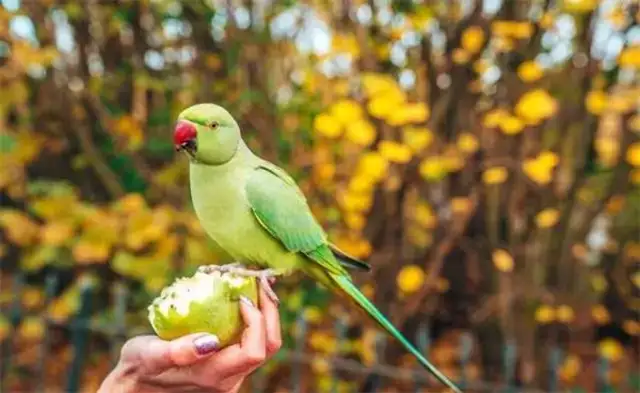
7. Gradually adding solid food
When young birds grow up, they can gradually add solid foods such as bird food, cooked rice, etc. These foods should be appropriate to the age and health of the young bird, with the option of choosing some food suitable for the parrot, or soft food such as cooked rice or vegetable mud. When adding new food, care should be taken to observe the reaction of young birds and, in case of indigestion, to stop adding and consult with veterinarians in a timely manner. At the same time, it was important to keep drinking water clean and sufficient, and young birds needed sufficient moisture to maintain their health while growing up.
8 Building interaction with young birds
Many young birds interact with each other and trust relationships that contribute to their growth and health. Interaction with young birds enhances their social capacities and makes them more responsive to the human environment. By touching their heads or backs, talking to them, or seducing them to interact with food, young birds can slowly become accustomed to and trust your presence. It is also possible to observe the behaviour and state of the young birds during the interaction and to identify and address problems in a timely manner in order to maintain their health and well-being.
Love, patience and care are among the most important qualities in raising the young parrots. Regular feeding and observation, scientific feed mix, a good living environment, and adequate sport and training are all key to ensuring the healthy growth of young birds. It is hoped that through these conservation advice, you will be able to provide a happy and healthy life for your young parrots and to establish closer ties with you. Last one. Next one.