Title: PET4319
English name: Pained Turtle
Character: lively
Origin: Mainly in the North American continent
Vulnerability to disease: Decay
Life: Overview of species of flame turtles around 30 years of age
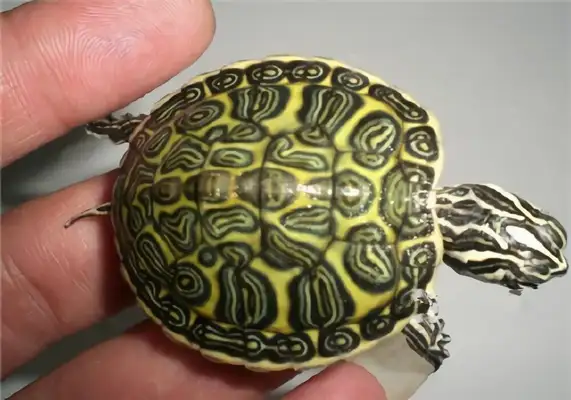
Flaming turtles, also known as red belly turtles, are in fact a branch of Brazilian turtles, but they are more beautiful than Brazil. They are expensive and cute and grow up to be vegetarian-oriented and cheap, so flame turtles are the preferred pet turtles for aquatic lovers.
Newly born turtles, all green, seem to have nothing to do with flames. So someone's gonna wonder if the flames are red? There's something inside. If you look at it carefully, it is easy to find that the stripes on its tortoise are very similar to the burning flames; more importantly, the flame turtle is called the flame turtle, and there is an important secret. Flaming turtles do not have the same layer of tortoise colours, but as they grow, the green raisins become yellow and red, and eventually become fire-like, and are famously known as flame turtles.
Chinese name: Flame Turtle
Alias: Red belly turtle
English name: Pained Turtle
Appearance: Small water turtles, with only 10-25 cm long backs, thin, smooth, flat elliptical shapes, colours from green to black, partly red stripes.
Distribution: Mainly on the North American continent.
(b) Practice: Living in lakes, rivers, ponds, etc. The main foods are snails, insects, lobsters, clams, small fish, rotting meat, algae and aquatic plants.
Reproduction practice: Flaming turtles have a breeding period of 2-22 eggs per year in June-July. Egg longitude 27.1 ~ 30.7 mm, short diameter 13.9 ~ 16l mm. Egg weight 3.55-5 grams. Incubation period 72-80 days.
Prices: Individual sizes and prices vary widely, with small scores and possibly larger 200. Flaming turtle morphological characteristics
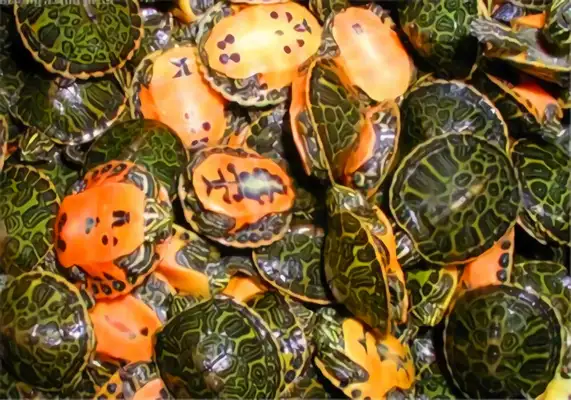
Flaming turtles are most popular with their beautiful backs, but many feel that they look a little bit like Brazilian turtles, but they all belong to the same group, but they are relatively expensive, and the way they are raised is as simple as Brazilian turtles.
Flaming turtles are small water turtles, with back nails of only 10-25 cm long, thin, smooth, flat ellipse, colours from green to black, and in part red stripes. The abdominal armour is generally yellow, sometimes bound with red, and sometimes with black to red brown patterns, which vary in size and shape. Flaming turtles have yellow and red stripes on their skin from black to olive, neck, limbs and tails, and yellow stripes on their heads. Male turtles have long front claws and thick tails. Female turtles tend to be larger, with shorter front claws and shorter tails.
We all know that fire turtles come from the United States, like Brazilian turtles, donut turtles, etc. The gene ratio of the flame turtle is very similar to that of the doughnut turtle and belongs to a close relative of one of the turtles. Flaming turtles are known for their beautiful patterns, as the burning flames rise. For donut turtles, the colour difference is greater and the viewer is stronger. Some of them love fire turtles. They love them. Fire turtle conservation knowledge
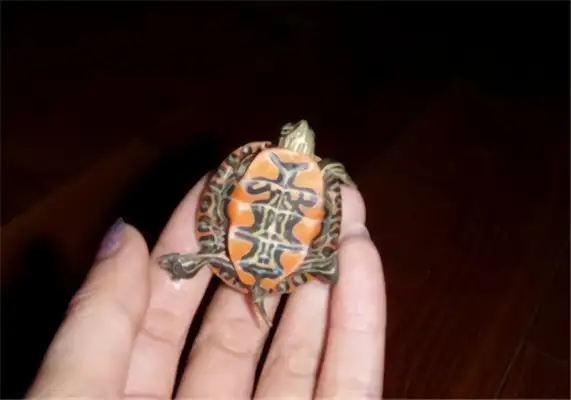
The fair prices of the flame turtles and the appearance of the adult are more beautiful than those of the Brazilian turtles, so they are popular, and the methods of raising the flame turtles are simple and not very different from those of the Brazilian turtles, so there is a high market penetration rate, which is taught below.
The timing of the selection of new flame turtles should be around May of each year, when the daily temperature is constant above 20 degrees and the average daily temperature is optimal at around 25-28 degrees. Flaming turtles can be selected earlier because of their cold-resistant characteristics.
2. Flaming turtles are characterized by very coloury textures and very beautiful. But I personally think that when you select new turtles, you should focus first on the health of turtles, not on their image. It is not advisable to buy back a turtle for as long as its friend who has just taken care of it without paying attention to its health. Like human beings, without a healthy body, even a beautiful appearance, it is in vain.
3. Flaming turtles are selected for individuals whose backs are 8 cm or more or weigh more than 2 taels. Put the turtle in your hand and if you feel like you're drifting, you have little weight, you don't fall, and you prove that turtles have health problems, and you don't choose to buy them.
4. Flaming turtles are selected for individuals with darker back-later colours, as there are more turtles in the pet turtle market and the back-later colours will fade as they grow. And when we're looking for donut turtles, we're going to have to pick out the individuals who have a lot of loops on their backs, and the flame turtles are going to pick out the ones that have lots of them. Fire turtle living environment
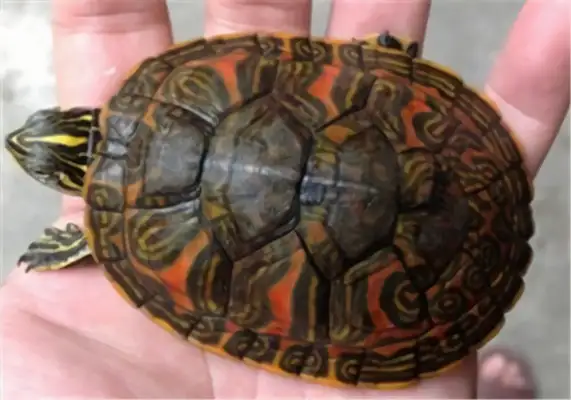
Flaming turtles are less environmentally demanding, which can be said to be a very easy-to-breed turtle, but even so, we have to do the necessary maintenance work, especially during the very young turtle period, to ensure their health.
I. Flaming turtle breeding environment
Flaming turtles are resistant to both cold and heat, are poorly fed and environmentally demanding and can grow and develop normally with water and food. Water tanks, basins and ponds can be raised. Specialized households should build pool farming. The size of the reservoir, which is 60 cm deep with brick and cement, depends on the number of turtles. The new cement pool must be washed with fresh water and dried up for three to five days. The bottom of the pool will be used with 20 centimetres of sand and 60 centimetres of walls around it to prevent turtles from escaping. In addition, a layer of sand is required between the pond and the wall for landing and spawning.
II. rearing management of juvenile turtles
In the case of short-lived shells, 10 per cent of their physio-saline water should be sterilized after drying out of their umbilical cords, then placed in a water tank with water temperature of 25°C to 30°C, with water exchanged once a day, and 2 to 3 days later fed to a boiled mix of wheat, millet, eggs, pumpkins, or to shredded fish meat, mackerel, animal internal organs, etc., and fed twice a day with less surplus, with timely elimination of residues in order to prevent deterioration of water quality. In winter, keep warm and keep the turtle safe. Flaming turtle feeding order.
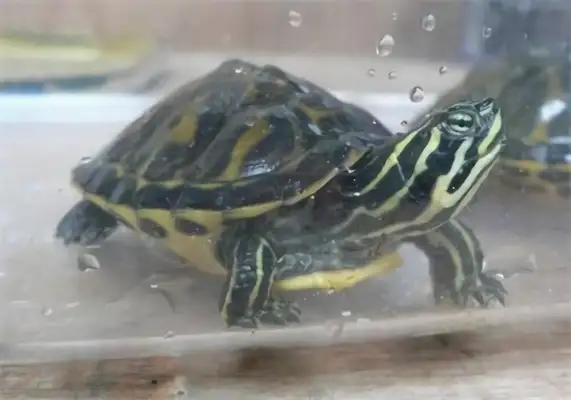
Fire turtles are easy to feed when they are familiar with the environment, and fire turtles are very edible when they eat, and much food is available to him, and the following is a description of their food options.
Flaming turtles are impenetrable and the main foods are snails, insects, lobsters, basil, small fish, rotting meat, algae and aquatic plants. Flaming turtles are carnivorous and, with age, more plant-oriented. In a state of artificial rearing, we can eat skinny pork, animal organs, shrimp, earthworms, watermelons, vegetable leaves, bananas, etc.
Flaming turtles are active, but they don't fight each other, they don't freeze to death below zero degrees, and they are active at 42°C. With good feeding, it can weigh 30 to 40 grams per month. The breeding period for flame turtles varies from 1 to 10 eggs per year in June to July. Egg longitude 27.1 ~ 30.7 mm, short diameter 13.9 ~ 16l mm. Egg weight 3.55-5 grams. Incubation period 72-80 days. Flaming turtles are highly adaptable, and their survival rates are high as long as feeding and management are strengthened.