It'll be comfortable to brush the shell, which is a deformation of its bones and has no nerve on its bones, and it'll feel comfortable as long as it has the right strength. Once the turtle has been brushed lightly, the remaining traces can be wiped with paper or dry cloth. A regular one-to-two monthly examination of turtle armour is sufficient, and regular bathing and brushing of turtles can also effectively reduce the probability of disease occurring in turtles.
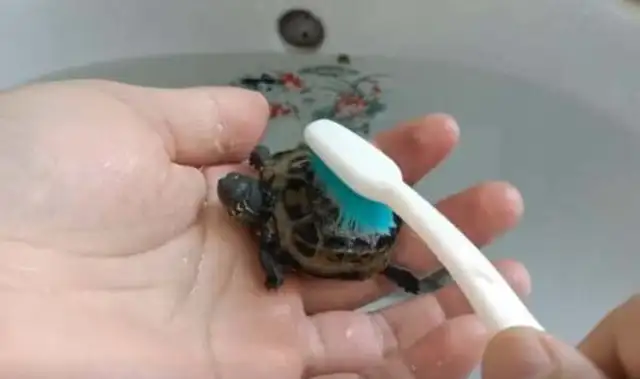
Brushing turtle shells requires attention:
1. When brushing back, keep an eye on water temperature and ambient temperature, and try to avoid a temperature differential irritation. When cleaning the head and limbs of turtles, the technique must be lighter, after all, the skin of turtles is not as hard and sensitive as crust. If you don't take care of yourself, you'll hurt your skin. And if you don't notice, it's easy to rot.
2. Tortoises grow moss without brushing their backs, indirectly affect the development of turtle crust, are less likely to grow, and conceal traces of the original nails, delaying the condition of the turtle.
3. Once the turtle has been brushed lightly, the remaining traces can be wiped with paper or dry cloth. Last one. Next one.