Designation: PET4856
English name: Introduction to the Golden Monkey species of Rhinopithecus
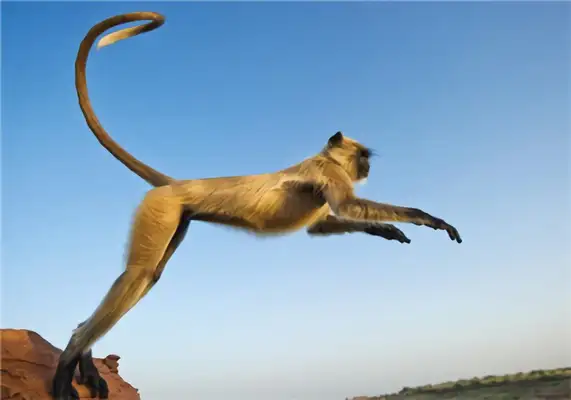
Rhinopiticus, because of his current scarcity, is it expensive? As a result, the monkey is a rare animal that is unique to China. Since the world's oldest nasal monkeys are the Sichuan, Xuanxi, Gansu's Kinshin monkeys living in China, this animal is commonly known as the Kinshin monkey, whose name is translated directly into Chinese.
Chinese literary name: Kinsim.
English name: Rhinopiticus
Area: Animal
Gate: Phylum Chordata
Amen: Vertebrata
Programme: Mammalia
Theria
Objective: Primes
AA: Anthropoidea
Section: Cercopichae
Yako: Cercopithacinae
Rhinopiticus
Scrambled monkeys, piping monkeys, gibberish monkeys, Vietnamese monkeys.
Distribution: Characteristics of the Golden Monkey in Yunnan, Guizhou, Sichuan, China
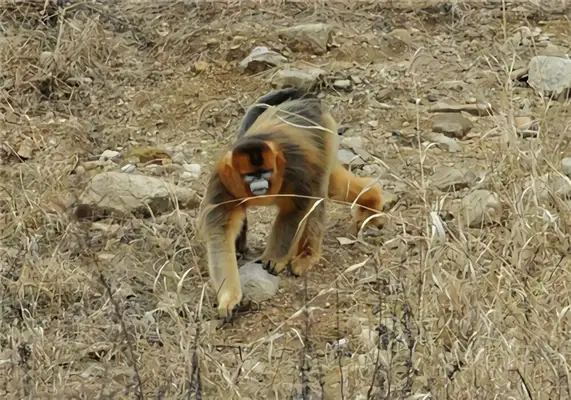
At present, there are six different kinds of monkeys, namely, the Myanmar Golden Monkey, the Furious River Monkey, the Kawakawa Monkey, the Phekin Monkey, the Golden Monkey and the Vietnamese Monkey. Of these, both Myanmar and Vietnam are Chinese-specific species. So what's the difference between these monkeys?
The common characteristics of the monkeys are large nostrils, tops, thick lips and no cheekbones, which are adapted to the aerobic evolution of the plateau.
Of these, the gold-coloured kimmons have long hair on their shoulders and long or longer tails, with an average adult male length of 680 mm and a tail length of 685 mm;
The shape of the gill monkey is similar to that of the gill monkey, but the tail is much longer, ranging from 637 to 690 mm, with 846 to 905 mm long, with brown backs and yellows;
The pixie monkey is slightly older, 740-830 mm long and has a relatively short tail, slightly equal to a long body, about 510-720 mm long, on the back of the body, on the side, on the outside of the limbs, on the hand, on the foot and on the tail. On the back and with gray and white thin hair. White on the neck, abdominal, hip and inner limbs;
Anger monkeys are black, only a little white on the face, chest and vagina, typically weighing 20-30 kg, slightly larger 35-45 kg and about 1.2 m in length;
The gold monkeys of Viet Nam are small, black in the chest, abdomen and light yellow on the inside of the limbs;
The Myanmar Golden Monkey is almost completely black, with a bunch of dark hairs long and curling up forward, small white hairs on his ears and cheeks, light pink skin on his face, a unique white beard on his chin that can be white and easily distinguishable; long tails, almost 1.4 times larger, adult males, 55.5 centimetres long and 78 centimetre long. The monkeys live in the environment.
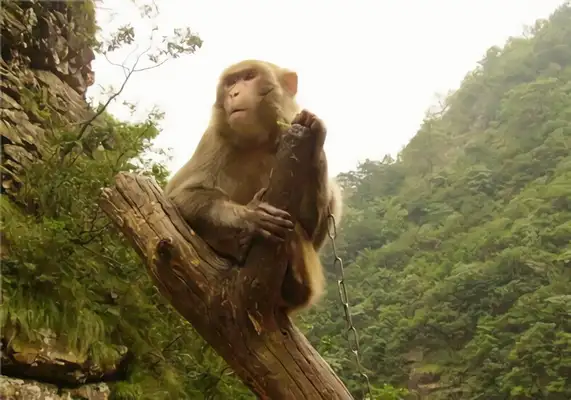
Although the monkeys are smart and have a relatively large number of species, it is difficult for new breeders to raise them because they are state-level protected animals, because of the illegal nature of individual breeding and the high level of demand for their environment.
The gill monkey is a typical forest tree-dwelling animal that lives in forests from 1,500 to 3300 m above sea level. The vegetation types and vertical distribution zones of the subtropical mountains are the co-mingled green, falling leaves, subtropical leaves and permafrost, and secondary needle leaves. Four vegetation types, such as mixed forests, do not migrate horizontally with seasonal variations, but only vertically in the habitat. For habitat, each large cluster is based on family-based small clusters. The largest group can be up to 600 people in primates, and such large groups are rare. The monkey breeds knowledge.
The monkeys like to live in groups and live in harmony with their companions. The way they live is very similar to that of humans. In the home of the monkeys, the minor monkeys are very curious and naughty, and are loved by their parents. However, when they reach adulthood, they are forced out of their homes by their father and live independently in the wild. The Golden Monkeys live in mountain forests. Living mainly on trees and looking for food on the ground. They feed on wild fruits, buds, bamboo and moss. The staple foods are leaves, spring branches, flowers, fruit, and also barks and roots, as well as insects, birds and eggs.