Designation: PET2456
English name: Introduction to Black-cheeked Lovebird parrot species
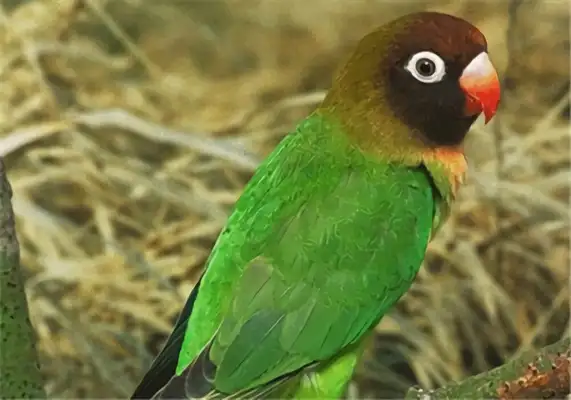
Black-cheeked Lovebird, alias Black-Skink Lovebird, “Agape” in Greek means love, whereas “Ornis” means bird, and therefore also known as “lovebird”. The feathers of the parrots are beautiful and are often caught and raised, resulting in fewer and fewer wild animals.
Chinese literary name: Blackface Parrot
Chinese aliases: Black cheek lovebird, black-faced parrot
English name: Black-cheeked Lovebird
Two by Agaponis nigragenis
Area: Animal
Door: vertebrate door.
Platform: Birds
It's a parrot.
Section of parrots
African parrots
It's a parrot.
Distribution: Pattern characteristics of parrots with black faces in south-central Africa
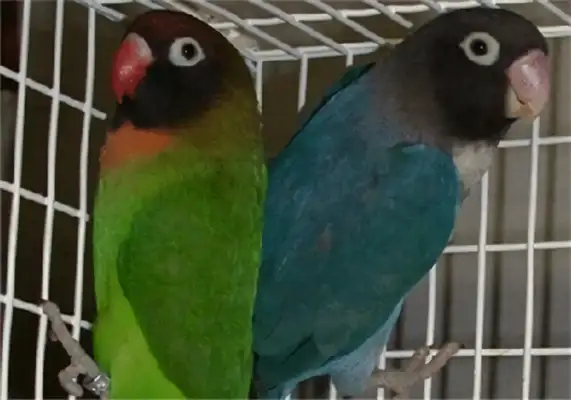
The desired length of a macaw after adulthood should be 13 centimetres and the desired weight should be around 40 g. This parrot's bird body is green and the black-faced parrot is not easily tamed, so it is best to raise it.
This parrot has a red brown forehead; black brown between the eyes and beaks, on the cheeks and throats; dark yellow on the back of the head and neck; orange on the chest, which gradually turns yellow on the lower of the chest; yellow green on the abdomen and inside the tail, with light green on the tail; and a broad circle of white eyes outside the eyes, red bird beaks and rainbow brown. The young birds are dark, and the beaks are black.
The black-faced parrot's neck is orange, green in the chest, and the number of black-faced lovebirds in the wild is very small, with only about 10,000, and the usual nested lovebirds are mostly mixed, so the number of pure-faced, black-faced lovebirds raised by humans is already quite small, with many colour variants compared to the mixed species below, and one of the most common parrots in the market. Some of the rare variants are not cheap, the hand-breeding birds are dynamic, attractive, tend to flirt or often unstable, are quick to act, and be careful that they do not escape carefully, if the young birds that they raise are close to their masters and are not afraid to bear, it is best to have only one, because their feelings are very close, not close to their owners, even the hand-breed birds are likely to do so. Black-faced parrot life habits.
Black-faced parrots share a common hobby with other parrots. With bites, the black-faced parrot barks not very loud, but the chirps and the bird is very annoying. The newly introduced birds are very sensitive to the living environment and have largely become strong after adaptation. Black-faced parrots live mainly in bushes, bush plains and open grasslands ranging from 600 to 1,000 metres, which grow in conjoining plants; they tend to operate in valleys. Black-faced parrots raise knowledge.
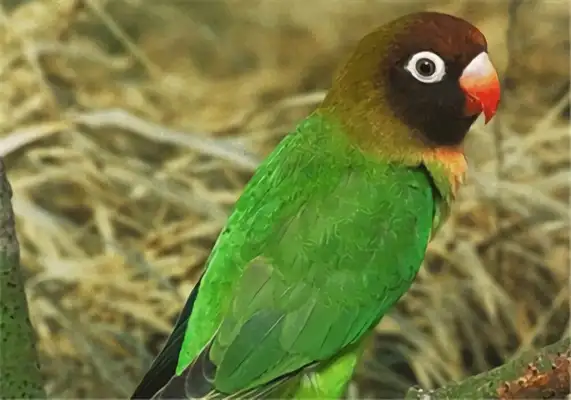
In the wild, macaws tend to reproduce in November and December of each year, and artificially grown in the spring of each year, with low rates of reproduction. The parrots have raised a family from childhood and the noise is not very high.
During reproduction, 20 *20 *30 cm thick nest boxes can be provided; black-faced parrots produce 3 to 6 eggs at a time, with an incubation period of 20 days and young bird feathers of about 32 days. In the absence of minerals, the prodigal bird tends to remove feathers from the young bird, who can reproduce several times a year if they are properly cared for, but preferably not more than twice a year for the health of the prodigy.
It is not easy to provide the material needed for nesting (e.g. straw, branches, paper) for nesting or breeding in groups, which can be reproductive throughout the year, producing four to six eggs at a time, often unfertilized, with an incubation period of about 18 to 23 days, sometimes the mother begins to hatch after the birth of the second egg, young birds grow into feathers after about one month, need sufficient food to feed their own birds during their breeding, and it is recommended that they may be moved out of their hands for about two weeks or more.