No.: PET6650
English name: White Oranda with Five Red Fins
Origin: Overview of Chinese pentafins
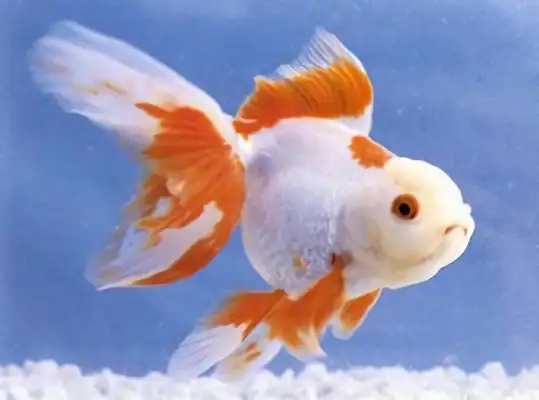
The five fins are a rare species of goldfish, but the colours of the five fins are silver and white, and the colours of the fins are red, so they are very distinctive and are gradually being accepted by goldfish lovers.
English name: White Oranda with Five Red Fins
Type: Goldfish, temperate freshwater fish
Origin: China
Reproduction: Eggs
Water quality: pH at around 7.5 and hard at 10 degrees above
difficulty of raising: easy
Fits to water temperature: the best water temperature is 20-28 degrees of five fin metre.
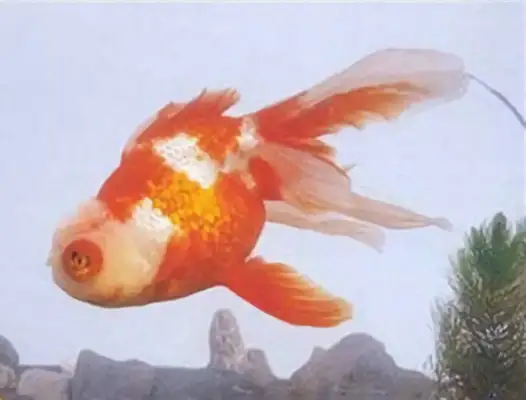
Five fins meet a goldfish species with the same habits as goldfish. The five fins are unique in their appearance, unlike the common goldfish, but also because they are unique in shape and colour, and are loved by large goldfish lovers.
Goldfish are known for their colours, so many white goldfish are unpopular, and even though the fish is silver, all fins are colourful and distinctive. However, such varieties are strictly selected, and the body must have no red spots, a mutation of white fish. After repeated selections, the positive rate has gradually increased, and in recent years new variants with black fins have been selected. Five fins meet the breeding environment.
It is not difficult to keep the fins together, but attention needs to be paid to their breeding environment and water quality. Many people think that goldfish can only be fed with random tap water, but it is also necessary to take care of water quality filters and water temperature to produce healthy fins.
In freshwater breeding, almost every breeder has studied nitrification systems and has studied ammonia, nitrite and nitrate. In short, the five fins live in a narrow space, and for family breeding, the five fins are the right place. In such a relatively small space, the crumbs that meet the fins, the residues of food and so on, even for a very well-developed filtration system, it is not easy to strike a balance. The final transformations may have excess nitrates. Nitrate is low, but there is a degree of tolerance for the five fins. Data suggest that it would be preferable to meet no more than 80-100 PPM, with a safety range below 40 PPM, and a large concentration of 120 PPM for large fins and walls. Beyond these values, there is a sense of urgency (stress), laziness, red spots on fish fins, or red blood vessels. So we usually change water regularly.
When temperatures are low, the five fins are essentially at the bottom of the fish tank, and they are not moving, and their reaction to fish food is slow. As water temperature rises, the five fins begin to move more and more frequently, moving faster, and the five fins begin to search for food at 5 °C, and after 20 °C the five fins become more active and faster, and even chase fish bugs at 25 °C. But when water warms up to 35 °C, it's no longer suitable. Five fins to feed each other.
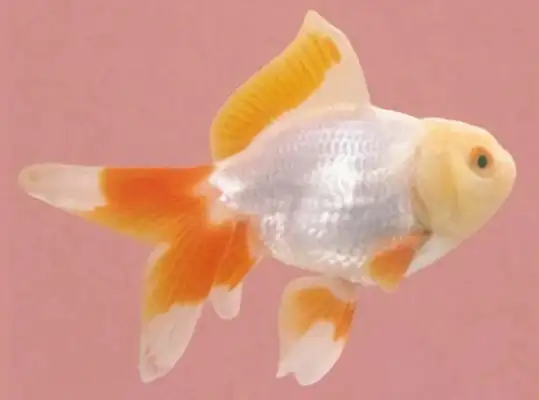
The fins coincide with a goldfish species, so that the feeding and feeding methods can be based on goldfish feeding points. Although it is not difficult to raise the fins, many fish friends are still feeding gold.
Despite being a fully domesticated, predatory fish, like other fish, such as gills, whether or not feed is reasonable or not, the correct feeding can directly affect the growth, depth and beauty of the five fins, the appearance of characteristics, the abundance and the resilience of the spawning, hatching and fins. Thus, nutrient-rich proteins, fats, carbohydrates, vitamins and a certain amount of inorganic salts and trace elements must be present in the feed that meets the fins. For example, in other identical situations, where red insects are able to feed enough fresh and living daily, fish growth is particularly strong, especially when features such as lion heads, water bubbles (meaning carcasses and bubbles) are more developed, perhaps because of the abundance of animal proteins, fats, carbohydrates and other nutrients in the red infestation.