No.: PET4874
English name: Taiwan kukri snake
Nationality: Taiwan
Vulnerability: oral inflammation
Life: Overview of Little Snakes in Taiwan 8-10 years
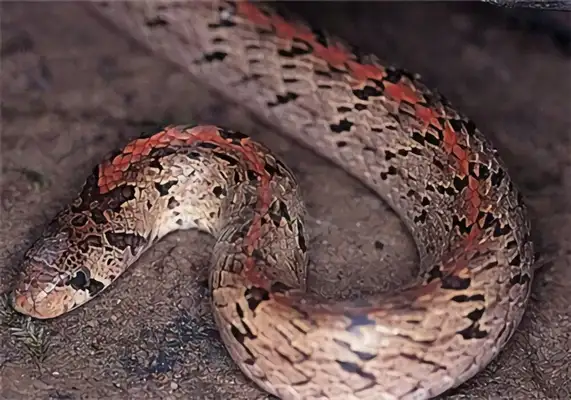
Taiwan kukri snake, by definition, is small and small. The more typical feature is that there's a v-print on the head, and the color of the young snake changes with age.
The species has been included in the List of Land-based Wildlife for National Conservation or of Significant Economic and Scientific Research, published by the National Forestry Administration of China on 1 August 2000.
Chinese literary name:
Chinese aliases:
English name: Taiwan kukri snake
Two words: Oligodonformosanus
Area: Animal
Door: vertebrate door.
Scramble
I've got eyes.
Section: Snake Section
It's a little snake.
Little snake from Taiwan.
Distribution: Jiangsu, Zhejiang, Fujian, Jiangxi, Hunan, Guangdong, Guangxi, Hainan, Guizhou, Yunnan, Taiwan, Hong Kong, Macao, Taiwan's little snake-head form
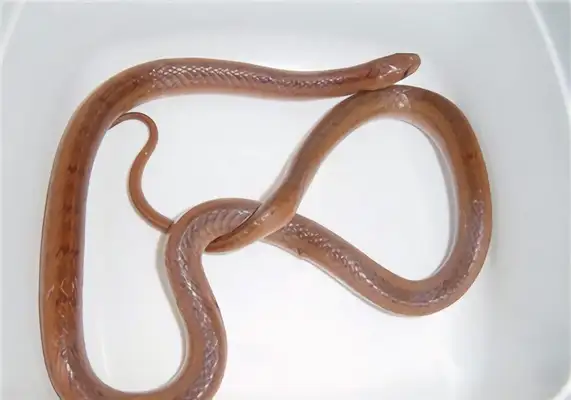
The small-headed snakes of Taiwan are non-venom-free, so those who love them can rest assured that they can be raised, and they can be divided into at least three types according to their color. There is a very visible red line on the back of the Taiwan cobra, with a patterned graft on the head that is easily identifiable.
Taiwan's little head snakes are about 95 CM long, their heads are small and elliptical, their kisses are short, their kisses are large and they extend upwards, and some of them can be seen from above. There is a red stripe in the centre of the body that extends from the neck to the tail, with a series of black and brown waves on both sides of the strip and brown and white on the abdomen. There is a visible black-brown pentage V on the back of the head, and there is sometimes another less visible pentage V on the front. The backbar is 19. The teeth in the rear of the upper cavity are specially shaped into large and narrow shapes. Taiwan's Little Snake Living Environment
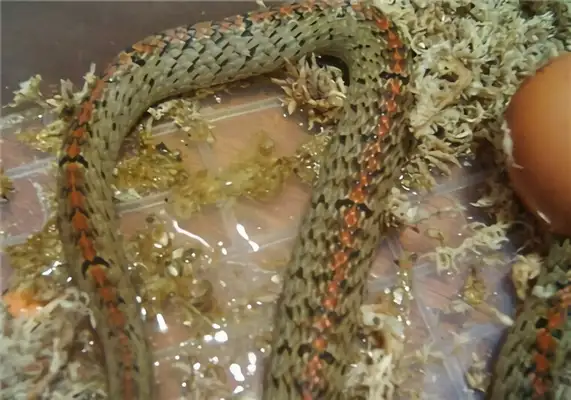
Taiwan's small-headed snakes are in the wild more oriented towards a bushed environment, with occasional aggressive sexual temperament. If you raise a family, you don't want a child to touch it in case you get hurt. The following needs to be prepared when raising non-venom-free snakes.
When raising it, you have to put it in a big glass container with a cap, half the size of the snake and one third the width of the snake. The basin, which is fed inside, the water basin, has two uses: drinking water and bathing, so the basin must be able to accommodate its entire body. There is also a need for thick sand in the container. A small flower pot will be buried in half of the sand as a small snake nest with branches, preferably with a thermometer and a humidity meter on the inner wall of the container and the packaging shall be well ventilated.
You know that snakes are only interested in living food, so they can eat frogs and chicks. Snakes do not like to stay in places where the light is very strong or very cold and humid, where the temperature can be kept at about 18 to 30 degrees in the case of rearing, and where, except for hibernation, the temperature difference between day and night cannot exceed 6 degrees. "Taiwan's little snakes breed knowledge."
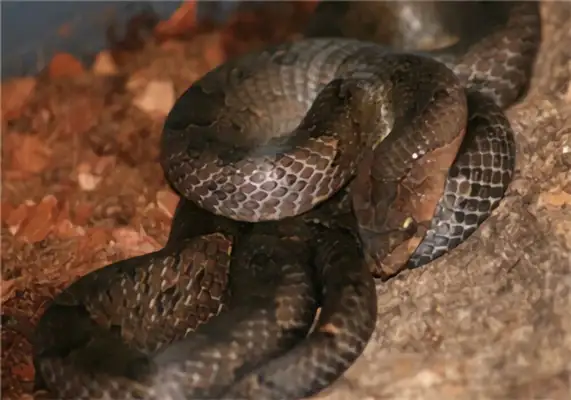
Taiwan's small-headed snakes differ from the diets of other snakes because the snake eats egg fluids like eggs and eggs, which are ploughed up like eggs, which are cut off and broken, and, interestingly, sometimes run into eggs of reptiles, which are not cut before eating, but swallowed.
In winter, more food is to be fed to the high proteins of Taiwan's little snake so that it can enjoy the winter. The feeding time is once a week, about 80% of each time.
When it wakes up in the spring, it must not be given an extraordinary amount of food, because the cold weather will make it impossible to digest the food in its body and it will become ill for a long time. When the temperature rises to 18 degrees, let it eat.