Designation: PET4633
Vulnerability: oral inflammation
Life: Overview of Himalayas ' whitehead species, 10-15
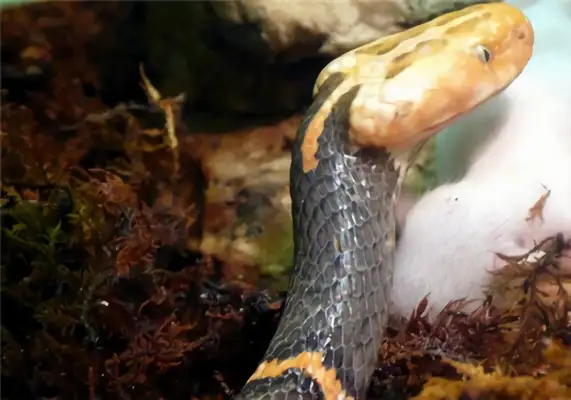
The Himalayas, known as the Whitehead, is the most toxic of the 27 kinds of snakes in China and belongs to an older species of snakes, which have been recorded as having seen them in the area of the Tibetan plateau. The Himalayan whiteheads are mainly located in Yunnan, Guizhou, Sichuan, Tibet, Shaanxi, Gansu, Guangxi, Anhui, Jiangxi, Zhejiang and Fujian in China. Other countries are located in Myanmar and northern Viet Nam.
Chinese literary name: Himalayan whitehead
Area: Animal
Gate: Phylum Chordata
Amen: Vertebrata
A: Reptilla
Platform: Diapsida, Lepidosaria
F: Squamata has information to be classified as Serpentformes
Asia: Serpentes
Section: Viperidae
Aco:
Azemiops
Speculation of white head
Distribution: China is mainly located in Yunnan, Guizhou, Sichuan, Tibet, Shaanxi, Gansu, Guangxi, Anhui, Jiangxi, Zhejiang and Fujian. Other countries in Myanmar and northern Viet Nam are characterized by Himalayas.
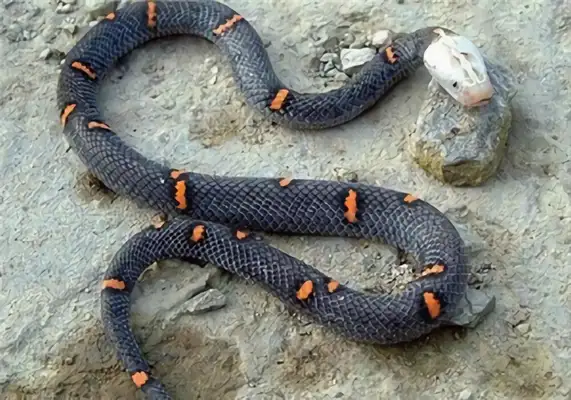
The Himalayas white-headed snake, by definition, is impressively white. The snake is often found on roadside, rocky land, paddy fields, grass piles, grassy fields and occasionally in residential areas.
The Himalayan whitehead is 600-800 mm long. Viper with tube teeth, tube teeth are short, cheekless. Black and brown on the back, with 10-15+3-4 pairs of cucumbers, staggered on the right and the right, or met each other in the middle of the back; abdominal olive gray, scattered in small white spots. The head and neck are yellow and white with dark brown stripes. A typical nine scales of head backs; 3 (2), wake up; 2 + 3 (2); 6, 2-1-3 upper lip scales; 8 (7-9), first 3 (4) precuts. Slips smooth, rows 17-17-15; abdominal scales 168-205, complete anal scales 39-53.
There are a number of major reasons why the academic community would think that white hair is a more primitive snake species. The white-heads have a strong body and a short tail, along with smoother backs and dragon bones, which is consistent with the common snake. Their heads are slightly flat and elliptical, the most special of which is that they are not so tightly covered as thin scales, but have the same size as the snakes of Viper and Cobra, unlike the common snakes. Similarly, the skull tectonics of a white skull are special in comparison to other snakes. Moreover, the tooth of the Himalayas whiteheads is hollow and can also be injected with toxins, although the tooth of the white head appears to be short. The tip of their poisonous teeth is in the form of a short knife, and the structure of the teeth is found only in the cavity and some of the snakes that have the rear gutter structure, while the venomous cyst form of the white-headed venomous toxin is relatively small. Finally, the biggest difference between a white head and a common snake is that the white head is an egg-breathing species and is hibernate.
Their bodies consist mainly of dark, dark blue, gray or black and small white, orange stripes. Their heads, however, are in sharp contrast to their bodies, generally yellow, and seep grey stripes. Their eyes are also yellow and their pupils are in a straight line. Himalayan whitehead living environment
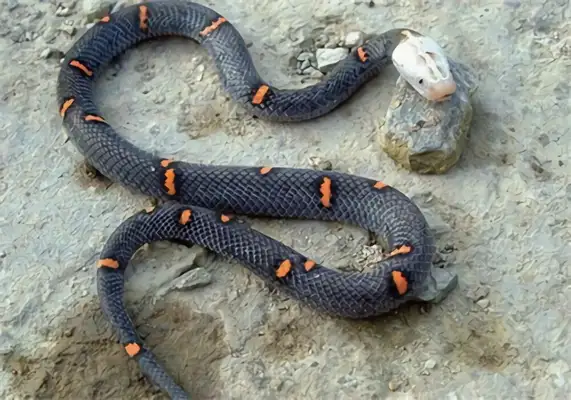
In the wild, the Himalayan whitehead likes to dwell in the mountains and to stay in the cold, at about 1,000 metres above sea level. They are sometimes found in the bushes, and it is no surprise to see them in residential areas.
In Viet Nam, Himalayan whiteheads prefer to live in bamboo forests and are active in areas with extensive vegetation distribution and mountain abundance. Himalayan whiteheads are night animals, the most popular of which are wet nights at temperatures of about 18-25 degrees Celsius. The Himalayas raised knowledge.
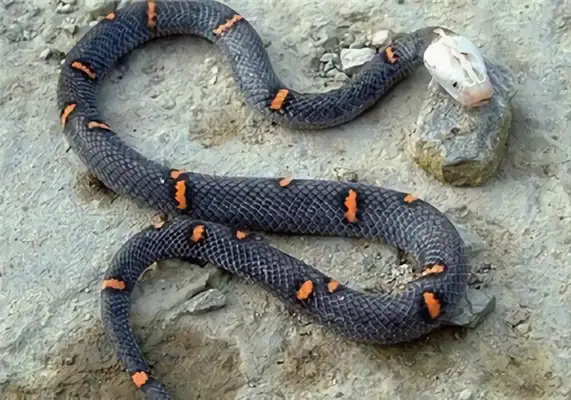
When you look at Himalayas, you better not bother him, and when it feels threatened, they flatten their bodies and make themselves look wide, and the head of an elliptical is a triangle. They even shake their tails to scare their opponents.
When the Himalayan whiteheads are in danger, they bite, but they do not necessarily use their poisonous teeth to launch the offensive. Moreover, in 1981, scholars argued that the Himalayan whiteheads were active mainly in the evening hours and not in nighttime snakes, as Orov had said, especially between March and November.
Himalayan whiteheads feed mainly small mammals, and young Himalayan whiteheads have also been found to feed their larvae. According to some feeding reports of Himalayan whiteheads, who have been raised, the Himalayan whiteheads are usually resistant to being nursed, are only willing to eat newborn rats at night, and are often not easily released whenever they bite their prey. The world reptiles, one of the world's most notoriously gruesome snakes, have been on hunger strike, and Europe and America have been imported many times, with the result that the entire army has been wiped out, and that reptiles are now known for the cause of death of Himalayan whiteheads, but it is generally believed that the hypothermia of Himalayan whiteheads has caused internal organ damage and hunger strikes, while another is due to the special nature of the food. In nature, it is mainly edible and is not adapted to rodents. However, in recent years, Russian researchers have succeeded in breeding and breeding Himalayas, believing that this fate has also been unbroken in the hands of private breeders.