Designation: PET3877
English name: Hydromedusa maximiliani
National origin: Overview of the type of Baya-Brazilian snake turtle in eastern and south-eastern Brazil
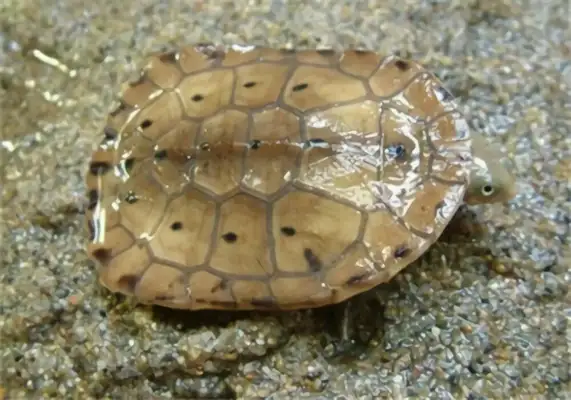
Brazilian snake-back turtles, also known as Brazilian turtles, are freshwater turtles belonging to snake-back turtles, mainly living in eastern and south-eastern Brazil. It is the smallest Brazilian fresh water turtle, the largest being no more than 20 centimetres (7.9 inches), and prefers to live in a cold stream of sand and rock floors.
Brazilian snake-back turtles are not common on the market and are expensive, with a small Brazilian turtle price of tens of thousands, so there are not many breeders, especially when they look different from adults, especially on the backs, and as Brazilian turtles, they tend to look more specific when they are young.
School name: Hydromedusa maximiliani
Local: Cágado da Serra
Reproduction: Eggs
Distribution: Brazilian turtles are mainly located in Bahia, Minas Gerais, Espírito Santo, Rio de Janeiro and São Paulo in eastern and south-eastern Brazil. Its distribution is closely related to the Atlantic Mountains rainforest, which generally lives at altitudes above 600 metres (2,000 feet).
In 1825, Mikan described the turtle for the first time, when Amys maximiliani was known, and then Wagler was assigned to the turtle in 1830. (The turtles are now two types of turtles, one in Brazil and the other in Argentina), and then some other descriptions were given, although they were classified as alien to the species. There are no identifiable subspecies under this species. Brazilian cervical turtle morphological characteristics
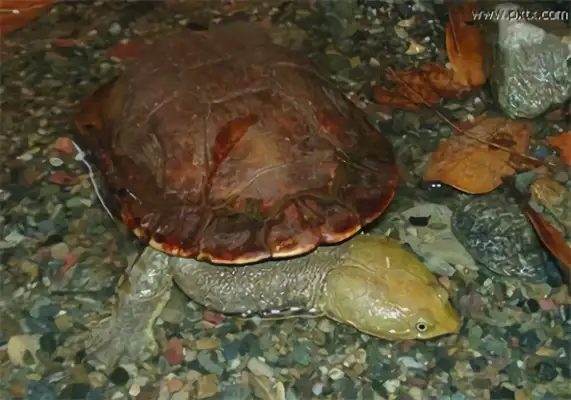
Snake neck turtles are the first class of aging turtles and crust is round or heart-shaped. Shells are thick, with a larynx shield or a bottom shield. To survive in the early days of Juru. This is true of the discovery of snake neck turtles and heaven turtles, mainly in Europe, Asia and so on.
The backs of Brazilian snakes with strong dragon bones and black or yellow spots near their heads. The female is bigger than the male. The male abdomen are dented in the centre of their abdomen, the anal shield is less engraved, the tail is longer, the excretion cavity is farther away from the back of the manure; the female abdomen is flat. The eggs are long ellipses, usually 34 mm long and 20 mm short.
Most of the turtles have very small neck shields, which are between the first and second edge shields, but are different, with larger neck shields, in the back of the first and second edge shields, and in the front of the first vertebrae. The bright colours of the neck and the varied stripes.
Unlike most other turtles, the turtles are not able to insulate their heads and necks into the shell, but rather to bend their necks to one side when they fall into the nails, and are named (as is the custom for snake-neck turtles). This is the only one. It's gray, 30 cm long. Brazilian knowledge of care for snakes and turtles
In order to protect them, newly captured turtles may produce liquids that smell like musk, but once they are provided with accommodation, the phenomenon will disappear. Even if just caught from the field, after a week of feeding from your hands, then when you enter the room, it swims in front of the aquarium, and when you approach it, it swims out of the water. Like many fresh water turtles, they look funny and make the master very happy. Such turtles are particularly suitable for breeding by beginners and by those who are addicted to turtles. Brazilian snake-backback living environment
Snake neck turtles can be raised in large aquariums with sunback sites and light. The temperature should remain at 72-76 degrees Fahrenheit. You can consider the use of peat and extend some of it to water. There are indications that if the pH of water is kept at a low level, these turtles can be fine around 6.5 and can avoid some common skin problems, while peat or peat can reduce pH. Point of origin for the Brazilian snake-backer.
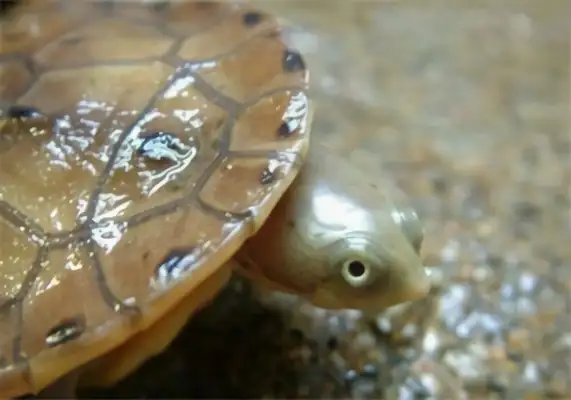
Brazilian turtles.
Brazilian snakes eat plants and animals. Living in shallow water, occasionally climbing over land. By the dry season, they sleep in the pond mud until the rainy season. The larvae that eat large numbers of mosquitoes are very useful animals for people.
Snake neck turtles are an object of a turtle's eye, evolved from the original amphibian turtle. The crust is often tectonically complete and the neck can bend to the shell. Aquatic. Seen in Jurassic, modern life is still alive. The current species are distributed only in Africa, South America and Oceania. There are many types of neck turtles, such as the Amazonian neck turtle, on the head of Madagascar.
The side-neck turtles in the turtles are those that are more unique and close to their prehistoric ancestors, whose heads cannot be condensed into turtle shells and who have to bend their front limbs. Interestingly, North America, despite its large number of turtles, does not have a distribution of the side-necked turtles, but rather more in Central and South America and Australia. Unlike most other turtles, the turtles are not able to insulate their heads and necks into the shell, but rather to bend their necks to one side when they fall into the nails, and are named (as is the custom for snake-neck turtles). This is the only one. It's gray, 30 cm long.
The state of protection outside protected areas is not encouraging. It is also rare on the market, where prices can reach tens of thousands of yuan, so it is not recommended to try farming.