Designation: PET4335
English name: Terrapene coahuila
Origin: Eastern United States to Mississippi River Basin.
Vulnerability: leukemia, gastrointestinal disease
Life: More than 50 years
Price: Overview of turtle species in the 2000-18,000 marshbox
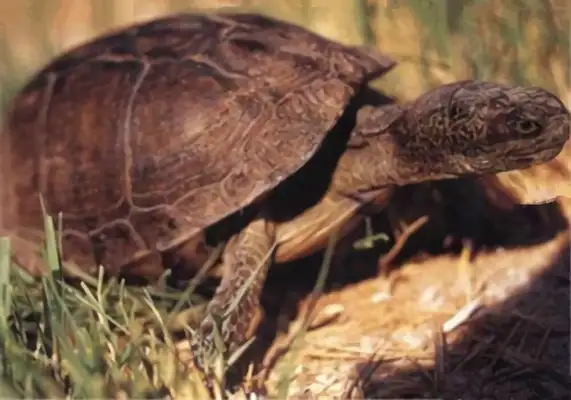
Swamp tank turtles are not a very common type of tank turtles, and they are less suitable for human breeding than their brothers, the eastern turtles, whose backs are not strutted or visible, so there are not many of them.
Chinese literary name: Swamp Box Turtle
Two words: Terrapene coahuila
Context: Animals
Gate: Pipeline gate
Programme: climb
Tortoises.
K: Zetoru
Yes: A tortoise
Crop: Marshbox turtle
Distribution: East United States to Mississippi River Basin.
Appearance characteristics: The back armour is high and round, with a maximum of about 18 centimetres. The middle section of the abdominal armour can be linked to the direction of the back armour and form a protective “box” that partially protects the body.
Lifestyle: Swamp-box turtles may live in rivers, and some places where sediments make aquatic plants flourish, such as marshes and wetlands.
Reproduction: Eggs. Each year, 1 to 8 eggs (mostly 2 to 3) are laid, and the period is 5 to 9 months.
Food: Swamp tank turtles are impregnable and eat insect larvae, crustaceans, shellfish, fish, amphibians, aquatic plants, fruit and algae, and sometimes on land. Swamp tank turtle morphology
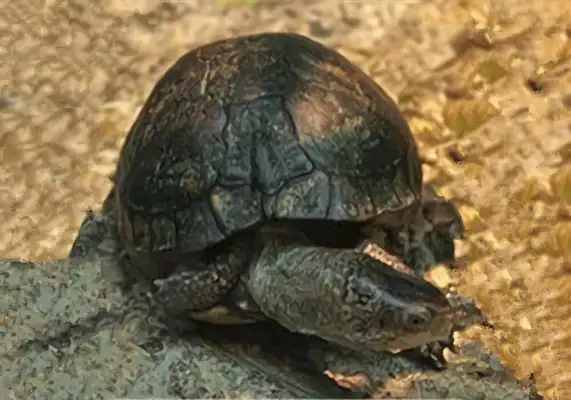
Like China's closed-hull turtles, some of them are said to be able to close their shells and trap dead snakes, and are therefore called snake turtles, which are one of the more medium-sized species, with ill-defined backnails and few flowers.
The crust of a swamp tank turtle can grow to 16.8 cm. The back armour is shaped by a dome, and the bottom armour is a thin ellipse. The color of the back armour is mostly green, brown or brown. The abdominal acetal colours are mostly light yellow and green, but other colours may appear. Most heads are brown.
The egg diameter of the marsh tank turtle is approximately 2.9 ~ 3.3 CM, and the portion is only 1.7 ~ 1.8 cm. The color of the turtle crust will have spots and black spots, and the colour of the back armour and the spots will fade as age grows. Adult males have brown spots, while females have yellow or brown spots.
The vast majority of tank turtles have a corset of abdomen, and when they are fully condensed into the shell, the whole appearance is a sealed box or box, which is the origin of their name. Two of the world ' s most important turtles are the North American turtle Terrapene and the Asian turtle Cuora. Taiwan has a distribution, which is certainly the famous snake-eater. Swamp tank turtle care knowledge
Swamp-box turtles are found in rivers, and some areas where sediments allow aquatic plants to thrive, such as marshes and wetlands. The tortoise is also a semi-aquatic or semi-land tortoise, which only occasionally floats on the surface and changes the size of its lungs by inhaling air, thus allowing the respiratory system to exchange gas. Swamp-box turtles are impregnable and eat insect larvae, crustaceans, shellfish, fish, amphibians, aquatic plants (e.g., radium), fruit and algae, and sometimes on land. Swamp tank turtle living environment
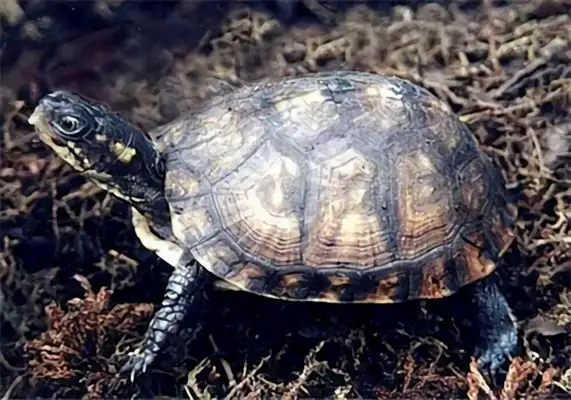
Swamp-box turtles are typical semi-aquatic turtles, so when setting up the breeding environment, the ratio of water to land can be set at 1:1 so that they can choose and regulate their living environment, and if they are raised outdoors, they can be closed because they are likely to escape from prison.
I. Environment of the marshbox turtle
All turtles are fed not by their digestive systems, but by temperature. When temperatures are inadequate, turtles are no longer hungry to feed, so their health and growth are at stake. It would be preferable to keep the turtles out of the room as long as possible and to move them in the winter. In the case of fish tank breeding, for example, land areas account for more than half of the space, while the other half are shallow water areas at half the overall height of turtle nails. As long as the environment is in its ideal state, the turtles will survive for more than 50 years.
II. Diseases of turtles
The turtles are generally stronger than the turtles, and with the exception of a small number of Chinese-born turtles, such as flowerback turtles, who are less likely to suffer from disease than to suffer from food resistance. Tortoise diseases are common, as are those in the cases of land turtles. But the vast majority of them cannot transmit to humans. Only a few in vitro parasites are more likely to be infected. Particular attention needs to be paid to the presence of other diseases when the appetite or excretion of turtles is reduced. It would be preferable to measure them regularly on a weekly basis in order to capture the state of growth. Swamp tank turtle breeding point
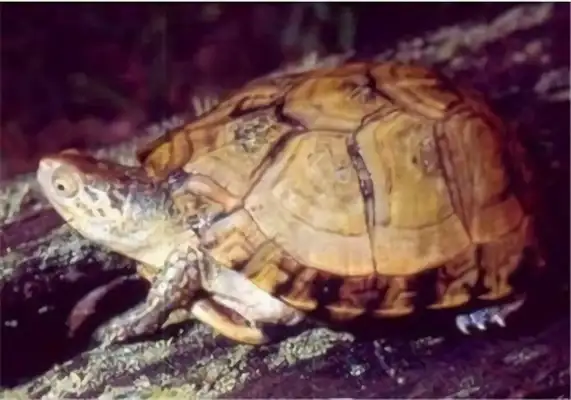
The health of the swamp turtle is inseparable from the diet, and it is important to provide him with the appropriate food. In a wild environment, swamp turtles capture small animals, such as insects, so that they are provided with a certain amount of meat when humans are raised, as well as vegetables and fruits in order to ensure nutritional balance.
Swamp tank turtles can excavate ground earthworms or worms in dead wood, snails, caterpillars, beetles, etc., which are staple foods, as well as fruits, grass, berries, fungi and wild flowers, mainly for food on land. In an artificial environment, the long-term success of box turtles requires that more time be devoted to their feeding status and that food content be adjusted regularly. To meet the requirements of nutritional balance. Essentially, animal proteins such as bread worms, crickets or earthworms account for 50 per cent of the food, and can also be replaced by tank turtle feed.
Vegetable foods such as vegetables, beans, carrots and potatoes account for 30 per cent of turtle food. For weeds, weeds, straws, and higher fibres such as radish leaves, 10 per cent of the plants. Multi-food combinations can help turtles maintain balanced nutrition and open digestive pathways. The other 10 per cent consists of fruits such as grapes, apple nuts, strawberries and cherries. In addition to the daily food, vitamins and calcium powder must be supplied at least once a week, which can be fed in combination with food, and must be regularly tanned or ploughed with UVB violet lamps, otherwise calcium cannot be absorbed.