Designation: PET2792
English name: EastAfericanblackmudturtle
Origin: Overview of cervical turtle species in East Africa
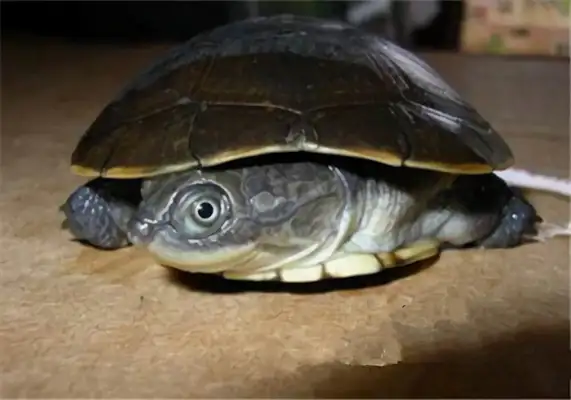
The small number of wild neck turtles on the side of East Africa and the resulting low number of artificially raised turtles, while in China, Eastern African neck turtles are less common and many other turtle species are visible on the side, also indicating the scarcity of such turtles and the need for protection. East African neck turtles feed on plants and animals. Living in shallow water, occasionally climbing over land.
East Africa ' s side of the neck turtle is located in the southern hemisphere on the islands of Africa, Madagascar, South America and the Indian Ocean. Unlike most other turtles, the head and neck are not condensed into the shell, but when the head is condensed into the nail, the neck bends to the side, and is therefore named (as is the custom for snake-neck turtles). This is the only one. It's gray, 30 cm long.
Chinese name: East African side neck turtle
Famous alias: Cyclops
English name: EastAfericanblackmudturtle
Latin name: Pelusioossubniger
Geographical distribution: Africa
Reproduction: Eggs
Price: Not available for Eastern African morphological features of the side of the neck turtle
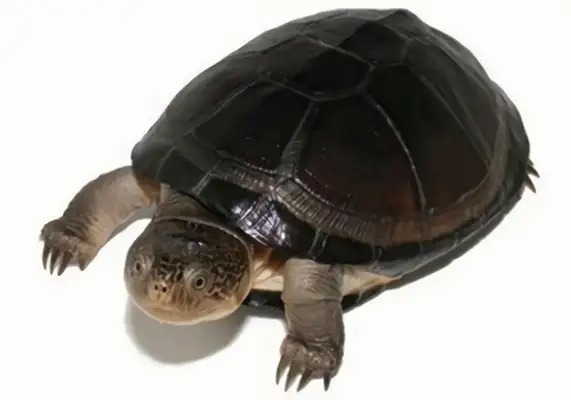
The eastern African side is 30-50 cm larger than the swamp side of the neck turtle's backnail, which is black, is not marked or scarred, is relatively large and has a neck that cannot be condensed inside the crust and can only be sideward. There are many species of turtles in the side of the neck, which we can highlight below.
There are two South American neck turtles, one of them, and one single one, with a rare Amazon large neck turtle. The South American side, with six of the Podocnemis, is concentrated in the tropics of northern to central South America and is typical of tropical species, particularly in the Amazon and Orinoco basins.
Like all the members of the pancreas, there are no neck shields, one to two jaws, large head-covered horny shields, soft skin in the body's soft tissue, small scales, four toes, toes, feet, tannery on the outside of the front leg. The most interesting feature is the fact that there is a groove between the heads of the eyes and the end of the nose, and that the end looks like a cut. While this is a young child with hair spots ranging from milk white to yellow to orange red, depending on the species, which explains their use as pets, it is regrettable that these beautiful stripes will fade away and disappear as adults. Knowledge of neck turtle care in East Africa
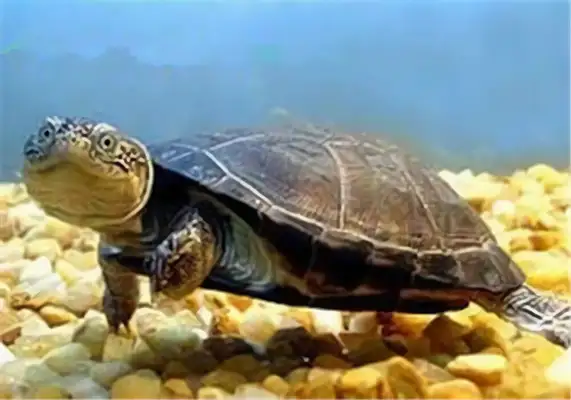
Eastern African neck turtles tend to breed in China for a small number of reasons, first of all because they are a kind of protected species and, secondly, because East African neck turtles do not originate in China, they are likely to die most of the turtles during transport, so few are willing to trade in them.
As a general rule, African-side neck turtles are impregnable turtles, with high food intake and high food intakes, with common shrimp herbs as their staples, and insect earthworms as welcome foods. They even work together to feed small birds or reptiles into the water and feed them well with general turtle feed or fish feed. Vegetables can also be fed occasionally. The tolerance for low temperatures is also higher than for the general tropical turtles. When frightened, they excrete musk-like liquids like musk turtles.
However, these instincts are easily distinguishable after taming, with smaller male sizes, thick tails, large female turtles and small tails. The African side of the tortoise is a highly produced tortoise, which produces several eggs per year, averaging 10-15 eggs per nest. Females were able to lay their eggs in a pit of almost the same depth as their nails, thus avoiding the high temperatures caused by the strong sun. It is worth mentioning that the eggs of the African-side neck turtles will be laid with a wet and smooth layer of slime, which will become very hard to protect against water and insect eating. Newborn turtles are darker and strong and fast growing. Living conditions for east African neck turtles
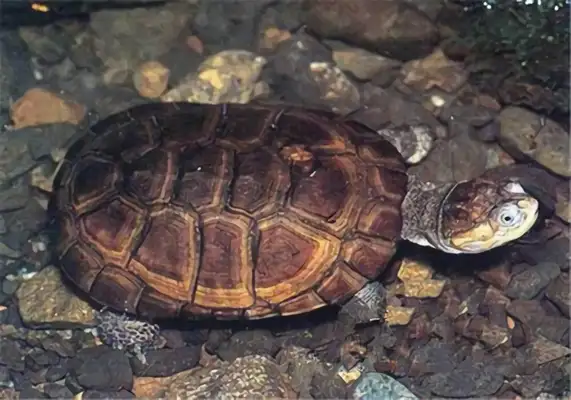
The most important part of trying to keep the East African side of the tortoise is to make the most suitable living environment for it. We know that the East African tortoise is a semi-water tortoise, so we can broadly think that he needs a suitable tan, because he needs to get back and rest.
All of them are small, semi-aquatic turtles. They usually live in water ponds. In the dry season, the side-neck turtles go into the bottom mud to sleep through the drought. They are therefore highly resistant to changes in the environment and food, and highly populated, and highly healthy water turtles. However, most imports are of wild individuals, with more frequent dehydration or turtle-lace injuries.
The side-neck turtles are very similar to the other East African side-neck turtles in their external shapes or habits and sometimes can be confused. In general, the size of the swamp-side neck turtle is smaller than that of the East African side. The eastern African side, with 15 species, can grow to 30-50 cm. The same pattern is observed.
In East Africa, where the size of the tortoises is large and the sun is high, it is important for larger individuals to provide a reliable backplace, where the tortoises are warm and lively, and where they are able to climb out of the water only when they are tanned and spawned. Strong heat lamps and UVB lamps are also necessary for these mild-side neck turtles. They are healthy, but sensitive to low temperatures. Water-sink heaters are required outdoor facilities and must not be less than 60F.
For smaller males, at least one 100 gallons of water tank is required, while for larger females, 160 gallons is required. They're good at swimming, so it's better to have large sites like ponds and ponds. The water needs to be as deep as possible as the turtle can get out. E. East African neck turtle breeding points
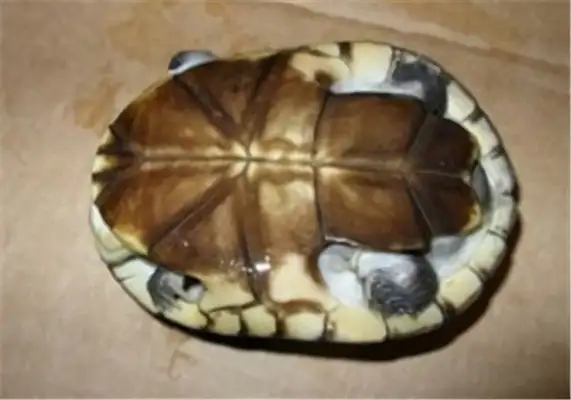
East Africa ' s side neck turtles are impenetrable turtles, and east-west neck turtles eat many small fish, shrimp and some plant foods that provide not only the trace elements needed for Eastern Africa ' s side neck turtles, but, more importantly, the calcium required.
In general, Eastern African neck turtles are impregnable turtles, with a high food intake and a high food intake, with common shrimp herbs as their main staple, and insect earthworms as welcome foods. They even work together to feed small birds or reptiles into the water and feed them well with common water turtle feed or fish feed. Vegetables can also be fed occasionally. The tolerance for low temperatures is higher than for the general tropical turtle category. When frightened, they excrete musk-like liquids like musk turtles. But most of these instincts disappear after being tamed. Females are easily identified, their male size is smaller, their tail is thick, their female turtle is large and their tail is small.
Are we right to buy some turtle food for turtles? To be sure, tortoise food can provide the necessary excess in the absence of knowledge of turtle food, but if turtles already eat, their chronic consumption may cause malnutrition, so they are not recommended for long-term consumption, but it is certainly a good option during the transition period or in normal times as a fill food.