Designation: PET3655
English name: SunParakeet
Vulnerability: respiratory, digestive and parasitic diseases
Life: 5 - 6-year profile of the solar cone parrot species
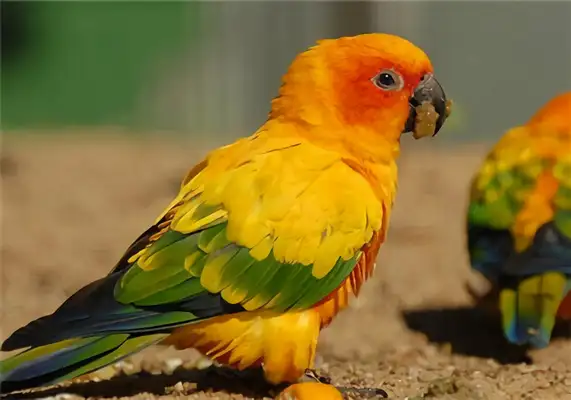
SunParakeet is a smart little parrot with a bright feather, not only talking, but also acting, which is very popular. His commotion is well known, and if you can accept its shortcomings, these very human little parrots can make your family more comfortable.
Chinese literary name: Sun cone parrot
Chinese alias:
English name: SunParakeet
Two words:
Area: Animal
Door: vertebrate door.
Amen.
Platform: Birds
Today's bird's
It's a parrot.
Section of parrots
Family: Conesian parrot
Distribution: In the north-eastern part of South America, including northern Brazil, south-eastern Venezuela, the North Amazon Basin, Guyana, Suriname and French Guiana. The solar cone parrot morphological characteristics
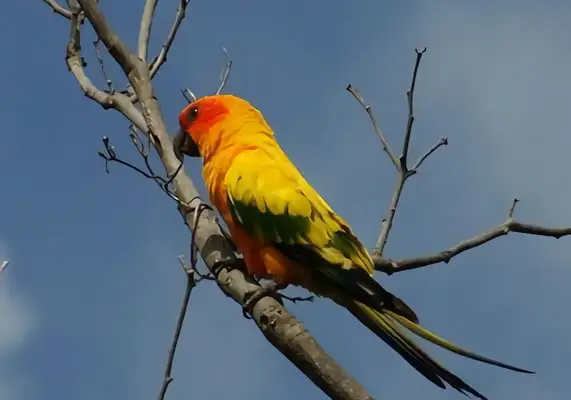
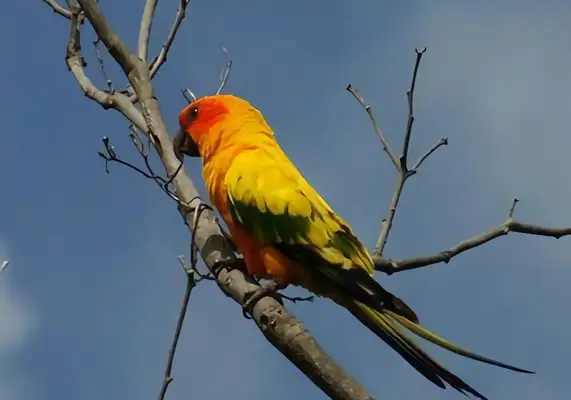
The sun-cray parrot is a typical climber, a pocket parrot whose body is largely covered with yellow feathers, whereas the tail feathers are green, in stark contrast to the body.
The sun conical parrot is 30 cm long and weighs 120-130 g. Most of these parrot birds are golden, with a bit of orange tone on their heads, cheeks, lower abdomen and lower abdomen; the main feathers on their tails are dark green, with a little bit of golden turds, the main flying feathers on their wings are dark green, and the tip of their wings are blue; the secondary flying feathers on the outside of their wings are golden and mixed with a little bit of dark green feathers; the eyes are covered with a circle of white nudity; the beaks are black and the rainbow is dark. The young birds are of the same colour as the adult birds, but the gold on the head carries many green feathers and the wings are mostly green. Solar cone parrot living environment
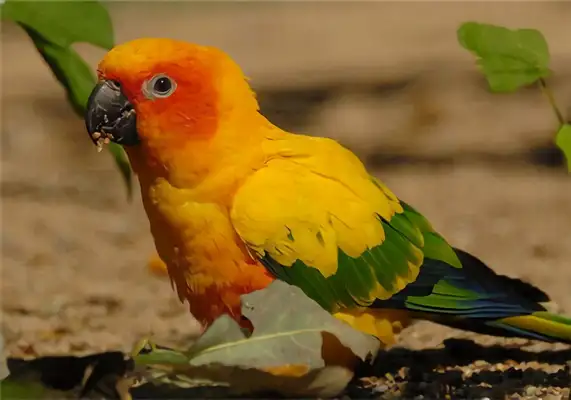
The advantage of raising the sun's parrot is that it doesn't take up space. What's more funny is that he likes to learn human speech and even to perform when he's happy. Now, these parrots are much cheaper on the market than they have been in the past few years, and when you're thinking about raising a solar cone parrot, are you ready for him to have a proper nest?
The sun-cray parrots, mainly in the wild, are found in arid areas, in broad-leafed forests and tree-populated savannahs, at an altitude of approximately 1,200 metres above sea level, and tend to live in groups, all of which are part of a gang movement.
Home-bred sun-cray parrots must first prepare a suitable cage, the size of which should be 45 centimetres long, wide and high. One for the water tank and one for the food basin. If you're worried about it being lonely and bored, you can put a toy in a cage to satisfy the curiosity of the parrot. And don't forget to bathe them because they're so fond. A solar cone parrot.
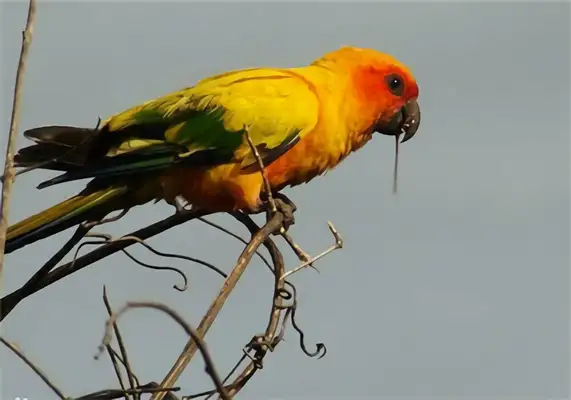
The solar cone parrot reproduces in the form of eggs, with an average life expectancy of 30 years. Therefore, breeding is not difficult for solar cone parrots, which can produce 3-4 nests a year, and most solar cone parrots are breeding in cages due to the prevailing conditions of breeding.
Solar conical parrots normally start in the spring, but can also occur in winter, subject to special temperature protection. Each pair of birds needs to be raised in isolation, with an average of four to five groups of eggs per nest, with an incubation period of approximately 23 days and young birds growing up for 50 days. Upon leaving the nest, young birds can continue to live with their parents for a period of time and can reproduce several times a year. Because the parrots are particularly fond of bites during their breeding period, they are required to use a hardwood nest box, which is about 18x18x50 cm in size and at least 7 cm wide in size. Every effort should be made to avoid moving breeding birds so that they do not disturb the next reproduction.
With the stability of cage-breeding, the number of artificially bred sun-cray parrots is so high that they can now be purchased at reasonable prices, much cheaper than the import prices of 7 or 8 years ago or even longer, and the sound of cage-breeding birds or birds in birds' houses is as noisy as many cone-tailed parrots, and the sound of sharp ears is often unbearable, especially when early morning and evening approaches, it is recommended that fresh branches be provided for bites, that the supply of fresh vegetables, green vegetables, seeds, and nuclear fruits make them healthier, and that the golden sun is dynamic and active and that it is active. The sun cone parrot feeds the point.
It can be said that the food points of the sun-cray parrots are completely different from those of cats and dogs, and that the birds eat as they eat, and the fruit and vegetables are their favorites and the dogs and cats are the opposite, so that family-breededed sun-cray parrots are reluctant to eat. A healthy diet can prolong life.
The sun-cray parrot parrots eat mainly seeds, berries, fruits (especially cactus fruits), flowers, nuts and so forth, as well as sunflower seeds, scabs, flax, wheat, oats, canary grains and a variety of grains and seed sprouts; soaked dove foods, fruit and vegetables (apples, mangoes, cucumbers, semi-cut corn, carrots, wild roses, berries, etc.), grass-coated foods (squads, dungs, etc.); regular mineral supplements, white bread and eggs.
There is a need to avoid the provision of foods that would harm them: cabbage and avocados, acreas and acne.
Solar cone parrots tend to feed vegetative pills and seeds. They like deep green and yellow vegetables. Complementing the healthy diet of parrots like fresh fruit and even cooked eggs is good for them. It is often remembered that these foods are to be removed in a few hours, because they are easily perishable because they are not preservatives. Of course, they need a clean water plate every day, and if they bathe in drinking water, we must note that they do so, so that they can replace clean water in time with their water plate. You can supplement your solar cone parrots with vitamins, especially when their usual diet is fed only to seeds. In general, feeding pills contain vitamins that they need. Their cages should be spacious and solid and provide them with a large supply of toys to entertain and ensure that there is sufficient space for them to play and stretch their bodies. The provision of mineral blocks will help them to acquire the calcium they need and help them to grow well.