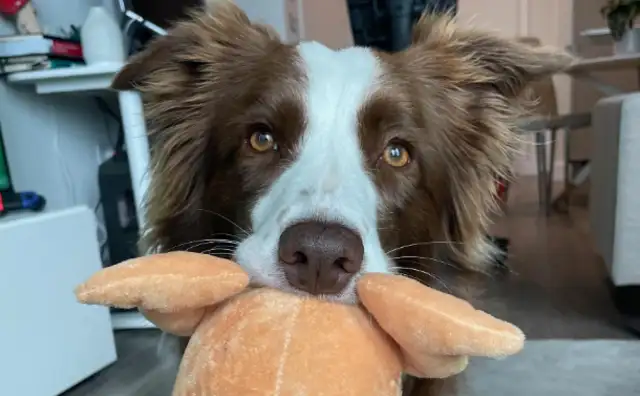
According to a recent groundbreaking study published by the research team of the University of Eötvös Loránd University in Hungary, some particularly intelligent dogs can not only associate specific words with specific appearances, as has been recognized in the past, but also correspond to objects with different appearances but functions according to their meaning.
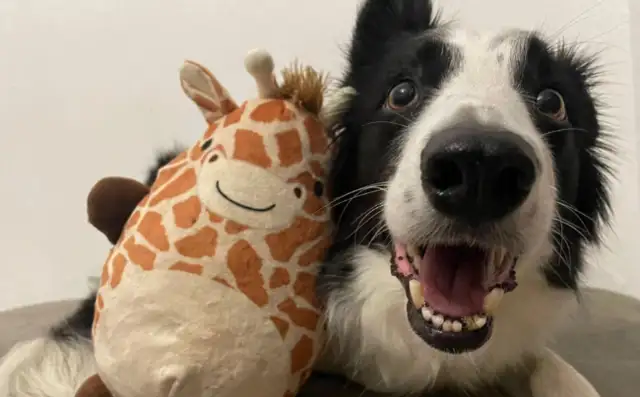
It is well known that, through training, dogs are able to search for and retrieve specific toys by name by password. As a rule, dogs identify these objects only on the basis of their appearance and complete their correct retrieval. However, researchers have found that seven gifted “gifted Word Learner dogs” demonstrate higher levels of capability — in scientists' experiments, they achieve so-called “label extension” skills.
The term “label extension” refers to the application of the same label not only to similar shapes, but also to different appearances of the same functions or uses. Previously, this ability had been demonstrated only partially by animals trained over many years and was generally considered to be the instinct of human young children.
In this experiment, seven domestic pet dogs (six of them border range dogs and one Australian cattle dog) were involved in two words: “Pull” and “Fetch” (retributed) during daily play with the master. If toys are used to pull games, they are classified as Pulls; if toys are thrown out and taken back by dogs, they are classified as Fetch. Experiments have shown that dogs are able to select the corresponding categories of toys from the toy pile according to the instructions received.
Subsequently, researchers joined several new toys with the same appearance but with the same style, and during the play with these new toys there was no explicit reference to Pull or Fetch. When researchers once again let dogs “take back” or “pull”, the pets are able to make a significantly better judgement than randomly selected to identify the right categories of these new toys.
The research director and scientist, Dr. Claudia Fugazza, said: “We find that a talented vocabulary study dog can extend the label of words to objects with the same functions or consistent usage. It's like humans use the word "hammer" to mean both a standard hammer and a stone that can knock a nail. - Despite their different appearances, the same name can be used for the same functions.”
The results were published in the journal Current Biologic. This research not only deepens human understanding of animal cognitive processes and language, but also opens new directions for future animal language research and animal intelligence training.