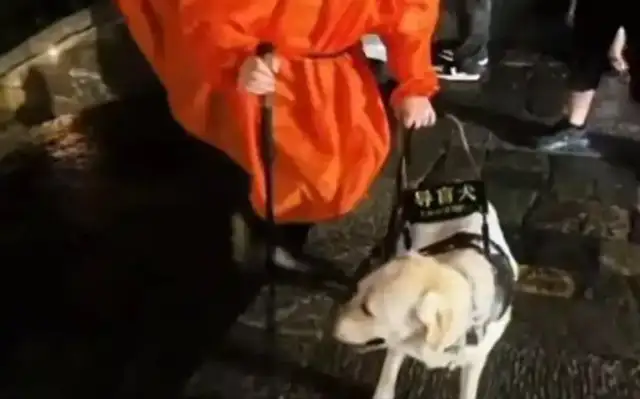
In recent days, two persons with visual impairments, carrying a guide dog, “Fendi”, to climb Tarzan, have been questioned about the lack of good treatment of the guide dog, live flow, etc. On the afternoon of 20 September, two staff members of the Chinese guide dog company base arrived in Beijing to remove the guide dog, Fendi, and to return to the base with a vehicle to investigate the use of dogs by the guide dog user camp.
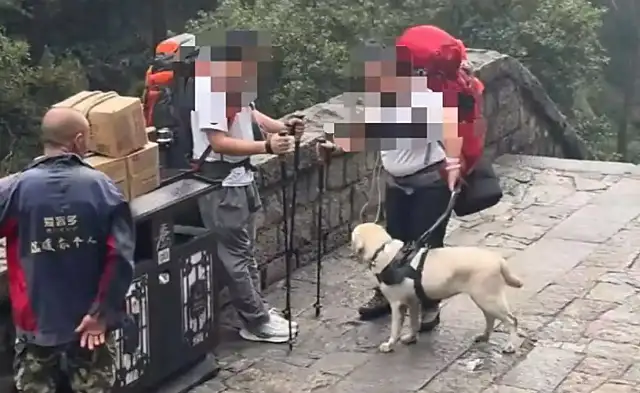
As soon as the matter arose, public opinion was raging, pushing the person concerned to the forefront. Many netizens, by watching the video, believe that the person in question is in the process of hitting the guide dog, failing to refill the water in a timely manner, failing to prepare the guide dog, etc., and questioning the fact that it is broadcasting live to capture the flow, thus triggering moral accusations against the guide dog owner. According to the respondents, they were well prepared for the trip, carrying sufficient rest and food for the guide dog, and there was no live diversion or abuse of the guide dog. This raises a series of questions once again: “Can't blind people have the right to climb a mountain? And when will the netizens be able to drop the keyboard and retain a good faith and understanding after a thorough understanding of what happened?”
Mountain climbing is a legitimate right of everyone, and blind people are no exception. There is nothing to be proud of through modest physical exercise and pleasure. There is also a security risk for the visually impaired to climb mountains. It is even more reasonable to take blind dogs and climb the mountains in order to ensure safety and reduce risk. Moreover, a group of people was fully prepared, supplied and equipped before travelling. There is thus no reason to condemn this climb. Society should support vulnerable groups to open themselves up, explore the world, move out of comfort zones and enjoy the possibilities and beauty of life.
In retrospect, many netizens not only lacked a little understanding of the needs of the blind, but even showed greater extreme emotion. They indicated that the person concerned regarded the guide dog as “a tool used indiscriminately” and even called for and demanded “no longer providing guide dog to the blind”. Such unrestrained and easily released malice is likely to once again turn into a devastating cyberstorm.
Of course, if the person concerned does not have a reasonable consideration in caring for the guide dog, society can make reasonable and good advice, such as recommending more specialized hiking support services, looking for professional guidance to climb with. This allows both easy and safe access to mountain climbing and adequate care for the health of guide dogs. In this particular case, however, the abuse of a guide dog should be assessed and evaluated by a professional body. It is not time for the keyboards to be able to decipher the information with "coloured glasses" subjectively and speculatively when the results have not yet been determined.
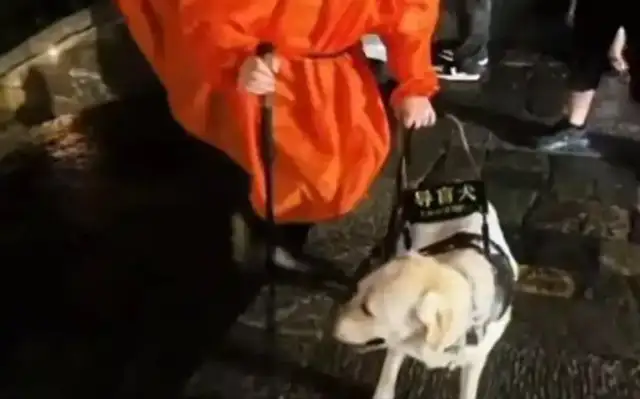
As stated by the person concerned, she “does not want to spend her whole life by massage beds”, although the approach may be inappropriate, and although she may not have fully considered blind dogs, the public should also maintain a moderate understanding and tolerance of the efforts of vulnerable groups to live autonomous lives. In the age of the Internet, public opinion is powerful and individual voices are often vulnerable to inundation. In this context, it is more important for the public at large to remain independent in thinking and rational judgement, and to maintain basic common sense and humanism.
When we look at other people's mistakes with microscopes and hold a keyboard in preparation for the release of malice, ask ourselves, “Do we know the truth and do we maintain good faith and justice?” And, in the face of so many similar news events, can we hold the line of reason and keep the background of good?