
In 2024, the size of the market for the consumption of Chinese dogs and cats exceeded 30 billion yuan, of which the cat economy continued to grow at a high rate, its share of consumption was almost equal to that of dogs, and in recent years it has grown at a much faster rate than that of dogs. With changes in the structure of the pet population, consumption demand and so on, the pet industry will undergo five significant changes in 2025.
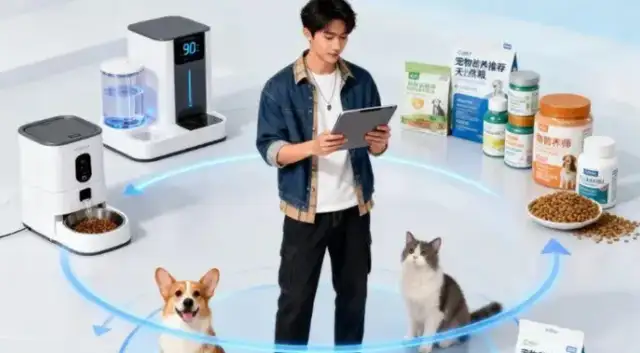
1 Caring population: precision driven by humanized consumption upgrading
In the past, most of the petting was emotional, and now 90 percent of total adoption consumption is over 65 percent, and they're concentrated in second-line cities, they're more knowledgeable about science and pursuit of high-quality parenting.
At the same time, there has been an increase in the number of single people and young people living alone, with pets becoming spiritual partners, with pets tending to “humanize”, and pet owners are willing to invest more in health management, beauty care, etc., to promote market segmentation and high-endization.
02 pet products: functional refinement + scenario breakdown
The breakdown of pet foods and supplies is evident, with the expansion of staple foods from the expansion of dry foods to new categories such as baked foods, frozen dry foods, etc., and more precise functional formulations for different ages, health problems, etc.
The expansion of the consumer landscape has led to diversification of products, the emergence of pet snacks, smart devices, and the emergence of a new trend of “popularity” and the creation of differential barriers to brand formation.
Consumption platform 03: Content electricians, social grass to the heart of decision-making
The flow structure has been reshaped and pet consumption decisions are increasingly dependent on content electricians and social platforms.
The shivering pet category GMV, the number of users, etc., has increased dramatically, and the "look and buy" has reduced the transformation path; the little red book is the "first stop" for pet owners to access information, over 78 per cent of the pet owners use it as the preferred platform for pet awareness, and brand marketing needs to be better informed about content and community.
04 pet foods: High-end trends highlight
Consumer choice of pet food has shifted from a focus on prices and tastes to a focus on the “natural ingredients” of the “scientific formulation”, low-sensitivity, valleyless, functionally high-end product labels, and rare food items such as deer meat and cods have also been sold.
At the same time, “visualization” has emerged, with transparent packaging, compositions that can retroactively increase consumer confidence, and future pet foods that will be tied to functional claims such as skin and gastrointestinal care.

05 Petty Medicines: Health Management: Prevention > treatment mainstream
The growth and ageing of the number of pets has given greater importance to the management of their health, the rise in the concept of “preventing more than cure” and the rapid expansion of the market for subdivisions such as health products and functional nutrition.
Patients reduce the risk of disease through daily interventions, joint protection, cardiovascular health products become hot spots, and the chain of the pet health industry is being improved and businesses are expected to become new engines of industrial growth.
In 2025, the pet industry moved from volume growth to qualitative upgrading, and brands need to take advantage of the opportunities of crowd change, insight into the evolution of scenes, use of content platforms and create differential advantages in such tracks as food and health care in order to compete.