Designation: PET4171
English name: Pionus charcopterus
Vulnerability: respiratory, digestive and parasitic diseases
Life: Overview of the species of blue-blown parrots, 10-15 years
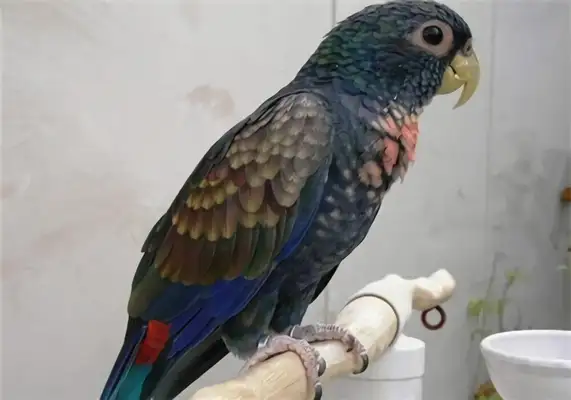
This is also the idea of a blue-blank parrot, known as the rainbow bird, whose skin looks like dark blue purple and whose head and neck are brown, given its name. They prefer to live in areas between 500 and 2,000 metres of tropical and subtropical forests.
Copper parrots are mainly located in Colombia, Ecuador, Peru and Venezuela.
Chinese literary name: Bronze Parrot
Chinese alias: Rainbowbird
English name: Bronze-winged Parrot, Living Rainbow
Two words: Pionus charcopterus
Area: Animal
Door: vertebrate door.
Amen:
Platform: Birds
Today's bird's
It's a parrot.
Section of parrots
The Parrot of Pie Onnis.
Subspecies: two
Distribution: The Andes of Colombia, Ecuador, and the Sanctuary of the north-west of Venezuela. Bronze-wing parrot morphological characteristics
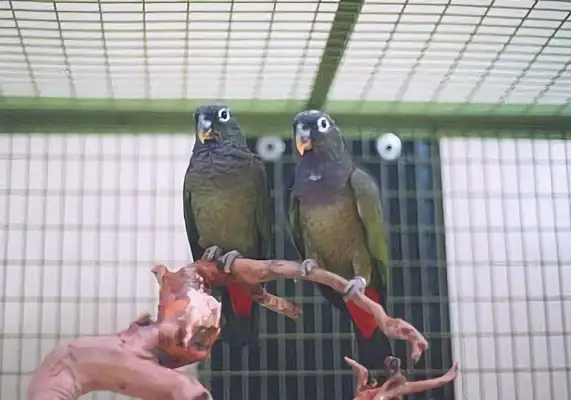
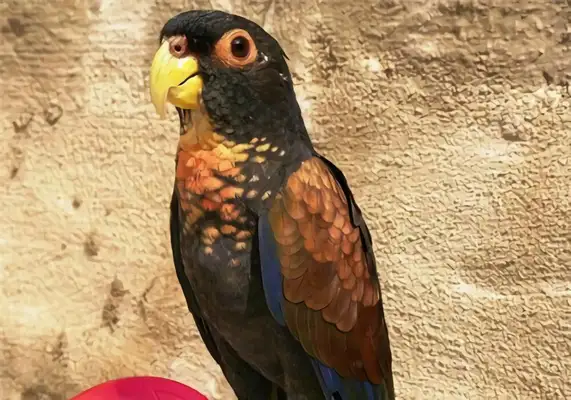
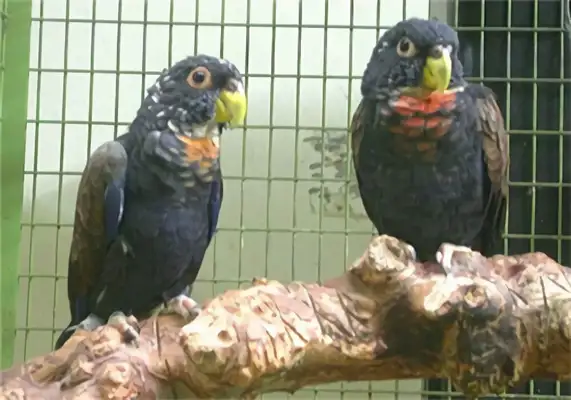
Bronze parrots have no hair in their eyes, and naked skin becomes pink when they reach adulthood. Bronze parrots can be about 30 cm in size and have an average lifespan of 10-15 years. Birds are dark blue and purple, and their heads and necks are brass.
The edges of the feathers of the blue blue wings are dark white; the jaws are small white feathers; the throats are covered with dark pink feathers; the feathers of the back, tail and shoulder are dark copper green with blue rolls; the sides of the chest and lower abdomen are dark green and have dark blue purple edges; the feathers of the wings are blue and blue; the feathers of the insides are red; the beaks are yellow and the rainbow is dark brown. Bronze parrot living environment
If you want to raise a blue-fined parrot, you must first ensure that you have a heart, a heart, a patience, because you have to do more in the early stages of raising a parrot, whether you eat it or in his environment. We'll see about that.
First, the environment is quiet, the temperature is right and the food is abundant. The parrots feel safe, they are lively, and they create a desire for reproduction. Birds naturally grow. Parrots are far more resistant to heat than humans, they can withstand heat, but they cannot withstand tides, and many friends of birds are raising parrots at home.
Bronze parrots mainly inhabit areas between 500 and 2,000 metres of tropical and subtropical forests in the wild, sometimes at a slightly higher or lower latitude, and regularly visit areas that have been reclaimed or cut off. In the reproductive season, usually paired or operated in small groups, timidly and timidly, unable to observe, and often undetectable when resting on trees, their feathers provide a good cover and are usually quiet when eating, but they are rather noisy on their way to their habitat or to their feeding areas. Bronze parrots feed knowledge.
The hard-earned crops of blue-fin parrots in the wild are fruit, nuts, berries, seeds and flowers on trees, so many farmers view blue-fin parrots as a pest. As a parrot, it does not speak very well, but it does not affect friends who like blue-blown parrots.
Their breeding season in the wild begins in February or April each year, and they nest in dead tree holes. They are more nervous when they are timid, and their respiratory tracts are more vulnerable to fungal diseases caused by fungus, which require additional vitamin A supplements during this period. Bronze parrots produce four to five eggs at a time, usually after the second. The mother will start dressing her eggs for an incubation period of about 26 days and the plume of a young bird will grow for about 60 days, while the artificially ploughed cranberry parrots will have a longer weaning period than the rest of the same species.